

What Is Skin Elasticity – Why It Matters After 40

Over 80 percent of American adults notice a change in their skin’s firmness as they get older. This shift often goes hand in hand with visible signs of aging like wrinkles and sagging, which can affect confidence and daily routines. Understanding how skin elasticity works and what influences it can help you make smarter choices about your skincare and lifestyle for healthier, younger-looking skin.
Table of Contents
- Defining Skin Elasticity And Its Role In Aging
- Factors That Influence Skin Elasticity Loss
- How To Assess Changes In Your Skin
- Proven Ways To Improve Skin Elasticity Over 40
- Selecting Skincare And Lifestyle Solutions For Canadians
Key Takeaways
| Point | Details |
|---|---|
| Skin Elasticity is Essential for Youthful Appearance | Skin elasticity, primarily determined by collagen and elastin, diminishes with age, leading to visible signs of aging. |
| Intrinsic and Extrinsic Factors Impact Elasticity | Aging is affected by genetic factors and hormonal changes, while environmental stressors such as UV exposure can accelerate elasticity loss. |
| Skincare and Lifestyle Choices Matter | Maintaining skin elasticity involves a targeted approach including sun protection, hydration, and a balanced diet rich in antioxidants. |
| Canadian Climate Requires Specialized Care | Tailor skincare routines to address seasonal changes and specific environmental conditions to effectively protect skin health. |
Defining Skin Elasticity And Its Role In Aging
Skin elasticity represents the ability of your skin to stretch and bounce back to its original shape, much like a rubber band. This remarkable property is primarily determined by two critical proteins: collagen and elastin. As we age, these proteins naturally break down, causing noticeable changes in skin texture and appearance.
The structural integrity of skin depends on elastin fibers in the dermis, which allow skin to dynamically stretch and recoil. When you’re younger, these fibers remain robust and flexible. However, around age 40, elastin production decreases significantly, leading to reduced skin resilience. Environmental factors like sun exposure, stress, and lifestyle choices can accelerate this process, causing premature aging.

Research indicates that elastin degradation contributes directly to skin’s loss of structural integrity, resulting in visible signs of aging such as sagging, fine lines, and wrinkles. The breakdown happens gradually but consistently, with factors like UV radiation, hormonal changes, and decreased cellular regeneration playing crucial roles in this natural process.
Pro Tip - Skin Elasticity Protection: Invest in broad-spectrum sunscreen with at least SPF 30 and incorporate antioxidant-rich skincare products to help preserve your skin’s natural elastin and collagen production, potentially slowing down the aging process.
Factors That Influence Skin Elasticity Loss
Skin elasticity loss is a complex process influenced by both intrinsic and extrinsic factors that systematically compromise your skin’s structural integrity. As we age, our body’s natural ability to produce and maintain critical proteins like collagen and elastin becomes increasingly challenging, setting the stage for visible signs of aging.
Intrinsic aging factors significantly impact skin elasticity, with genetics and hormonal changes playing pivotal roles. Genetic predispositions determine how quickly your skin will show signs of aging, while hormonal shifts during menopause can dramatically accelerate collagen and elastin breakdown. These internal mechanisms reduce skin thickness, decrease natural oil production, and diminish the skin’s capacity to retain moisture.
External environmental factors can dramatically accelerate skin elasticity loss. Prolonged sun exposure, smoking, and environmental pollutants create significant cellular damage, breaking down existing collagen structures and preventing new protein formation. Ultraviolet radiation penetrates deep into skin layers, causing oxidative stress that directly compromises skin’s elastic properties. Lifestyle choices like chronic stress, poor nutrition, and inadequate hydration further compound these destructive processes.
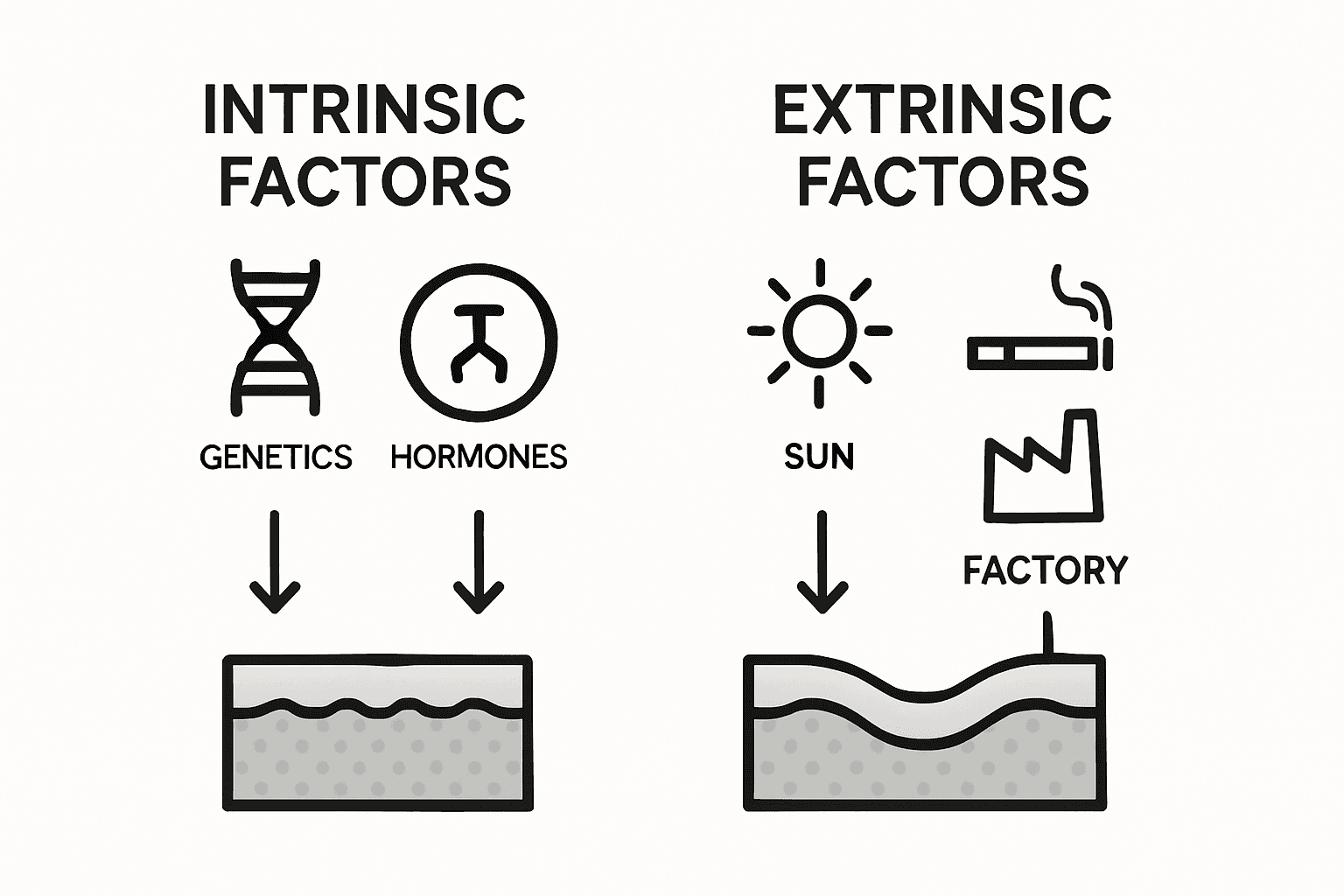
Here’s a comparison of intrinsic versus extrinsic factors affecting skin elasticity:
| Factor Type | Key Characteristics | Examples | Primary Impact |
|---|---|---|---|
| Intrinsic | Related to genetics and biology | Genetics, hormones | Natural aging, slow progression |
| Extrinsic | External and modifiable factors | Sun exposure, pollution | Accelerated breakdown of proteins |
Pro Tip - Environmental Protection: Create a daily skincare routine that includes broad-spectrum sunscreen, antioxidant-rich serums, and protective clothing to minimize external damage and preserve your skin’s natural elasticity.
How To Assess Changes In Your Skin
Tracking skin elasticity changes requires a combination of professional assessment and personal observation. Understanding these transformations helps you develop targeted skincare strategies that address age-related modifications in your skin’s structural integrity and appearance.
Professional measurement techniques like the Cutometer provide precise scientific evaluations of skin elasticity, offering quantitative data about your skin’s mechanical properties. These advanced diagnostic tools measure how quickly and effectively your skin returns to its original position after gentle stretching, providing objective insights into age-related changes that might not be immediately visible to the naked eye.
Personal assessment involves a systematic approach to monitoring skin changes. Key indicators include skin texture, visible fine lines, moisture retention, and recovery time after pinching or stretching. Pay close attention to areas most prone to elasticity loss, such as the face, neck, and hands. Look for subtle signs like decreased bounce-back when gently pulling skin, increased dryness, and the emergence of permanent creases that don’t immediately disappear after facial movements.
Pro Tip - Self-Monitoring Technique: Create a monthly skin journal with dated photos and notes about texture, firmness, and hydration levels, allowing you to track subtle changes and identify potential intervention points early.
Proven Ways To Improve Skin Elasticity Over 40
Restoring and maintaining skin elasticity after 40 requires a comprehensive, multifaceted approach that combines targeted skincare, nutrition, and lifestyle modifications. Your skin’s resilience is not predetermined, and strategic interventions can significantly slow down the aging process and promote healthier, more supple skin.
Protecting your skin from further damage remains the most critical strategy for preserving elasticity. This means implementing rigorous sun protection, using broad-spectrum sunscreen daily, and minimizing direct sun exposure during peak hours. Antioxidant-rich nutrition plays a crucial role, with foods like berries, leafy greens, and fatty fish providing essential nutrients that combat oxidative stress and support collagen production.
A personalized skincare routine becomes paramount in maintaining skin elasticity. This includes gentle cleansing, consistent hydration, targeted serums with ingredients like hyaluronic acid and peptides, and regular exfoliation to encourage cellular turnover. Developing a comprehensive skincare regimen that includes cleansing, toning, moisturizing, and sun protection can dramatically improve skin’s resilience. Additionally, consider incorporating supplements like collagen peptides, vitamin C, and omega-3 fatty acids, which support internal skin health and protein synthesis.
The table below summarizes effective interventions for improving skin elasticity after age 40:
| Intervention Area | Example Action | Expected Benefit |
|---|---|---|
| Skincare Routine | Use hydrating serums | Boosts moisture and firmness |
| Nutrition | Eat antioxidant-rich foods | Protects against oxidative stress |
| Lifestyle | Practice stress management | Supports collagen maintenance |
| Supplementation | Take collagen peptides | Enhances protein synthesis |
Pro Tip - Holistic Skin Restoration: Implement a 360-degree approach by combining external skincare, nutrient-dense nutrition, proper hydration, stress management, and consistent sleep patterns to comprehensively support your skin’s natural elasticity and regenerative processes.
Selecting Skincare And Lifestyle Solutions For Canadians
Canadian adults over 40 face unique challenges in maintaining skin health, particularly given the diverse climate and environmental conditions across the country. Developing a comprehensive approach to skincare and lifestyle management requires understanding the specific factors that impact skin elasticity and overall wellness.
Protecting skin from environmental stressors becomes crucial in mitigating premature aging, especially in a country with significant seasonal variations. Canadian skincare solutions must account for extreme temperature changes, from harsh winter conditions to intense summer sunlight. This means investing in multi-functional products that provide robust protection, hydration, and repair mechanisms.
Understanding the balance between intrinsic and extrinsic aging factors helps Canadian adults develop more targeted wellness strategies. Local skincare brands that recognize the unique challenges of Canadian skin can offer more specialized solutions. Consider products with added protection against UV radiation, pollution, and temperature fluctuations. Incorporate supplements and nutrition that support skin health from within, focusing on omega-3 fatty acids, antioxidants, and hydration-supporting nutrients.
Pro Tip - Canadian Skin Defense: Create a seasonal skincare rotation that adapts to changing environmental conditions, using lighter moisturizers in summer and richer, more protective formulations during cold winter months.
Support Your Skin’s Elasticity and Wellness After 40
Maintaining your skin’s natural elasticity after 40 can feel challenging as collagen and elastin decline with age. This leads to sagging, fine lines, and diminished skin bounce-back that impact your confidence and well-being. To combat these changes, a holistic approach involving targeted skincare, proper nutrition, and supportive lifestyle products is essential. At Real Healthy Haven, we understand the importance of preserving your skin’s resilience and overall health with solutions designed specifically for Canadian adults over 40.

Explore our selection of wellness supplements, comfortable activewear, and health monitors that empower you to boost your skin’s elasticity and promote healthy aging. Don’t let time dictate how your skin looks and feels. Visit Real Healthy Haven today to discover curated products and expert support tailored to your unique needs. Start your journey to stronger, healthier skin now by exploring our healthcare supplies created to fit your lifestyle.
Frequently Asked Questions
What is skin elasticity and why is it important after 40?
Skin elasticity is the ability of your skin to stretch and return to its original shape, which is crucial for maintaining a youthful appearance. After age 40, the production of collagen and elastin declines, leading to visible signs of aging such as sagging and fine lines.
What are the main factors that affect skin elasticity?
Both intrinsic factors (like genetics and hormonal changes) and extrinsic factors (such as sun exposure and pollution) significantly influence skin elasticity. Intrinsic aging is related to natural biological processes, while extrinsic factors can accelerate the breakdown of proteins in the skin.
How can I improve my skin elasticity after the age of 40?
To improve skin elasticity, it’s essential to establish a comprehensive skincare routine that includes using hydrating serums, practicing sun protection, and maintaining a balanced diet rich in antioxidants. Also, consider lifestyle modifications such as stress management and adequate hydration.
What types of skincare products should I use to maintain skin elasticity?
Look for products that contain ingredients like hyaluronic acid, peptides, and antioxidants. These components can help hydrate the skin, support collagen production, and combat oxidative stress, which are all beneficial for maintaining skin elasticity.
Leave a comment