

Why Maintain Flexibility for Healthy Aging

Nearly 60 percent of American adults over 40 report increased muscle stiffness and reduced mobility. Flexibility plays a vital role in how we move, age, and maintain our daily independence. Without routine stretching and joint care, everyday tasks can quickly become more difficult, limiting quality of life. Discover how prioritizing flexibility can help you stay active, resilient, and confident well into your later years.
Table of Contents
- Defining Flexibility And Its Importance
- Major Types Of Flexibility For Adults
- How Flexibility Impacts Everyday Life
- Risks Of Reduced Flexibility After 40
- Practical Ways To Maintain Flexibility
Key Takeaways
| Point | Details |
|---|---|
| Importance of Flexibility | Flexibility is vital for overall health, mobility, and independence as we age. Regular stretching helps maintain joint range of motion and prevent injuries. |
| Types of Flexibility | Both static and dynamic flexibility training are essential, offering different benefits for muscle extensibility and mobility. Depending on individual needs, various stretching techniques can be utilized. |
| Impact on Daily Life | Flexibility directly influences everyday actions, enhancing ease in movements and reducing strain, thereby promoting confidence and reducing stress. |
| Strategies for Maintenance | Consistency in incorporating targeted stretching exercises, yoga, and gentle movements can significantly improve flexibility and prevent age-related stiffness. |
Defining Flexibility and Its Importance
Flexibility is more than just touching your toes or performing impressive stretches. At its core, flexibility represents a critical component of physical fitness that significantly impacts our overall health and mobility as we age. Flexibility measures the range of motion within our joints and determines how effectively we can move, bend, and adapt physically.
Understanding flexibility requires recognizing its two primary types: static and dynamic. Static flexibility represents the maximum range of motion a joint can achieve while remaining stationary, like reaching to touch your toes without moving. Dynamic flexibility, alternatively, involves how smoothly and efficiently joints move during actual physical activity. Stretching serves as a key method for enhancing overall joint mobility and physical performance, helping individuals maintain muscle elasticity and reduce potential injury risks.
As we progress through different life stages, maintaining flexibility becomes increasingly important. Regular stretching and mobility exercises can counteract the natural stiffening of muscles and connective tissues that occurs with aging. This process helps preserve our range of motion, supports proper body mechanics, and contributes to overall physical independence. Simple practices like daily gentle stretches, yoga, or targeted mobility routines can make significant differences in how we move and feel as we grow older.
Beyond physical benefits, flexibility training offers psychological advantages as well. Engaging in consistent stretching can reduce muscle tension, promote relaxation, and improve body awareness. These holistic benefits demonstrate that flexibility is not just about physical movement, but about maintaining a dynamic, adaptable approach to health and wellness throughout our lifetime.
Major Types of Flexibility for Adults
Flexibility training is not a one-size-fits-all approach. Adults have multiple strategies for improving joint mobility and muscle extensibility, each targeting different physical needs and performance goals. Flexibility exercises encompass several distinct techniques that can be tailored to individual fitness levels and health requirements.
Static stretching represents the most traditional and widely practiced method, involving holding a stretched muscle position for 15-30 seconds without movement. Different stretching approaches offer unique benefits for adults, with dynamic and static techniques being particularly recommended for mature individuals. Dynamic stretching involves controlled movement through a full range of motion, actively preparing muscles for more intense physical activity and helping improve overall mobility.
More advanced flexibility techniques include Proprioceptive Neuromuscular Facilitation (PNF) and ballistic stretching. PNF involves alternating muscle contraction and relaxation to achieve deeper stretches, often requiring a partner or professional guidance. Ballistic stretching, which uses bouncing or jerking movements, is generally not recommended for adults over 40 due to increased injury risks. These advanced methods should be approached cautiously and preferably under professional supervision.
Choosing the right flexibility approach depends on individual fitness levels, physical condition, and specific health goals. Exploring mobility exercises specifically designed for adults can help individuals develop a personalized stretching routine that enhances physical performance, reduces injury risks, and supports overall wellness. The key is to start slowly, listen to your body, and progressively increase flexibility through consistent, gentle practice.
How Flexibility Impacts Everyday Life
Flexibility transforms how we move, interact, and experience our physical world. Maintaining muscle mobility ensures ease and safety in daily movements, preventing the gradual limitations that can restrict our independence as we age. Simple actions like reaching for a high shelf, bending to tie shoelaces, or getting in and out of a car become significantly more comfortable when our muscles and joints remain supple and responsive.
Flexibility exercises directly improve our ability to perform essential daily activities, from personal care routines to household tasks. Improved range of motion supports better posture, reduces muscle tension, and minimizes the risk of strains or injuries during routine movements. Imagine getting dressed without struggling, gardening without back pain, or playing with grandchildren without feeling stiff and restricted.

Beyond physical capabilities, flexibility impacts mental well-being and confidence. When our bodies move more freely, we feel more empowered and less anxious about physical limitations. Reduced muscle tension translates to lower stress levels, creating a positive feedback loop between physical mobility and psychological resilience. The essential guide to mobility exercises can provide additional insights into maintaining this crucial aspect of health.
Practical strategies for maintaining everyday flexibility include incorporating gentle stretching into daily routines, practicing balance-focused activities like yoga or tai chi, and being mindful of body mechanics during routine tasks. The goal is not extreme athleticism but sustainable, comfortable movement that supports an active, independent lifestyle as we navigate the natural changes that come with aging.
Risks of Reduced Flexibility After 40
Joint stiffness becomes an increasingly significant health challenge as we age, with the period after 40 marking a critical turning point in physical mobility. Reduced flexibility can dramatically increase the risk of falls and movement difficulties, transforming once-simple actions like climbing stairs or reaching for objects into potential physical challenges. Muscle shortening and decreased joint elasticity gradually limit our range of motion, creating subtle but profound changes in how we interact with our physical environment.
Decreased flexibility fundamentally alters our ability to perform everyday tasks, introducing unexpected complications into routine activities. Simple movements such as bending to tie shoelaces, getting in and out of a car, or reaching into a kitchen cabinet can become increasingly challenging. This progressive restriction not only impacts physical capabilities but also contributes to a growing sense of vulnerability and potential loss of independence.
The physiological risks extend beyond mere inconvenience. Reduced flexibility increases susceptibility to muscle strains, joint injuries, and chronic pain conditions. Muscles that remain consistently tight create imbalanced tension patterns, potentially leading to compensatory movements that further stress vulnerable body regions. Developing a consistent workout routine becomes crucial in mitigating these age-related mobility challenges.
Psychological impacts accompany these physical changes, often creating a negative feedback loop. As movement becomes more difficult, individuals may unconsciously reduce physical activity, which further accelerates muscle stiffness and joint degradation. Breaking this cycle requires proactive engagement, consistent stretching, and a commitment to maintaining muscular flexibility as a fundamental aspect of healthy aging.
Practical Ways to Maintain Flexibility
Flexibility training requires a strategic and consistent approach, especially for adults navigating the physical changes after 40. Incorporating targeted flexibility exercises into daily routines can significantly improve muscle elasticity and joint mobility, transforming how our bodies move and respond to physical challenges. Key areas to focus on include shoulder stretches, upper back movements, and hamstring exercises that counteract the natural stiffening process.
Passive static stretching emerges as a powerful technique for maintaining muscle health. Using tools like towels or elastic bands can help enhance stretching effectiveness, allowing individuals to safely extend their range of motion. These gentle yet purposeful stretches help lengthen muscles, improve joint flexibility, and reduce the risk of strain or injury. Morning and evening stretch sessions, even if brief, can create substantial improvements in overall physical mobility.
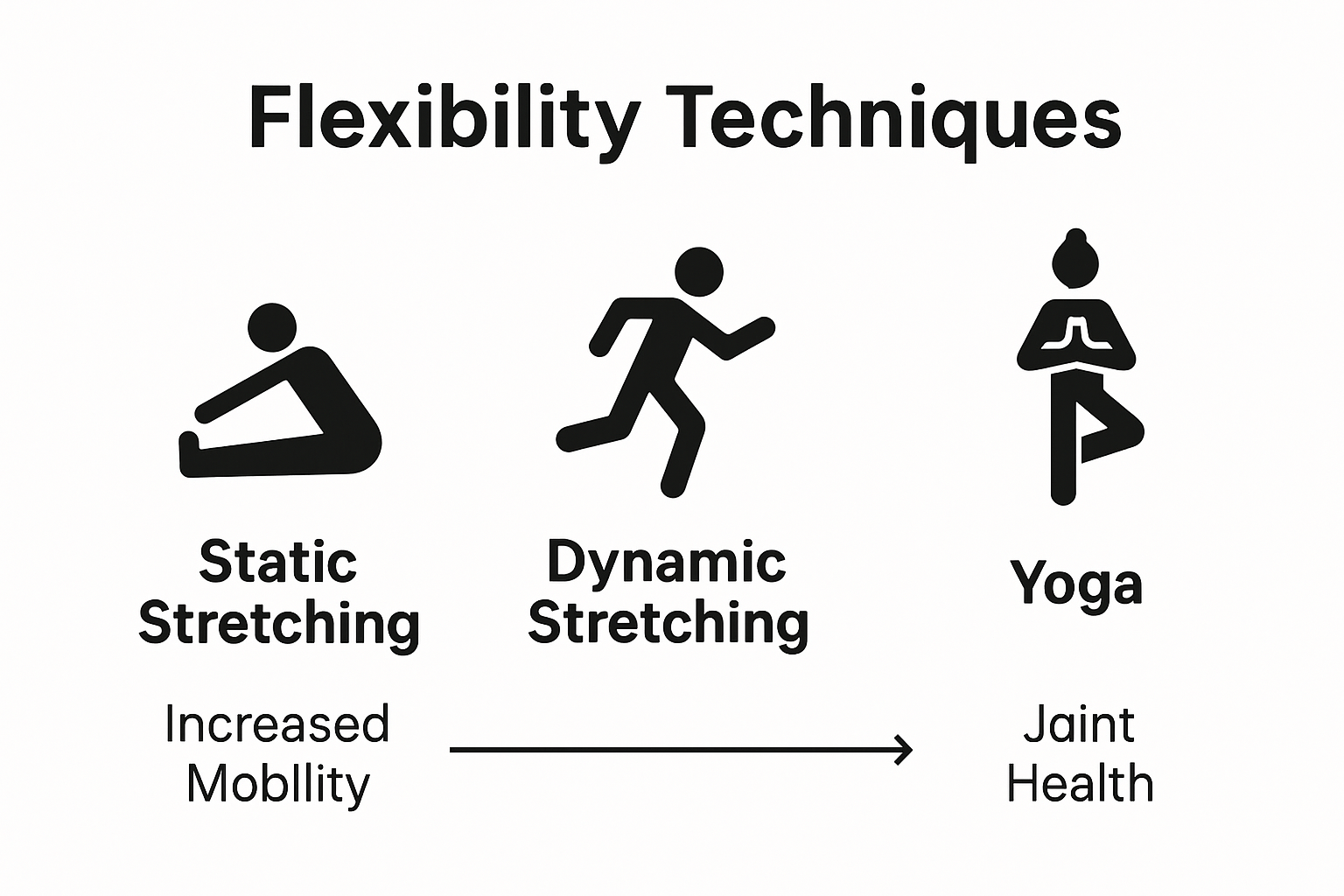
Dynamic activities like yoga, swimming, and tai chi offer comprehensive flexibility benefits beyond traditional stretching. Exploring yoga practices specifically designed for adults over 40 can provide structured, low-impact approaches to maintaining muscle suppleness. These movement practices not only improve physical flexibility but also contribute to balance, core strength, and mental relaxation.
Consistency is the cornerstone of flexibility maintenance. Start with short, manageable stretching routines and gradually increase duration and complexity. Listen to your body, avoid pushing into painful ranges of motion, and consider consulting a fitness professional who specializes in mature adult fitness. The goal is sustainable, gentle progress that supports long-term physical function and reduces the likelihood of age-related mobility restrictions.
Maintain Your Flexibility for a Stronger, Independent Tomorrow
The article highlights how maintaining flexibility is vital for healthy aging and preventing daily movement challenges after 40. If you want to overcome common pain points like joint stiffness, muscle tension, and reduced mobility, developing a consistent flexibility routine is essential. Whether you need gentle stretching aids, supportive activewear for ease of movement, or wellness supplements to keep your muscles supple, specialized tools can empower you to stay active and independent.

Take control of your health today by exploring our range of carefully selected products designed specifically for adults over 40 at Real Healthy Haven. Start with basic flexibility-enhancing tools and progress into advanced wellness solutions. Visit Flexibility Exercises for Seniors to learn more about practical ways to stay agile then shop with confidence to support your personalized healthy aging journey now.
Frequently Asked Questions
What is flexibility and why is it important for aging adults?
Flexibility refers to the range of motion within our joints and is crucial for maintaining mobility as we age. It helps in preventing injuries, supports proper body mechanics, and contributes to overall physical independence.
What are the main types of flexibility exercises recommended for older adults?
The two main types are static stretching, where a muscle is held in a stretched position, and dynamic stretching, which involves controlled movements through a full range of motion. Both are effective for enhancing flexibility and supporting active living.
How does reduced flexibility affect daily activities in older adults?
Reduced flexibility can make everyday tasks like bending, reaching, and getting up from a seated position more challenging. This limitation can lead to a greater risk of falls and a sense of vulnerability, impacting overall independence.
What are practical ways to maintain flexibility as we age?
Incorporating regular stretching routines, such as passive static stretching, yoga, or tai chi can significantly improve flexibility. It’s important to start slowly, listen to your body, and be consistent with stretching activities.
Leave a comment