

Role Of Mobility In Aging: The Definitive Guide

Nearly one in three adults over 65 will experience a decline in mobility, shaping how they age and live each day. When movement becomes harder, everyday activities like walking, climbing stairs, or even enjoying outings can slip out of reach. Understanding mobility means looking beyond simple movement and seeing it as the foundation for independence, mental well-being, and a vibrant, fulfilling life. Learning how to protect and support mobility unlocks greater freedom and peace of mind as we grow older.
Table of Contents
- Defining Mobility’s Role In Aging
- Types Of Mobility Limitations And Variations
- How Mobility Impacts Health And Independence
- Practical Mobility-Enhancing Strategies
- Risks Of Impaired Mobility And Mitigation
- Alternatives And Supportive Tools
Key Takeaways
| Point | Details |
|---|---|
| Importance of Mobility | Mobility is crucial for healthy aging, influencing physical health, psychological well-being, and independence. |
| Consequences of Decline | Reduced mobility can lead to social isolation, increased risks of depression, and a cycle of further physical decline. |
| Holistic Strategies | Engaging in targeted strength, flexibility, and balance exercises are essential for maintaining mobility and preventing deterioration. |
| Supportive Tools | Advanced mobility devices and adaptive technologies can enhance independence and social participation for individuals facing mobility challenges. |
Defining mobility’s role in aging
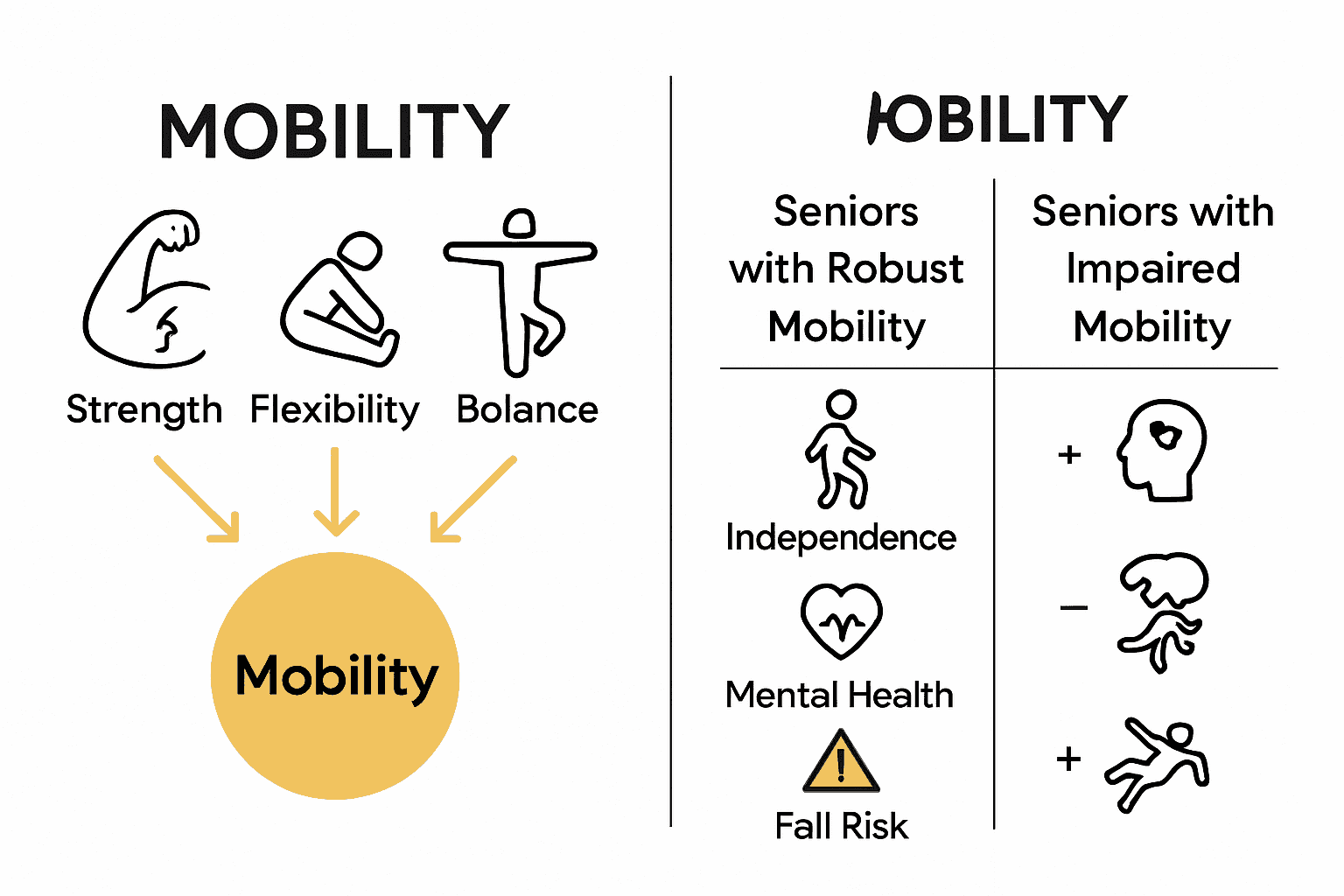
Mobility isn’t just about moving from point A to point B - it’s a critical component of healthy aging that impacts overall quality of life. Mobility represents your body’s ability to move freely, efficiently, and without pain, encompassing everything from walking and balance to flexibility and strength. As we age, maintaining robust mobility becomes increasingly important for preserving independence and preventing physical decline.
Understanding mobility requires recognizing it as a complex interplay between muscular strength, joint flexibility, neurological coordination, and cardiovascular fitness. Each of these systems contributes to your ability to move smoothly and confidently. Muscles provide power, joints allow range of motion, the nervous system coordinates movement, and cardiovascular health ensures sustained energy during physical activities. When any of these systems weaken, mobility can become compromised, leading to reduced activity levels and potential health risks.
The consequences of diminished mobility extend far beyond physical limitations. Research from Real Healthy Haven highlights that reduced mobility can significantly impact mental health, social engagement, and overall psychological well-being. Older adults with restricted movement often experience:
- Increased risk of social isolation
- Higher rates of depression
- Reduced confidence in daily activities
- Greater likelihood of experiencing chronic pain
Preventing mobility decline isn’t about extreme fitness regimens but consistent, targeted approaches. Integrating gentle strength training, flexibility exercises, and balance work can help maintain your body’s natural movement capabilities. Regular physical activity doesn’t just preserve mobility - it actively improves it, creating a positive feedback loop of increased strength, confidence, and physical capability.
Types of mobility limitations and variations
Mobility limitations are not a one-size-fits-all experience, but rather a complex spectrum of physical challenges that evolve uniquely for each individual. PubMed research highlights that mobility declines with age, with complex and demanding tasks being impacted first, revealing a nuanced progression of physical limitations.
These limitations can be categorized into several distinct types. Neurological mobility restrictions stem from conditions like Parkinson’s disease or multiple sclerosis, affecting movement coordination and muscle control. Musculoskeletal limitations involve joint stiffness, arthritis, and reduced muscle strength, directly impacting range of motion. Cardiovascular mobility challenges emerge when heart and lung functions compromise an individual’s stamina and ability to move consistently.
According to PubMed research, mobility loss results from intricate impairments across multiple body systems:
- Central nervous system disruptions
- Muscle strength deterioration
- Joint flexibility reduction
- Sensory system changes
Interestingly, these changes often begin subtly, with preclinical modifications occurring well before noticeable mobility restrictions. For those seeking deeper insights, our mobility devices guide for adults over 40 offers comprehensive strategies for understanding and managing these transitions.
Recognizing these variations is crucial. Some individuals might experience gradual strength decline, while others face sudden movement restrictions. The key is early detection, proactive management, and personalized intervention strategies that address individual physical needs and maintain overall quality of life.

How mobility impacts health and independence
Mobility is far more than physical movement - it’s a critical cornerstone of overall health and personal autonomy for aging adults. PubMed research reveals that regular physical activity, such as 30 minutes of brisk exercise daily, serves as a powerful protective factor for cognitive functioning, directly influencing brain health and preventing age-related structural and functional losses.
The intricate connection between mobility and independence manifests through multiple physiological pathways. When mobility declines, individuals experience cascading effects across physical, psychological, and social domains. Reduced movement capabilities can lead to decreased muscle strength, diminished cardiovascular endurance, increased fall risks, and compromised ability to perform daily activities independently. These limitations create a challenging cycle where reduced mobility breeds further physical decline and potential social isolation.
According to PubMed research, preserving mobility is crucial for extending healthspan in older adults. The research emphasizes targeting multiple body systems to enhance overall function and independence. Key impacts include:
- Maintaining cognitive sharpness
- Preserving muscle and joint flexibility
- Supporting cardiovascular health
- Reducing chronic disease risks
- Promoting psychological well-being
For those seeking comprehensive strategies to maintain mobility, our guide on mobility exercises for Canadians over 40 offers targeted insights and practical recommendations. The ultimate goal is not just extending years of life, but ensuring those years are filled with quality, independence, and personal agency.
Practical mobility‑enhancing strategies
Mobility training is a personalized journey that requires a holistic approach tailored to individual physical capabilities and health conditions. Developing an effective mobility enhancement strategy involves understanding your body’s unique strengths and limitations, then implementing targeted interventions that progressively improve movement quality and confidence.
The foundation of practical mobility enhancement centers on three primary pillars: strength training, flexibility work, and balance development. Strength training focuses on building muscle groups that support joint stability and movement efficiency. This doesn’t mean heavy weightlifting, but rather consistent, low-impact resistance exercises using body weight, resistance bands, or light dumbbells. Flexibility work involves gentle stretching routines that maintain joint range of motion and prevent stiffness, while balance exercises challenge and improve neurological coordination and spatial awareness.
Key practical strategies for enhancing mobility include:
- Daily gentle stretching routines (10-15 minutes)
- Low-impact resistance band exercises
- Walking programs with gradual intensity progression
- Tai Chi or similar balance-focused movement practices
- Chair-based exercises for limited mobility individuals
- Aquatic exercises to reduce joint stress
For those seeking comprehensive guidance, our mobility exercises guide for Canadians over 40 provides detailed, age-appropriate recommendations. The most critical aspect of mobility enhancement is consistency - small, regular movements compound over time to create significant improvements in physical function and overall quality of life.
Risks of impaired mobility and mitigation
Impaired mobility represents a significant health challenge that extends far beyond simple movement difficulties. PubMed research reveals that reduced mobility in older adults is associated with dramatically increased risks of falls, hospitalization, and mortality, underscoring the critical importance of proactive intervention and management.
The cascading health risks of diminished mobility are multifaceted and interconnected. Physical limitations can trigger a domino effect of health complications, including muscle weakness, cardiovascular deconditioning, reduced bone density, and compromised immune function. Socially, decreased mobility often leads to isolation, depression, and a profound loss of independence. Psychological impacts can be equally devastating, with reduced mobility creating feelings of vulnerability and decreased self-confidence.
According to PubMed research, mitigating these risks requires a comprehensive approach focused on targeted interventions:
- Regular strength training programs
- Consistent physical activity
- Balance and coordination exercises
- Professional physiotherapy assessments
- Adaptive mobility support technologies
- Nutritional support for muscle maintenance
For individuals seeking detailed strategies to address mobility challenges, our mobility devices guide for active seniors offers expert insights and practical recommendations. The key is early detection, proactive management, and a holistic approach that addresses physical, psychological, and social dimensions of mobility health.
Alternatives and supportive tools
Mobility support tools represent a critical lifeline for individuals experiencing movement challenges, offering innovative solutions that extend far beyond traditional assistive devices. PubMed research highlights the profound importance of social engagement and personal identity in maintaining community mobility, emphasizing that supportive tools are not just physical aids but pathways to continued independence and social participation.
The landscape of mobility alternatives has evolved dramatically, moving from purely functional devices to sophisticated, technology-integrated solutions. Modern supportive tools range from advanced walking aids and ergonomic mobility devices to smart wearable technologies that monitor movement patterns, track health metrics, and provide real-time feedback. These tools are designed not just to assist movement but to empower users, helping them maintain dignity, confidence, and a sense of personal agency.
Key alternatives and supportive tools for enhancing mobility include:
- Adjustable walking canes with ergonomic grips
- Lightweight rollators with built-in seats
- Smart balance assist devices
- Mobility tracking wearables
- Adaptive exercise equipment
- Home modification tools for increased accessibility
For comprehensive insights into selecting the right mobility support, our mobility devices guide for active seniors provides expert recommendations tailored to individual needs. PubMed research emphasizes that accessible infrastructure and thoughtful transportation options are equally crucial in supporting mobility, reminding us that support extends beyond personal devices to encompass broader environmental considerations.
Strengthen Your Mobility Journey with Real Healthy Haven
Maintaining your mobility as you age is about more than just moving freely—it is about preserving independence, confidence, and quality of life. The challenges of reduced strength, flexibility, and balance highlighted in the article reveal how crucial it is to actively support your body’s vitality. At Real Healthy Haven, we understand the emotional weight of these concerns and offer solutions designed specifically for adults over 40 who want to embrace healthy aging with practical tools and trusted products.

Explore our thoughtfully curated selection of exercise equipment, health monitors, and therapeutic supplies that empower you to take control of your mobility today. Whether you are starting gentle strength training or seeking supportive wellness products, visit Real Healthy Haven to find everything you need in one place. Don’t wait for mobility to decline — begin enhancing your movement and well-being now by checking out our offerings at Real Healthy Haven and discover expert guidance tailored for your journey.
Frequently Asked Questions
What is the importance of mobility in aging?
Mobility is crucial for healthy aging as it affects overall quality of life, independence, and physical health. It encompasses the body’s ability to move without pain and supports mental well-being, social engagement, and the ability to perform daily activities.
What types of mobility limitations commonly affect older adults?
Older adults may experience various mobility limitations, including neurological restrictions (from conditions like Parkinson’s disease), musculoskeletal issues (like arthritis), and cardiovascular challenges that impact stamina and movement efficiency.
How can I improve my mobility as I age?
Improving mobility can be achieved through consistent activities such as gentle strength training, flexibility exercises, and balance work. Regular physical activity that targets multiple body systems is key to maintaining and enhancing mobility.
What are the risks associated with impaired mobility in older adults?
Impaired mobility can lead to a range of health risks, including increased likelihood of falls, hospitalization, muscle weakness, and social isolation. It can also contribute to mental health issues like depression and reduced self-confidence.
Recommended
- The Essential Guide to Why Mobility Exercises Matter – Real Healthy Haven
- Why Mobility Exercises: Complete Guide for Canadians Over 40 – Real Healthy Haven
- Complete Guide to Mobility Devices for Adults 40+ – Real Healthy Haven
- Best 7 Mobility Aids for Active Seniors – Expert Comparison 2025 – Real Healthy Haven
Leave a comment