

What Is Healthspan and Why It Matters After 40

Most American adults are surprised to learn that while average lifespan has increased, the average person spends only about 80 percent of those years in good health. As life expectancy rises, the real question shifts to how many of those years are lived with energy, independence, and freedom from chronic disease. In this guide, you will discover what truly sets healthspan apart from lifespan and how you can shape your healthiest years well beyond your 40s.
Table of Contents
- Defining Healthspan Versus Lifespan
- How Healthspan Shapes Healthy Aging
- Science and Lifestyle Factors That Influence Healthspan
- Risks That Shorten Healthspan After 40
- Supporting Longer Healthspan With Wellness Solutions
Key Takeaways
| Point | Details |
|---|---|
| Lifespan vs. Healthspan | Lifespan measures the total years lived, while healthspan focuses on the quality of those years in terms of health and vitality. |
| Proactive Lifestyle Choices | Individuals can significantly influence their healthspan through nutrition, exercise, stress management, and proactive healthcare. |
| Risks After 40 | Factors like muscle loss, poor nutrition, and chronic stress can compress healthspan, making it crucial to adopt preventive measures. |
| Personalized Wellness Strategies | Each person’s healthspan can be optimized through tailored wellness strategies that consider individual genetic and lifestyle factors. |
Defining Healthspan Versus Lifespan
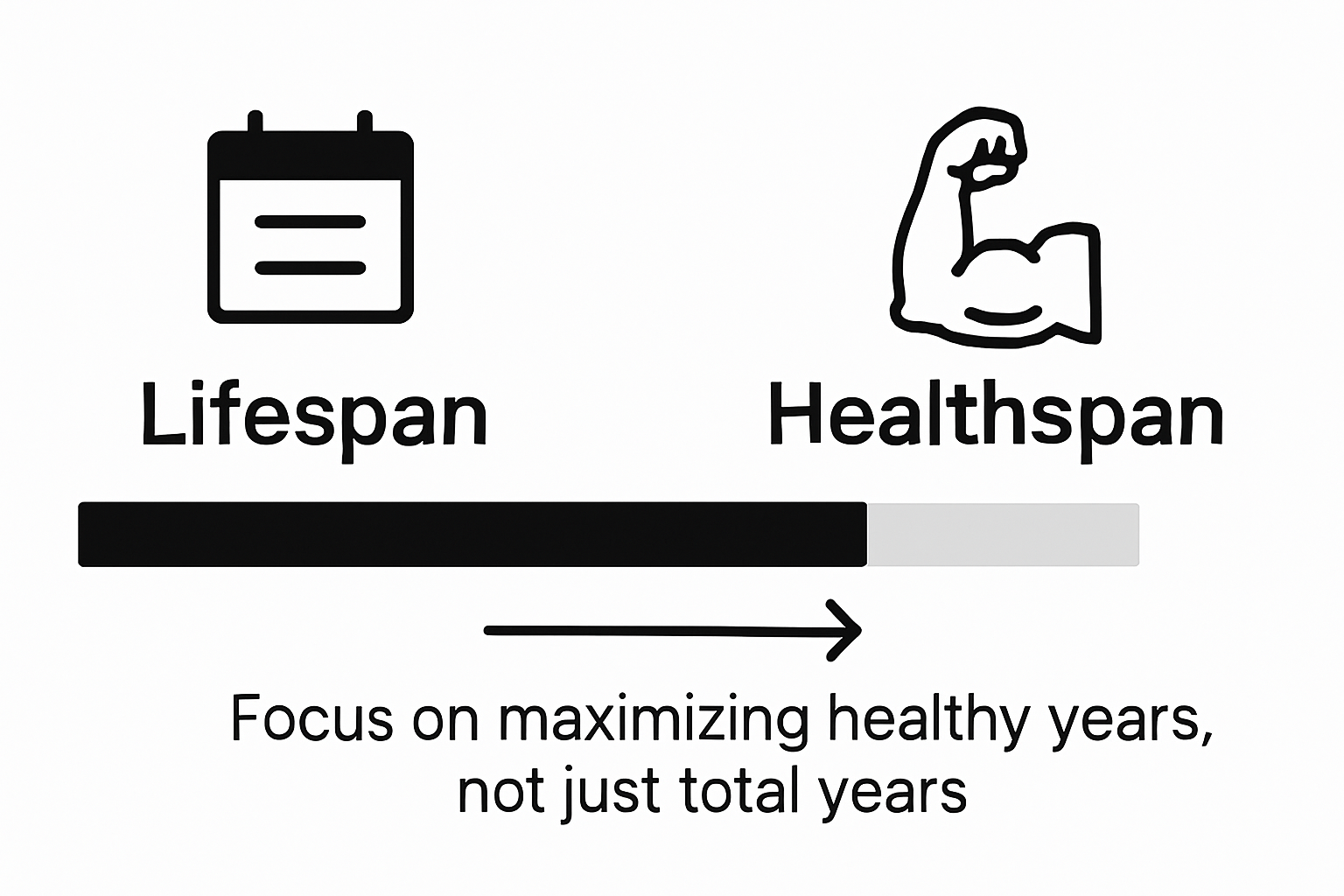
As you navigate your health journey after 40, understanding the difference between lifespan and healthspan becomes critical. While these terms might sound similar, they represent distinctly different approaches to measuring human life and wellness. Lifespan refers to the total number of years a person lives, spanning from birth to death. In contrast, healthspan measures something far more nuanced and meaningful.
Healthspan is about quality, not just quantity. It represents the number of years you remain healthy, active, and free from significant chronic conditions. Think of it as your prime years of vitality, where you can engage fully in life without being limited by health challenges. The goal isn’t just to live longer, but to live better.
To break this down practically, imagine two scenarios. Person A lives to 85 but spends the last 20 years struggling with multiple health issues, limited mobility, and reduced quality of life. Person B lives to 82 but remains physically active, mentally sharp, and independently functional until the very end. While Person A has a longer lifespan, Person B has a more robust healthspan. This distinction matters profoundly as you enter your 40s and beyond.
The real power lies in understanding that healthspan isn’t predetermined. Through strategic lifestyle choices - including nutrition, exercise, stress management, and proactive healthcare - you can significantly influence how many vibrant, capable years you experience. Your healthspan is essentially a canvas you can paint, with each healthy choice adding color and depth to your life’s masterpiece.
How Healthspan Shapes Healthy Aging
Healthy aging isn’t just about adding years to life, but adding life to years. Modern medical understanding increasingly recognizes that extending good health is more important than simply prolonging existence. As you move through your 40s and beyond, your approach to wellness becomes less about surviving and more about thriving.

While medical advances have dramatically increased life expectancy, many of those additional years are complicated by chronic diseases and reduced mobility. This reality underscores why healthspan matters so critically. It’s not just about how long you live, but the quality of those years. Imagine maintaining your independence, energy, and passion well into your 60s and 70s - that’s the promise of prioritizing healthspan.
Shaping your healthspan requires a proactive, holistic approach. This means integrating multiple wellness strategies: regular physical activity that maintains muscle strength and cardiovascular health, nutritional choices that support cellular repair and reduce inflammation, stress management techniques that protect mental and emotional resilience, and preventative healthcare that catches potential issues early. Each of these elements works together to create a robust foundation for vibrant, extended health.
The most empowering aspect of healthspan is that it’s largely within your control. Genetic predispositions play a role, but lifestyle choices are the primary architects of your long-term wellness. By making intentional decisions about diet, exercise, mental health, and preventative care, you’re not just adding years to your life - you’re adding life to your years. Your healthspan is a canvas of potential, waiting for you to paint it with bold, vibrant strokes of wellness and vitality.
Science and Lifestyle Factors That Influence Healthspan
Scientific research has uncovered compelling evidence about the key factors that dramatically shape our healthspan. Researchers have identified that lifestyle choices play a fundamental role in extending the number of healthy, active years we can experience. These aren’t just theoretical concepts, but actionable insights that can transform how we approach aging.
Physical activity emerges as a critical determinant in reducing cardiovascular risk and extending overall healthspan. Regular exercise isn’t just about maintaining muscle tone or weight management - it’s a powerful intervention that can slow down age-related decline. Cardiovascular workouts, strength training, and flexibility exercises all contribute to cellular health, reduce inflammation, and support metabolic function.
Beyond physical activity, multiple lifestyle factors intersect to influence healthspan. Nutrition plays a pivotal role, with research highlighting the importance of whole foods, balanced macronutrients, and anti-inflammatory dietary patterns. Sleep quality, stress management, social connections, and mental engagement also contribute significantly. Each of these elements works synergistically - improving one area can create a positive cascade effect across your overall health.
The most exciting revelation is that healthspan is largely within your control. Genetic predispositions exist, but lifestyle choices are the primary architects of your aging trajectory. By making intentional, science-backed decisions about how you move, eat, rest, and connect, you can potentially add years of vibrant, active living to your life. Your healthspan isn’t predetermined - it’s a dynamic landscape you can actively shape through informed, consistent choices.
Risks That Shorten Healthspan After 40
Muscle loss emerges as a critical threat to healthspan for adults entering their 40s, dramatically accelerating functional decline and chronic health risks. Known as sarcopenia, this progressive muscle deterioration isn’t just about losing strength - it fundamentally undermines your body’s ability to maintain independence, metabolic health, and overall vitality. Without intentional intervention, muscle mass can decline by approximately 3-5% per decade after 40, creating a cascading effect on mobility, metabolism, and physiological resilience.
Preventing functional decline becomes paramount for maintaining quality of life in later years. The risks extend far beyond muscle loss. Hormonal shifts, metabolic changes, reduced cellular repair mechanisms, and cumulative lifestyle stress begin to compound, creating a perfect storm that can dramatically compress your healthspan. Chronic conditions like diabetes, cardiovascular disease, and metabolic syndrome become increasingly probable, transforming what could be vibrant decades into periods of medical management.
Multiple interconnected risk factors accelerate healthspan compression. Sedentary lifestyles amplify muscle loss and metabolic dysfunction. Poor nutrition - characterized by processed foods, excessive sugar, and inflammatory diet patterns - further compromises cellular health. Chronic stress triggers hormonal imbalances that disrupt sleep, metabolism, and immune function. Mental health challenges like depression and anxiety can create feedback loops that reduce physical activity and social engagement.
The most empowering revelation is that these risks aren’t inevitable. They’re manageable through strategic, proactive choices. By understanding these potential pitfalls, you can design a personalized approach that mitigates risks and promotes resilience. Resistance training, nutrient-dense whole foods, stress management techniques, and consistent physical activity become your primary tools for maintaining muscle mass, metabolic flexibility, and overall functional capacity. Your healthspan is a dynamic landscape - one you can actively shape through informed, intentional lifestyle design.
Supporting Longer Healthspan With Wellness Solutions
Modern wellness strategies offer powerful pathways to extending your healthspan, transforming how we approach aging after 40. While genetics play a role, proactive lifestyle interventions can dramatically influence your long-term health trajectory. The key is understanding that aging isn’t about passive acceptance, but active optimization of your physical, mental, and metabolic potential.
Nutritional choices emerge as a cornerstone for supporting longer, healthier years. A diet rich in whole foods, antioxidants, and anti-inflammatory nutrients can help combat cellular aging, support metabolic flexibility, and reduce chronic disease risks. Think of your diet as a daily investment in your future health - each meal is an opportunity to nourish your body’s regenerative capabilities.
Comprehensive wellness solutions extend beyond nutrition. Regular physical activity, particularly resistance training and cardiovascular exercise, helps maintain muscle mass, metabolic health, and cognitive function. Stress management techniques like meditation, adequate sleep, and social engagement create a holistic approach to wellness. Mental stimulation through learning new skills, maintaining social connections, and pursuing challenging activities also contributes to cognitive resilience.
The most empowering aspect of healthspan optimization is its personalized nature. There’s no universal blueprint, but rather a tailored approach that considers your unique genetic makeup, lifestyle, and health history. Working with healthcare professionals, tracking key health markers, and remaining adaptable in your wellness strategy can help you design a proactive path to vibrant, extended health. Your healthspan is a dynamic journey of continuous improvement, not a predetermined destination.
Extend Your Healthspan with Targeted Wellness Solutions
Maintaining a vibrant healthspan after 40 means proactively addressing muscle loss, metabolic changes, and chronic disease risks with the right tools. This article highlights the importance of strategic lifestyle choices that keep you active, resilient, and thriving during your prime years. At Real Healthy Haven you can find everything you need to take control of your wellness journey starting today. From our carefully curated Vitamins And Supplements example products that support cellular health and reduce inflammation to fitness gear and monitoring devices designed specifically for adults over 40, every product is aimed at helping you add life to your years.

Discover personalized ways to boost your energy and safeguard your independence with Real Healthy Haven. Start optimizing your healthspan now by exploring our range at realhealthyhaven.com and take that decisive step toward a healthier, more active future. The time to invest in your health is now because vibrant aging is a choice you can make every day.
Frequently Asked Questions
What is the difference between lifespan and healthspan?
Lifespan refers to the total number of years a person lives, while healthspan measures the number of years spent healthy and free from significant chronic conditions.
Why is healthspan significant after the age of 40?
After 40, the focus on healthspan becomes essential as it emphasizes maintaining quality of life and preventing chronic illnesses rather than merely extending life.
How can I improve my healthspan?
You can improve your healthspan by making strategic lifestyle choices such as engaging in regular physical activity, maintaining a balanced diet, managing stress, and prioritizing preventive healthcare.
What risks can shorten healthspan after 40?
Common risks that can shorten healthspan after 40 include muscle loss, sedentary lifestyle, poor nutrition, chronic stress, and mental health challenges.
Leave a comment