

Role of Healthy Body Fat—Why It Matters After 40

Most American adults find that the number on the scale tells only part of the story. Understanding healthy body fat is far more important than focusing solely on weight, since body fat percentage is a much stronger predictor of long-term health. Getting this balance right affects hormone regulation, energy, and even aging. This guide will break down what healthy body fat truly means and show why every American should care about more than just clothing size.
Table of Contents
- What Healthy Body Fat Really Means
- Types of Body Fat and Their Functions
- Body Fat’s Role in Aging and Hormones
- Risks of Too Much or Too Little Fat
- How to Support Healthy Body Fat Balance
Key Takeaways
| Point | Details |
|---|---|
| Healthy Body Fat Is Essential | Maintaining an appropriate body fat percentage supports hormone regulation, energy storage, and organ protection, especially after 40. |
| Different Types of Body Fat | Understanding white, brown, and beige fat aids in managing energy utilization and metabolic health effectively. |
| Hormonal Influence on Health | Fat tissue acts as an endocrine organ, impacting metabolism and cognitive function as we age. |
| Balanced Management Approach | Effective body fat management involves comprehensive strategies including exercise, nutrition, and continuous health monitoring for personalized wellness. |
What Healthy Body Fat Really Means
Healthy body fat is not about being thin - it’s about maintaining the right proportion of fat tissue that supports optimal physiological function. Your body requires a certain amount of fat to regulate hormones, protect vital organs, and provide energy storage. Unlike common misconceptions, body fat percentage is a more accurate health indicator than weight alone.
Typically, healthy body fat ranges vary based on age and gender. For adults over 40, these ranges shift slightly. Women generally need between 21-36% body fat, while men typically maintain healthy levels between 8-25%. These percentages aren’t about achieving a specific aesthetic, but ensuring your body has enough essential fat for critical metabolic processes.
Beyond numbers, healthy body fat plays multiple crucial roles. It helps regulate body temperature, cushions internal organs, supports hormone production, and serves as an energy reserve. Fat tissue isn’t just passive storage - it’s an active metabolic organ that communicates with other body systems. As we age, understanding and maintaining appropriate body fat becomes increasingly important for overall wellness and preventing age-related health complications.
Strategic approaches to managing body fat after 40 involve more than just diet and exercise. It requires comprehensive tracking, understanding your unique body composition, and making informed lifestyle choices. Healthy weight loss strategies become less about aggressive calorie restriction and more about balanced nutrition, consistent physical activity, and understanding your body’s changing metabolic needs.
Types of Body Fat and Their Functions
Body fat isn’t a uniform substance, but a complex system with multiple types serving distinct physiological purposes. Understanding the different fat types reveals how our body manages energy, temperature regulation, and metabolic processes. The primary fat types - white, brown, and beige - each play unique roles in maintaining our overall health and metabolic efficiency.
White fat, the most abundant type, acts as our body’s energy storage system. It cushions organs, provides thermal insulation, and produces crucial hormones that regulate metabolism. As we age, white fat distribution changes, often accumulating more around the midsection. This shift can impact insulin sensitivity and metabolic health, making it essential to monitor body composition after 40.

Brown fat functions differently - it’s metabolically active and specializes in generating heat. Located primarily around the neck, shoulders, and spine, brown fat burns calories to maintain body temperature. While more prevalent in children, adults retain some brown fat, and research suggests that increasing brown fat activity could potentially support weight management and metabolic health.
Beige fat represents a fascinating hybrid, capable of switching between energy storage and calorie burning. Exposure to cold temperatures, certain exercises, and specific nutrients can activate beige fat cells, transforming them into metabolically active tissues. Body composition tracking becomes crucial in understanding how these fat types interact and contribute to overall metabolic wellness, especially as our bodies change with age.
Body Fat’s Role in Aging and Hormones
As we age, body fat becomes more than just a storage mechanism - it transforms into a complex endocrine organ that significantly influences our overall health and hormonal balance. Unexpected brain health connections reveal that body fat, particularly around the waistline, can impact cognitive function and neurological well-being as we get older.
Hormonal interactions become increasingly intricate after 40. Fat cells produce essential hormones like leptin and adiponectin, which regulate metabolism, appetite, and insulin sensitivity. These hormonal messengers play a critical role in managing weight, inflammation, and metabolic processes. Interestingly, research suggests an intriguing ‘obesity paradox’ where body fat distribution can influence health outcomes in ways we’re only beginning to understand.
Muscle mass changes interact closely with hormonal shifts, creating a complex metabolic landscape. As estrogen and testosterone levels decline, fat distribution tends to change, often accumulating more centrally. This visceral fat isn’t just passive - it’s metabolically active, producing inflammatory compounds that can accelerate aging and impact overall health.
Understanding these intricate hormonal relationships becomes crucial for adults navigating the physiological changes of midlife. The key isn’t elimination, but balanced management. Strategic approaches involving nutrition, targeted exercise, and comprehensive health monitoring can help maintain hormonal equilibrium and support healthy aging.
Risks of Too Much or Too Little Fat
Body fat measurements reveal a delicate balance crucial to our health. Excess body fat isn’t just about appearance - it’s a significant health risk that can trigger serious medical conditions. Research indicates that carrying too much fat increases the likelihood of developing cancer, heart disease, and diabetes, creating a complex web of potential health complications for adults over 40.
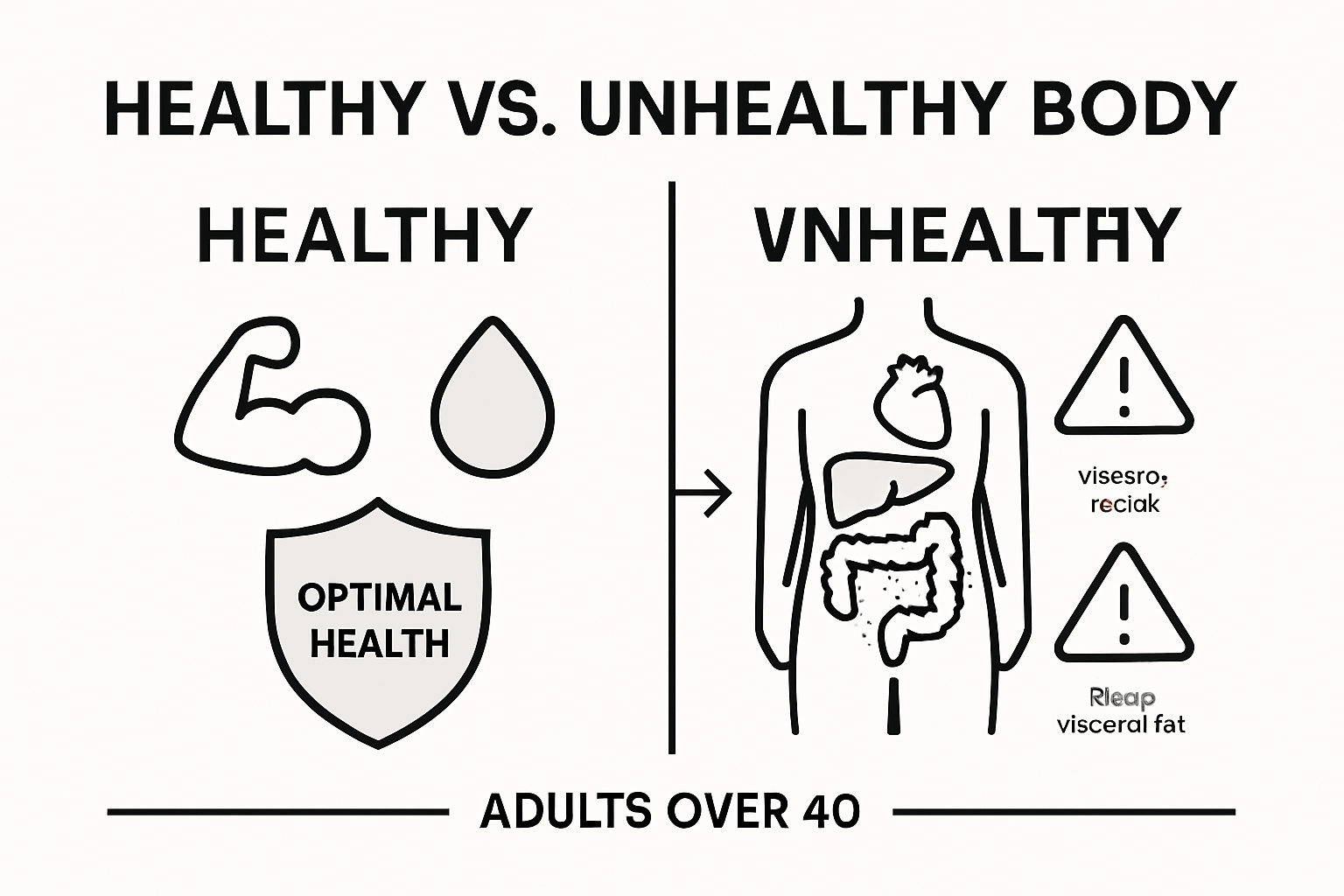
Metabolic risks extend far beyond simple weight concerns. Mortality studies suggest that high body fat percentages can significantly increase health risks, even when traditional body mass measurements appear normal. This means individuals might be at risk without realizing it, highlighting the importance of comprehensive body composition understanding.
Conversely, too little body fat presents its own set of challenges. Insufficient fat can lead to critical health issues like anemia, compromised hormone production, and increased risk of osteoporosis. For adults navigating midlife, maintaining a nuanced approach to body composition becomes essential. Muscle mass changes further complicate this balance, making strategic health monitoring crucial.
Navigating these complex body fat dynamics requires more than simplistic diet approaches. It demands a holistic understanding of individual metabolic patterns, personalized nutritional strategies, and consistent health tracking. The goal isn’t achieving a universal standard, but discovering the optimal fat balance that supports your unique physiological needs and long-term wellness.
How to Support Healthy Body Fat Balance
Body composition strategies require a comprehensive approach that goes beyond simple dieting. Effective body fat management involves a carefully balanced combination of targeted exercise, nutrition, and lifestyle modifications. For adults over 40, this means creating a holistic plan that addresses the unique metabolic changes happening in our bodies.
Exercise plays a critical role in maintaining healthy body fat balance. Tracking body composition requires a strategic approach that combines both cardiovascular and strength training. Aim for at least 150 minutes of moderate-intensity cardio weekly, complemented by strength training that targets all major muscle groups at least twice a week. This combination helps boost metabolism, build lean muscle mass, and support overall fat management.
Weight management tips extend beyond exercise to include nutrition and metabolic awareness. Focus on nutrient-dense foods that support hormonal balance and metabolic health. Incorporate lean proteins, complex carbohydrates, healthy fats, and plenty of vegetables. Equally important is maintaining consistent meal patterns and staying hydrated, which helps regulate metabolism and support overall body composition.
Understanding your unique body requires ongoing monitoring and adaptation. Regular health assessments, including body fat percentage measurements, waist circumference tracking, and muscle mass evaluations, provide crucial insights. The goal isn’t achieving a universal standard, but developing a personalized approach that supports your individual health needs and promotes long-term wellness.
Support Your Healthy Body Fat Balance After 40 with Targeted Wellness Solutions
Maintaining the right body fat balance is essential for hormonal health, metabolic function, and healthy aging especially after 40. If you want to support your unique body composition goals without guesswork, explore our curated range of Vitamins And Supplements example products designed to nourish your metabolism and promote fat management safely. These high-quality supplements complement balanced nutrition and exercise routines proven to help regulate hormones and support fat distribution.

Take control of your body fat health now with personalized wellness products created for adults seeking sustainable results. Visit Real Healthy Haven today and boost your journey toward optimal aging. Discover tools, expert advice, and effective supplements all tailored to your needs. Start your transformation with confidence and enjoy free shipping across Canada.
Frequently Asked Questions
What is healthy body fat, and why is it important?
Healthy body fat is the right proportion of fat that supports optimal physiological function, including hormone regulation, organ protection, and energy storage. It’s crucial for overall health, especially as we age.
What are the recommended body fat percentages for adults over 40?
For adults over 40, women generally need between 21-36% body fat, while men typically maintain healthy levels between 8-25%. These percentages support essential bodily functions and metabolic health.
How does body fat impact hormonal balance after 40?
Body fat produces essential hormones like leptin and adiponectin, which regulate metabolism and appetite. Changes in fat distribution and hormonal interactions after 40 can significantly influence health and well-being.
What strategies can help maintain healthy body fat after 40?
To maintain healthy body fat, focus on a balanced diet rich in nutrient-dense foods, regular physical activity that includes both aerobic and strength training, and consistent health monitoring to adapt to your body’s changing needs.
Recommended
- Complete Guide to Healthy Weight Loss After 40 – Real Healthy Haven
- Complete Guide to Strength After 40: Expert Strategies – Real Healthy Haven
- Why Muscle Mass Decreases: Complete Guide for Adults 40+ – Real Healthy Haven
- 7 Essential Weight Management Tips 2025 for Adults 40+ – Real Healthy Haven
- Wechseljahre und Ernährung: Gesund durch den Wandel
- 7 Essential Weight Loss Tips for Longevity-Minded Adults
Leave a comment