

Why Muscle Mass Decreases: Complete Guide for Adults 40+

Over 30 million american adults experience muscle loss as they move past their 40th birthday, facing challenges that go far beyond simple strength decline. Muscle mass holds the key to mobility, energy, and independence. Understanding why this decrease happens—and what drives it—empowers you to take thoughtful action for your future health as you age. This article breaks down the science behind muscle loss and highlights what every american should know to remain strong and active for years to come.
Table of Contents
- What Causes Muscle Mass Decrease After 40
- Types Of Muscle Loss And Their Distinctions
- How Aging, Hormones, And Lifestyle Impact Muscle
- Key Risks And Health Implications Of Muscle Loss
- Prevention Strategies And Safe Interventions
Key Takeaways
| Point | Details |
|---|---|
| Muscle Mass Decline | Muscle mass begins to decline at approximately 0.5% per year after age 40, leading to significant loss by age 80. |
| Hormonal Impact | Decreased levels of testosterone and estrogen affect muscle protein synthesis and maintenance, especially after 35. |
| Active Prevention | Regular resistance training and adequate protein intake are crucial for mitigating muscle loss and maintaining functional independence. |
| Health Risks | Muscle loss increases the risk of falls, hospitalization, and may compromise overall health and longevity. |
What Causes Muscle Mass Decrease After 40
Muscle mass decline is a natural biological process that accelerates as we age, presenting significant challenges for adults over 40. According to Statistics Canada, bone and muscle mass decrease by approximately 0.5% per year after age 40, with individuals potentially losing nearly 50% of their muscle mass by age 80. This phenomenon, known as sarcopenia, is not just an inevitable consequence of aging but a complex interplay of multiple physiological factors.
Hormonal changes play a critical role in muscle mass reduction. As men and women enter their 40s, testosterone and estrogen levels begin to decline, which directly impacts muscle protein synthesis and maintenance. Harvard Health indicates that age-related muscle loss can begin around age 35, occurring at a rate of 1-2% per year and potentially accelerating to 3% after age 60. These hormonal shifts compromise the body’s ability to efficiently build and repair muscle tissue.
Multiple interconnected factors contribute to muscle mass decrease. Key elements include:
- Decreased Physical Activity: Reduced exercise and sedentary lifestyles accelerate muscle loss
- Nutrition Deficiencies: Inadequate protein intake and reduced nutrient absorption
- Metabolic Slowdown: Lower metabolic rates reduce muscle protein production
- Inflammation: Chronic low-grade inflammation associated with aging
- Nerve Function: Reduced nerve signaling to muscle fibers
Understanding these mechanisms is crucial for developing strategies to mitigate muscle mass decline. By recognizing the underlying causes, adults can take proactive steps to maintain strength and mobility.
 For a comprehensive approach to maintaining strength, check out our strength after 40 guide.
Types of Muscle Loss and Their Distinctions
Muscle loss is not a uniform condition, but rather a complex phenomenon with distinct variations that impact adults differently. Wikipedia defines sarcopenia as the degenerative loss of skeletal muscle mass, quality, and strength primarily associated with aging or prolonged immobility. This condition stands apart from other muscle-wasting processes due to its specific characteristics and progressive nature.
Three primary types of muscle loss are critical to understand for adults over 40:
- Sarcopenia: Age-related muscle decline characterized by gradual strength reduction
- Cachexia: Muscle degradation linked to chronic diseases and inflammatory processes
- Atrophy: Muscle loss resulting from prolonged inactivity or medical conditions
Canadian Frailty Network highlights that sarcopenia specifically refers to muscle mass and function reduction associated with aging, which significantly increases risks of falls and functional dependence. Unlike other muscle loss types, sarcopenia is intrinsically tied to the natural aging process and cannot be completely prevented, though its progression can be mitigated.
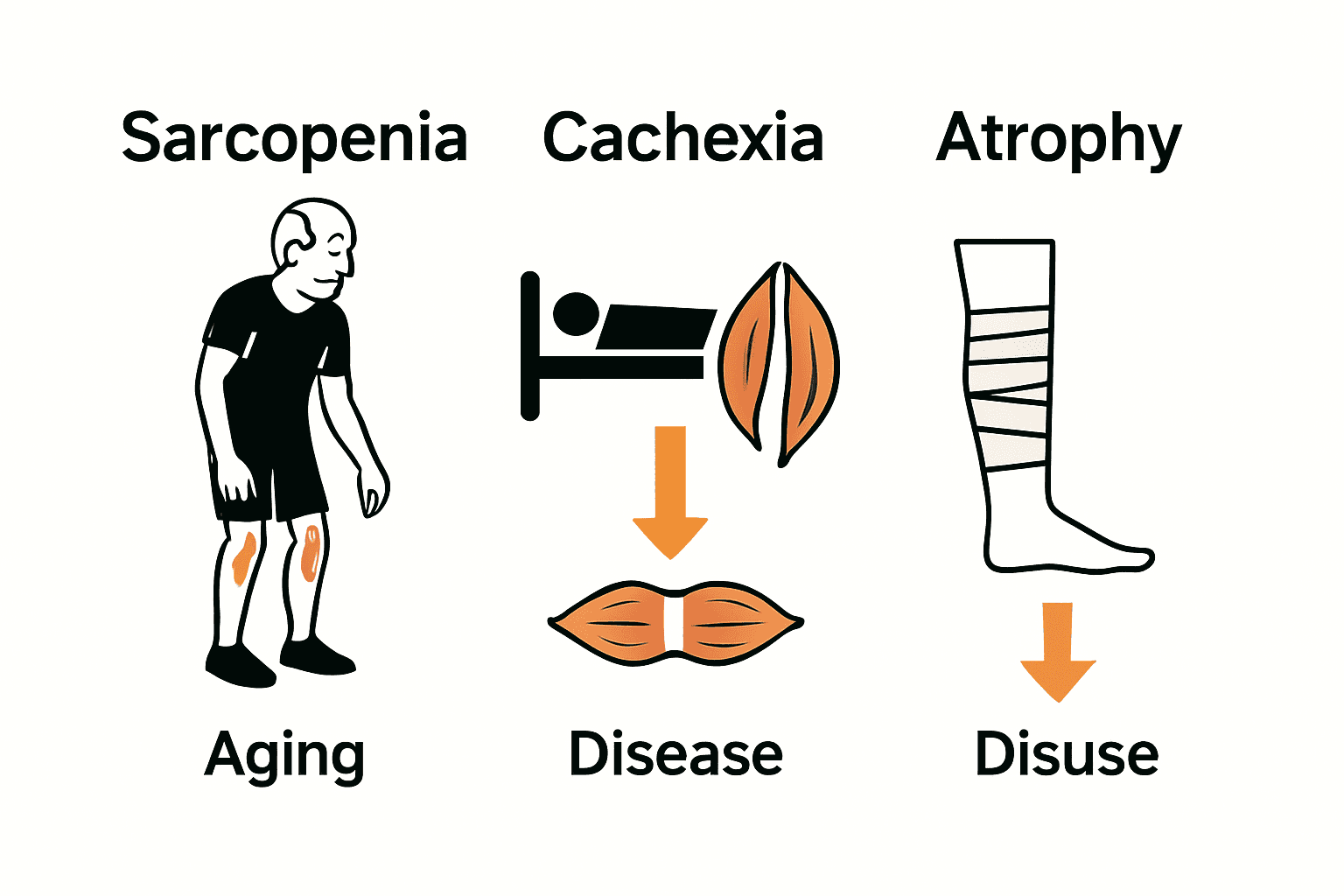
Understanding these distinctions is crucial for developing targeted intervention strategies.
While each type of muscle loss presents unique challenges, they all share a common thread: the potential to dramatically impact quality of life. For comprehensive strategies to combat muscle loss, explore our workout routine for adults 40+ which provides tailored approaches for maintaining muscle health.
How Aging, Hormones, and Lifestyle Impact Muscle
Muscle health is a complex interplay of biological and lifestyle factors that become increasingly challenging as we age. Scientific American highlights that aging triggers significant hormonal changes, particularly a decrease in testosterone, which directly impacts muscle protein production. These physiological shifts create a perfect storm of challenges for maintaining muscle mass and strength in midlife and beyond.
The interconnected nature of aging and muscle loss reveals multiple critical mechanisms. Cleveland Clinic explains that sarcopenia involves a gradual decline in muscle mass and strength, significantly impacting daily activities and overall quality of life. The primary contributors to this decline include:
- Hormonal Disruptions: Reduced testosterone and growth hormone production
- Metabolic Changes: Slower protein synthesis and cellular repair
- Reduced Physical Activity: Decreased muscle engagement and stimulation
- Nutritional Deficiencies: Inadequate protein and micronutrient intake
- Inflammatory Processes: Increased systemic inflammation with aging
Understanding these interconnected factors empowers adults to take proactive steps in muscle preservation. While some muscle loss is inevitable, strategic interventions can significantly slow the progression. For comprehensive insights into maintaining mobility and strength, explore our guide on the role of mobility in aging, which provides actionable strategies for supporting muscle health throughout midlife and beyond.
Key Risks and Health Implications of Muscle Loss
Muscle loss is far more than a cosmetic concern. PubMed research reveals that declining muscle mass and strength significantly impact physical performance and psychological well-being, creating a complex web of health challenges for adults over 40. The erosion of muscle tissue goes beyond simple strength reduction, touching every aspect of daily functioning and independence.
The health risks associated with muscle loss are profound and multifaceted. Canadian Frailty Network highlights several critical implications that extend far beyond basic mobility:
- Increased Fall Risk: Higher probability of dangerous accidents
- Reduced Functional Independence: Decreased ability to perform daily tasks
- Higher Hospitalization Rates: Longer medical recovery periods
- Accelerated Mortality Risk: Potential reduction in life expectancy
- Compromised Metabolic Health: Decreased insulin sensitivity and metabolism
Understanding these risks transforms muscle preservation from optional to essential. Proactive strategies become crucial in mitigating these potential health challenges. For comprehensive insights into maintaining your physical resilience, explore our guide to recovering from workouts naturally, which offers targeted strategies for supporting muscle health and overall wellness.
Prevention Strategies and Safe Interventions
Muscle preservation requires a strategic, multifaceted approach tailored specifically for adults over 40. Scientific American emphasizes that regular physical activity, particularly resistance training, can effectively counteract age-related muscle loss. Understanding that prevention is both possible and crucial becomes the foundation for maintaining strength and functional independence.
Harvard Health recommends a comprehensive strategy focusing on targeted interventions:
- Resistance Training: Strength exercises 2-3 times weekly
- Protein-Rich Nutrition: Consuming 1-1.2 grams of protein per kilogram of body weight
- Progressive Overload: Gradually increasing exercise intensity
- Recovery Strategies: Adequate rest and proper muscle recovery techniques
- Hormone Balance: Regular health screenings to monitor hormonal health
Success in muscle preservation demands a holistic approach that combines targeted exercise, nutritional support, and consistent monitoring. While individual strategies matter, their combined implementation creates a powerful defense against age-related muscle decline. For practical guidance on supporting your fitness journey, explore our midlife nutrition guide for Canadians, which offers comprehensive insights into maintaining optimal health after 40.
Stay Strong and Fight Muscle Loss After 40 with Proven Solutions
Losing muscle mass after 40 is a real challenge that affects strength, independence, and overall quality of life. The decline known as sarcopenia can feel overwhelming but it does not have to define your future. You can take control today with effective tools designed to support muscle maintenance, proper nutrition, and safe exercise routines specifically made for adults over 40.

Take the first step toward preserving your muscle health by exploring our carefully selected range of fitness equipment, nutritional supplements, and wellness products at Real Healthy Haven. Combine these with our expert-backed workout routines for adults 40 plus and guidance on strength after 40 for a complete approach to combating muscle loss. Don’t wait to safeguard your mobility and independence. Visit Real Healthy Haven now and start your journey toward stronger muscles and healthier aging.
Frequently Asked Questions
What causes muscle mass decrease after age 40?
Muscle mass decrease after age 40 is primarily caused by hormonal changes, decreased physical activity, nutritional deficiencies, metabolic slowdown, chronic inflammation, and reduced nerve function to muscle fibers.
What are the different types of muscle loss related to aging?
The three primary types of muscle loss include sarcopenia, which is age-related muscle decline; cachexia, which is muscle degradation linked to chronic diseases; and atrophy, which occurs from prolonged inactivity or certain medical conditions.
How can I prevent muscle loss as I age?
Preventing muscle loss involves engaging in regular resistance training, consuming a protein-rich diet, ensuring adequate recovery, progressively increasing exercise intensity, and monitoring hormonal health through regular check-ups.
What are the health risks associated with muscle loss after age 40?
The health risks of muscle loss include increased risk of falls, reduced functional independence, higher hospitalization rates, accelerated mortality risk, and compromised metabolic health, which can lead to further health complications.
Recommended
- Complete Guide to Strength After 40: Expert Strategies – Real Healthy Haven
- Complete Guide to Healthy Weight Loss After 40 – Real Healthy Haven
- How to Recover from Workouts 40+ Naturally: Step-by-Step Guide – Real Healthy Haven
- Workout Routine for Adults 40+: Build Strength and Mobility – Real Healthy Haven
- Why Metabolic Rate Declines with Age? - LeanAndFit
- What is Muscle Hypertrophy? Understanding Its Importance – MyGymSupplements
Leave a comment