

Complete Guide to Strength After 40: Expert Strategies

Over 40 percent of adults notice strength and muscle changes by midlife, often before they expect it. Staying strong after 40 is about more than lifting heavy weights. It means adjusting to real shifts in muscle health, recovery, and metabolism. With the right knowledge, you can challenge age-related declines, support your body’s resilience, and keep up with everything life throws at you. Learn how to redefine strength for this new chapter and build a foundation for lifelong vitality.
Table of Contents
- Defining Strength After 40 and Core Principles
- Age-Related Muscle Changes and Challenges
- Effective Training Methods for Adults Over 40
- Essential Nutrition and Supplement Strategies
- Injury Prevention and Recovery Techniques
- Choosing Strength Products for Canadian Adults
Key Takeaways
| Point | Details |
|---|---|
| Holistic Strength Definition | Strength after 40 involves functional fitness, injury prevention, and metabolic health, not just muscle mass. |
| Nutritional Importance | Increased protein intake and nutrient optimization are crucial for maintaining muscle health and metabolic resilience. |
| Strategic Training Approach | Focus on resistance training with longer recovery times, proper form, and mobility work to counteract age-related declines. |
| Injury Prevention | Adopt comprehensive recovery techniques and adaptive training strategies to maintain fitness while preventing injuries. |
Defining Strength After 40 and Core Principles
Strength at 40 isn’t just about muscle mass—it’s a comprehensive approach to physical and metabolic resilience. According to research from PubMed, age-related changes significantly impact muscle architecture and metabolism, making strategic fitness more critical than ever.
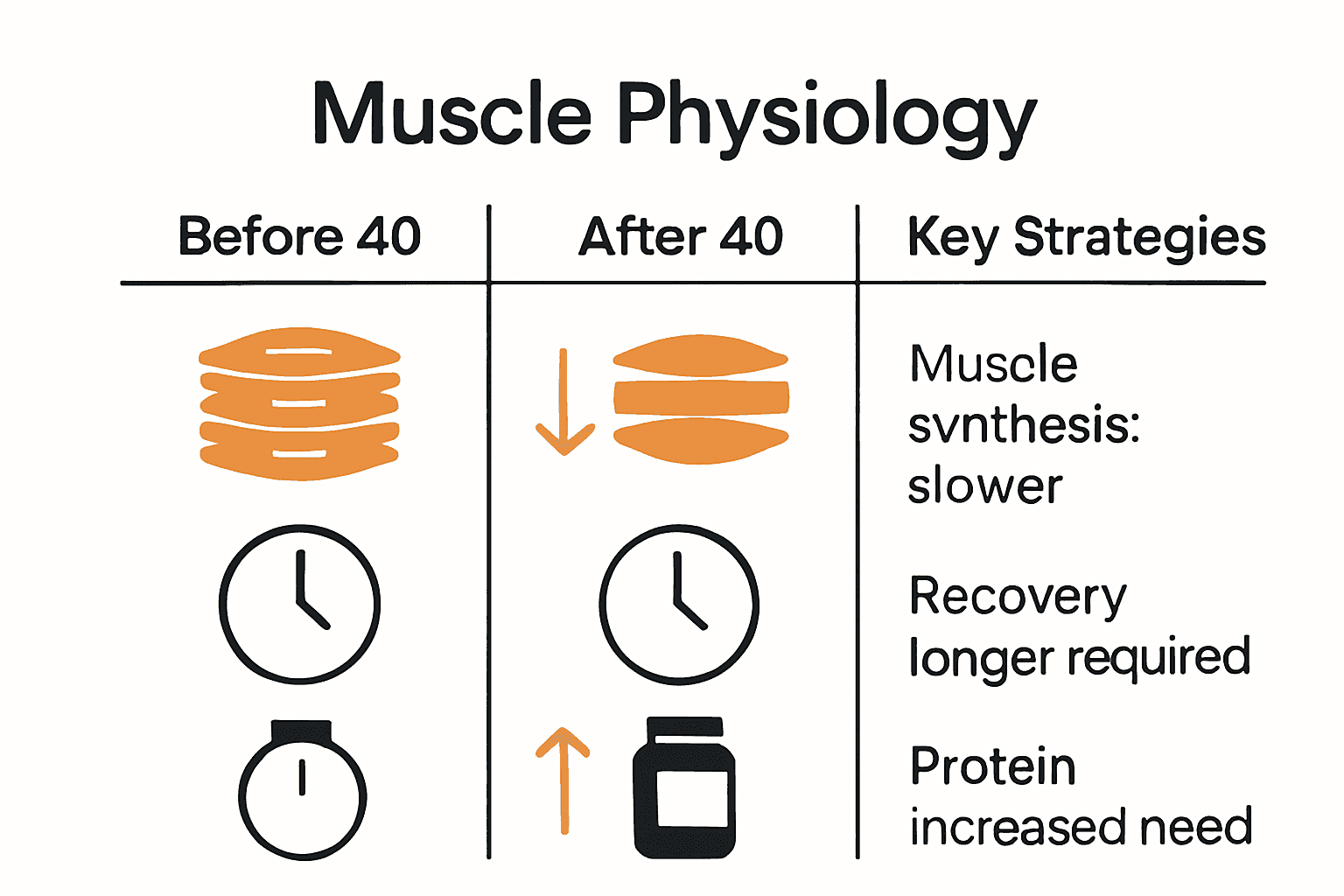
Muscle Physiology Shifts occur naturally after 40, requiring a nuanced understanding of how our bodies adapt. Key changes include:
- Decreased muscle fiber recruitment
- Slower muscle protein synthesis
- Reduced metabolic efficiency
- Increased recovery time between intense workouts
Physical inactivity amplifies these natural declines, making consistent, intentional movement paramount. A groundbreaking study examining skeletal muscle fibers reveals that excitation-contraction coupling becomes less efficient with age, directly impacting strength potential PubMed.
Strength after 40 transcends traditional weightlifting. It encompasses functional fitness, mobility, injury prevention, and metabolic health. Integrating core strengthening techniques becomes crucial for maintaining overall physical capability and preventing age-related functional decline.
Age-Related Muscle Changes and Challenges
As we age, our muscles undergo profound transformations that dramatically impact strength, mobility, and overall physical performance. According to research from PubMed, these changes are complex, involving microscopic and macroscopic shifts influenced by multiple factors including nutrition, hormonal levels, and physical activity.
Sarcopenia, the progressive loss of muscle mass and function, becomes a critical concern after 40. Key physiological changes include:
- Reduced muscle protein synthesis
- Decreased muscle fiber size and quantity
- Lower muscle tissue regeneration capacity
- Diminished muscle stem cell functionality
Nutritional and activity interventions emerge as powerful strategies to combat these natural declines. Research highlights that strategic approaches can significantly mitigate age-related muscle wasting PubMed. The goal isn’t just maintaining muscle mass, but preserving functional strength and metabolic resilience.
Addressing these challenges requires a holistic approach. Mobility-focused workout strategies become crucial in counteracting muscle degradation, ensuring adults over 40 can maintain independence, prevent injuries, and sustain an active lifestyle. Understanding these physiological shifts empowers individuals to make informed, proactive health decisions.
Effective Training Methods for Adults Over 40
Training after 40 requires a strategic, nuanced approach that acknowledges the body’s changing physiological capabilities. According to research from PubMed, physical activity serves as a powerful countermeasure against muscle aging, capable of attenuating age-related decreases in muscle mass, strength, and metabolic function.
Resistance Training Principles become crucial for maintaining muscular health. Key strategies include:
- Prioritize compound movements
- Incorporate longer recovery periods
- Focus on proper form over heavy weights
- Integrate flexibility and mobility work
Progressive resistance training emerges as a critical intervention. Research demonstrates that carefully structured exercise can slow primary aging processes in skeletal muscle PubMed. The objective shifts from pure muscle building to maintaining functional strength and preventing age-related decline.
To maximize training effectiveness, adults can follow targeted workout routines designed specifically for their age group. This approach ensures safe, sustainable progress while minimizing injury risk and supporting overall metabolic health.
Essential Nutrition and Supplement Strategies
Nutrition after 40 becomes a critical cornerstone of maintaining muscle health and overall metabolic function. According to research from PubMed, aging dramatically modifies skeletal muscle metabolism, making dietary interventions increasingly important for preserving strength and preventing age-related muscle wasting.
Nutritional Priorities for adults over 40 include targeted strategies to support muscle preservation:
- Increased protein intake (1.2-1.6g per kg of body weight)
- Higher quality protein sources
- Adequate micronutrient supplementation
- Anti-inflammatory food choices
- Balanced macronutrient distribution
The relationship between nutrition and muscle architecture is complex. Research reveals that physical inactivity significantly contributes to functional decline, underscoring the importance of strategic dietary approaches PubMed. Metabolic resilience becomes less about calorie restriction and more about nutrient optimization.
For comprehensive nutritional guidance tailored to midlife health, adults can explore detailed nutrition strategies designed specifically for individuals navigating physiological changes after 40.
 This approach ensures not just sustenance, but strategic support for long-term health and vitality.
Injury Prevention and Recovery Techniques
As adults age past 40, injury prevention becomes a critical component of maintaining long-term physical fitness and mobility. According to research from PubMed, microscopic and macroscopic muscle changes require a strategic approach to training that acknowledges the body’s evolving physiological capabilities.
Recovery Strategies for adults over 40 should focus on comprehensive protection and regeneration:
- Extended warm-up and cool-down periods
- Increased attention to flexibility and mobility
- Strategic rest intervals between intense workouts
- Emphasis on proper form and technique
- Adaptive resistance training approaches
Hormonal and metabolic shifts significantly impact muscle recovery potential. Research highlights that physical activity and targeted nutritional interventions can effectively combat age-related muscle wasting PubMed. Proactive management becomes crucial in maintaining muscle resilience and preventing potential injuries.
Recovering from workouts naturally requires a holistic understanding of the body’s changing needs. By implementing thoughtful, age-appropriate recovery techniques, adults can sustain their fitness journey while minimizing the risk of strain or long-term damage.
Choosing Strength Products for Canadian Adults
Selecting appropriate strength products after 40 requires a nuanced understanding of changing physiological needs. According to research from PubMed, aging fundamentally modifies skeletal muscle metabolism, making product selection more complex than simply choosing the heaviest or most intense option.
Product Selection Criteria for adults over 40 should prioritize adaptability and targeted support:
- Low-impact resistance equipment
- Adjustable weight training tools
- Ergonomic design considerations
- Recovery-focused accessories
- Supportive mobility enhancement products
Metabolic changes significantly influence how adults should approach strength training equipment. Research highlights that physical inactivity contributes substantially to functional decline, emphasizing the need for carefully selected products PubMed. Functional adaptability becomes more important than raw performance metrics.
Exploring comprehensive mobility device guides can help Canadian adults make informed decisions about strength training equipment. The goal is finding products that support sustainable, safe, and effective fitness journeys tailored to midlife physiological requirements.
Take Control of Your Strength Journey After 40
Navigating the challenges of muscle loss, slower recovery, and changing metabolism can feel overwhelming. But you do not have to face these obstacles alone. This article highlights the vital need for proper nutrition, functional fitness, and injury prevention to maintain strength and vitality. At Real Healthy Haven, we understand that adults over 40 need specially curated products designed to support these goals. Explore our carefully selected Vitamins And Supplements example products tailored to optimize muscle health and metabolic resilience.

Ready to empower your health and fitness routine with trusted tools made for your unique needs? Visit Real Healthy Haven now to find reliable exercise equipment, wellness supplements, and recovery aids crafted specifically for Canadian adults 40 and over. Take the next step toward lasting strength and a healthier you today!
Frequently Asked Questions
What are the key changes in muscle physiology after 40?
Muscle physiology after 40 involves decreased muscle fiber recruitment, slower muscle protein synthesis, reduced metabolic efficiency, and increased recovery time between workouts. Understanding these changes is crucial for effective strength training.
How can I maintain functional strength as I age?
Maintaining functional strength after 40 requires prioritizing resistance training, focusing on compound movements, incorporating flexibility and mobility work, and ensuring longer recovery periods to accommodate the body’s changes.
What nutritional strategies should I follow to support muscle health after 40?
To support muscle health, adults over 40 should increase protein intake to 1.2-1.6g per kg of body weight, choose high-quality protein sources, ensure adequate micronutrient intake, and adopt anti-inflammatory foods to optimize nutrient absorption and muscle architecture.
What are effective injury prevention strategies for adults over 40?
Effective injury prevention strategies include extended warm-up and cool-down periods, focusing on flexibility and mobility, allowing strategic rest intervals between workouts, and maintaining proper form during exercises to reduce the risk of injury.
Recommended
- Workout Routine for Adults 40+: Build Strength and Mobility – Real Healthy Haven
- How to Prevent Injury Working Out for Adults Over 40 – Real Healthy Haven
- How to Recover from Workouts 40+ Naturally: Step-by-Step Guide – Real Healthy Haven
- Role of Healthy Routines: Complete Guide for Adults 40+ – Real Healthy Haven
Leave a comment