

How to Prevent Injury Working Out for Adults Over 40

Over 35 percent of adults over 40 experience exercise-related injuries each year, often because they skip key steps in their fitness routines. As the body changes with age, choosing the right approach to working out becomes more important than ever. Knowing how to stay safe lets you build strength and keep moving without setbacks. This guide breaks down practical steps so you can start or refresh your fitness journey with confidence and peace of mind.
Table of Contents
- Step 1: Assess Your Physical Condition Before Starting
- Step 2: Choose Age-Appropriate Workout Equipment
- Step 3: Warm Up Thoroughly and Stretch Safely
- Step 4: Monitor Your Form and Intensity Throughout
- Step 5: Review Your Progress and Adjust for Safety
Quick Summary
| Key Point | Explanation |
|---|---|
| 1. Assess your physical condition first | Use the PAR-Q to screen for health risks before beginning any exercise program to avoid injuries. |
| 2. Choose age-appropriate equipment | Select low-impact tools like resistance bands and stability balls to ensure a safe and effective workout routine. |
| 3. Warm up and stretch properly | Engage in light aerobic activity followed by gentle static stretches to prepare muscles and avoid strains. |
| 4. Monitor exercise form and intensity | Use the perceived exertion scale to track effort and ensure workouts remain safe and effective. |
| 5. Review and adjust your progress regularly | Conduct fitness evaluations every 6-8 weeks to track progress and make necessary adjustments with professional guidance. |
Step 1: Assess your physical condition before starting
Before jumping into any workout routine, understanding your current physical condition is crucial for preventing potential injuries. Purdue University Extension recommends a comprehensive evaluation that goes beyond just feeling “okay” to exercise.
Start by completing the Physical Activity Readiness Questionnaire (PAR-Q), which helps identify potential health risks before beginning an exercise program. This screening tool asks critical questions about heart conditions, chest pain, balance issues, and other medical concerns that might require professional medical consultation. Mayo Clinic suggests additional self assessment methods including measuring your resting heart rate, checking muscular strength through basic push up tests, and assessing flexibility.
If you have any pre existing health conditions or haven’t exercised regularly in the past few years, scheduling a consultation with your healthcare provider is highly recommended. They can provide personalized guidance based on your unique health profile and help you design a safe workout plan tailored to your specific needs. A professional medical assessment can reveal any underlying conditions that might impact your exercise routine and help you prevent potential injuries before they occur.
For those ready to proceed, Workout Routine for Adults 40+ can provide additional insights into age appropriate exercise strategies.
Step 2: Choose age-appropriate workout equipment
Selecting the right workout equipment is crucial for adults over 40 to prevent injury and maintain an effective fitness routine. Medical News highlights that not all exercise equipment is created equal when it comes to mature fitness enthusiasts.
American Academy of Physical Medicine and Rehabilitation recommends starting with a functional assessment to guide your equipment choices. Focus on low impact tools that support strength and flexibility without excessive strain. Excellent options include resistance bands lightweight dumbbells stability balls and recumbent bikes which provide cardiovascular benefits while minimizing joint stress. These tools allow you to build strength progressively and safely.
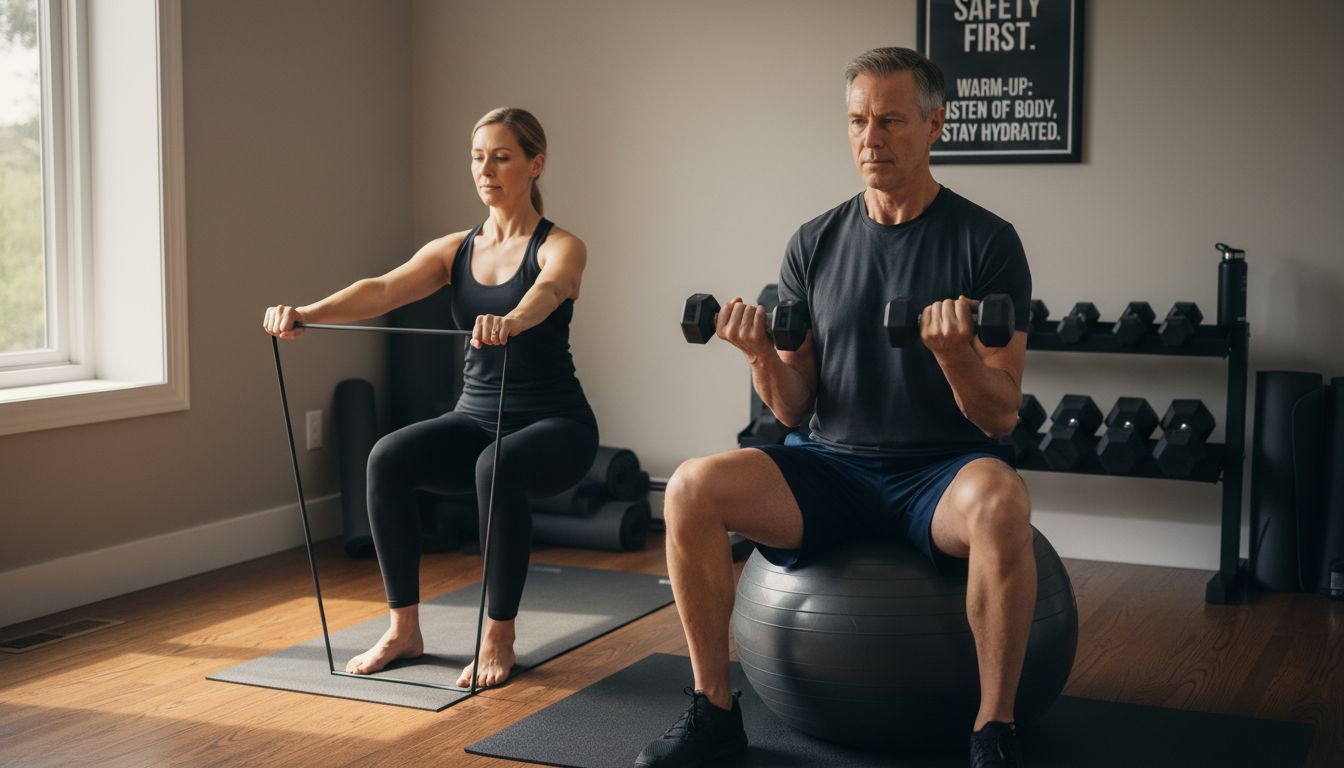
Pay special attention to equipment that supports balance and core strength. Adjustable weight machines with lower resistance settings stability balls and padded exercise mats can help you develop muscle strength without risking overexertion. Remember to start with lighter weights and gradually increase resistance as your strength improves.
For more detailed guidance on maintaining mobility as you age, check out our Complete Guide to Mobility Devices which offers comprehensive insights into selecting the right fitness tools for your body.
Step 3: Warm up thoroughly and stretch safely
Warming up and stretching are critical components of any workout routine, especially for adults over 40 who want to prevent injuries and maximize their exercise potential. American Academy of Family Physicians emphasizes the importance of a comprehensive warm up routine that prepares your body for physical activity.
Purdue Extension recommends starting with 5 to 10 minutes of light aerobic activity like brisk walking or gentle cycling to gradually increase your heart rate and blood flow. This approach helps warm up your muscles and joints, reducing the risk of strains or pulls. Follow your light cardio with gentle static stretching focusing on major muscle groups such as your legs, back, shoulders, and arms. Hold each stretch for 15 to 30 seconds without bouncing, and breathe deeply to help your muscles relax and become more flexible.
Pay close attention to your body during stretching. If you feel pain or significant discomfort, ease off the stretch immediately. Your goal is to create gentle tension, not to push yourself to the point of pain. Start with less intense stretches and gradually increase your flexibility over time. For additional insights on maintaining mobility as you age, explore our Why Mobility Exercises guide to learn more about safe and effective stretching techniques.
Step 4: Monitor your form and intensity throughout
Maintaining proper form and managing exercise intensity are crucial for preventing injuries and maximizing your workout effectiveness, especially as you age. American Academy of Family Physicians recommends using the Borg Rating of Perceived Exertion scale to help you track how hard your body is working during exercise.
American Academy of Physical Medicine and Rehabilitation emphasizes the importance of regular self assessment during your workout. Pay attention to your body signals and aim to exercise at a level where you can still carry on a conversation but feel slightly challenged. This means avoiding exercises that cause sharp pain or extreme fatigue. Use a perceived exertion scale from 1 to 10 where 1 is sitting still and 10 is maximum effort. Aim to stay around 4 to 6 during your workout providing enough challenge without overwhelming your system.
Consider working with a fitness professional who understands the unique needs of adults over 40. They can help you develop proper technique and provide real time feedback on your form. For additional guidance on maintaining safe and effective workout practices, check out our Complete Guide to Balance Training which offers insights into maintaining stability and proper movement patterns.
Step 5: Review your progress and adjust for safety
Regularly assessing your fitness journey is crucial for maintaining long term health and preventing potential injuries, especially as you age. Mayo Clinic recommends conducting periodic fitness evaluations to ensure your exercise routine continues to meet your changing physical needs.
American Academy of Family Physicians suggests scheduling comprehensive reviews every six to eight weeks. During these assessments, track key metrics like resting heart rate, muscle strength, flexibility, and overall endurance. Consider performing simple tests such as counting how many push ups you can complete, measuring your walking or cycling distance, and noting how you feel during and after workouts. These measurements help you understand your progress and identify any areas that might require modification.
Consult with your healthcare provider or a fitness professional who specializes in working with adults over 40. They can provide personalized insights into your fitness progression and help you make safe adjustments to your workout routine. For more detailed strategies on maintaining your fitness journey, explore our Body Composition Tracking Guide which offers comprehensive approaches to monitoring your health and fitness progress.
Stay Injury-Free and Strong After 40 with the Right Tools and Support
Working out safely after 40 demands more than just good intentions. This article highlights common challenges like preventing injuries, selecting age-appropriate equipment, and maintaining proper form and intensity. If you want to protect your joints, improve flexibility, and build strength without setbacks, you need fitness products and guidance tailored specifically to your stage of life. From low-impact workout gear to health monitors that track your progress, having the right support makes all the difference.

Take charge of your fitness journey today by exploring Real Healthy Haven where you will find specialized exercise equipment and wellness supplies designed for adults over 40 in Canada. Don’t wait until a small injury slows you down. Visit us now and discover how our curated products can help you warm up safely, monitor your health, and work out confidently. Start building a healthier future one smart step at a time.
Frequently Asked Questions
How can I assess my physical condition before starting a workout?
To assess your physical condition, complete the Physical Activity Readiness Questionnaire (PAR-Q) which identifies any potential health risks. Additionally, consider measuring your resting heart rate and performing basic strength and flexibility tests to gauge your fitness level.
What age-appropriate workout equipment should I choose to prevent injury?
Select low-impact equipment such as resistance bands, lightweight dumbbells, and stability balls to minimize joint strain. Start with lighter weights and gradually increase resistance as you become stronger to ensure safety and enhance your workout.
How should I warm up and stretch safely before exercising?
Begin with 5 to 10 minutes of light aerobic activity, like brisk walking, followed by gentle static stretching of major muscle groups. Hold each stretch for 15 to 30 seconds without bouncing to prepare your muscles and prevent injuries.
What should I monitor during my workout to prevent injury?
Pay attention to your form and exercise intensity throughout your workout. Use the Borg Rating of Perceived Exertion scale and aim to maintain a level of 4 to 6, ensuring you feel slightly challenged but can still converse comfortably.
How often should I review my progress to adjust my workout plan?
Plan to review your fitness progress every six to eight weeks. During each assessment, track key metrics like resting heart rate, muscle strength, and overall endurance to make informed adjustments to your routine as needed.
What steps can I take if I experience discomfort during a workout?
If you feel pain or significant discomfort, stop the exercise immediately and assess your body’s signals. Begin with less intense exercises and gradually build your strength and flexibility to avoid injury.
Leave a comment