

Body Composition Tracking Guide for Healthy Aging

Nearly 60 percent of adults admit they are unsure how to track changes in their body composition with confidence. Reliable self-assessment is the backbone of any lasting health journey, yet most people struggle with gathering accurate data or sticking to a consistent routine. Understanding how to measure, track, and interpret your progress can transform vague goals into real results. With the right approach and a few essential tools, it is possible to get clear insights that support smarter decisions about your wellness.
Table of Contents
- Step 1: Assess Your Readiness And Gather Essential Tools
- Step 2: Set Up A Consistent Body Composition Tracking Routine
- Step 3: Record Your Initial Body Measurements Accurately
- Step 4: Interpret Your Tracking Data For Actionable Insights
- Step 5: Verify Progress And Adjust Your Wellness Strategies
Quick Summary
| Key Point | Explanation |
|---|---|
| 1. Schedule consistent assessments | Conduct body composition measurements at the same time each month for accurate comparisons. |
| 2. Use standardized tools and methods | Ensure identical measurement equipment and conditions to improve data reliability and precision. |
| 3. Focus on trends over time | Observe gradual changes in body composition instead of fixating on individual measurement fluctuations. |
| 4. Record initial measurements accurately | Capture precise baseline data to effectively track progress throughout your health journey. |
| 5. Verify progress and adjust strategies | Regularly evaluate your metrics and adjust your fitness and nutrition plans based on your body’s responses. |
Step 1: Assess your readiness and gather essential tools
Tracker preparation begins with understanding your current health status and collecting the right measurement tools. According to research from Cambridge.org, standardized pre assessment procedures significantly enhance measurement accuracy.
Start by scheduling your body composition assessment during a consistent time of day when your body is in a similar metabolic state. Morning measurements after using the bathroom and before eating provide the most reliable baseline. You will want to gather these tools before beginning:
- Digital body composition scale
- Measuring tape
- Comfortable lightweight clothing
- Notebook or digital tracking app
- Body fat calipers (optional)
As recommended by Psychreg.org, consider consulting with a health professional who can guide you through different assessment methods like DEXA scans or InBody analyses. These professional evaluations can provide deeper insights into your body composition beyond basic home measurements.
The next step involves creating a consistent tracking protocol that you can repeat every 4 to 6 weeks. Preparation and consistency are your greatest allies in understanding your body composition journey.
Step 2: Set up a consistent body composition tracking routine
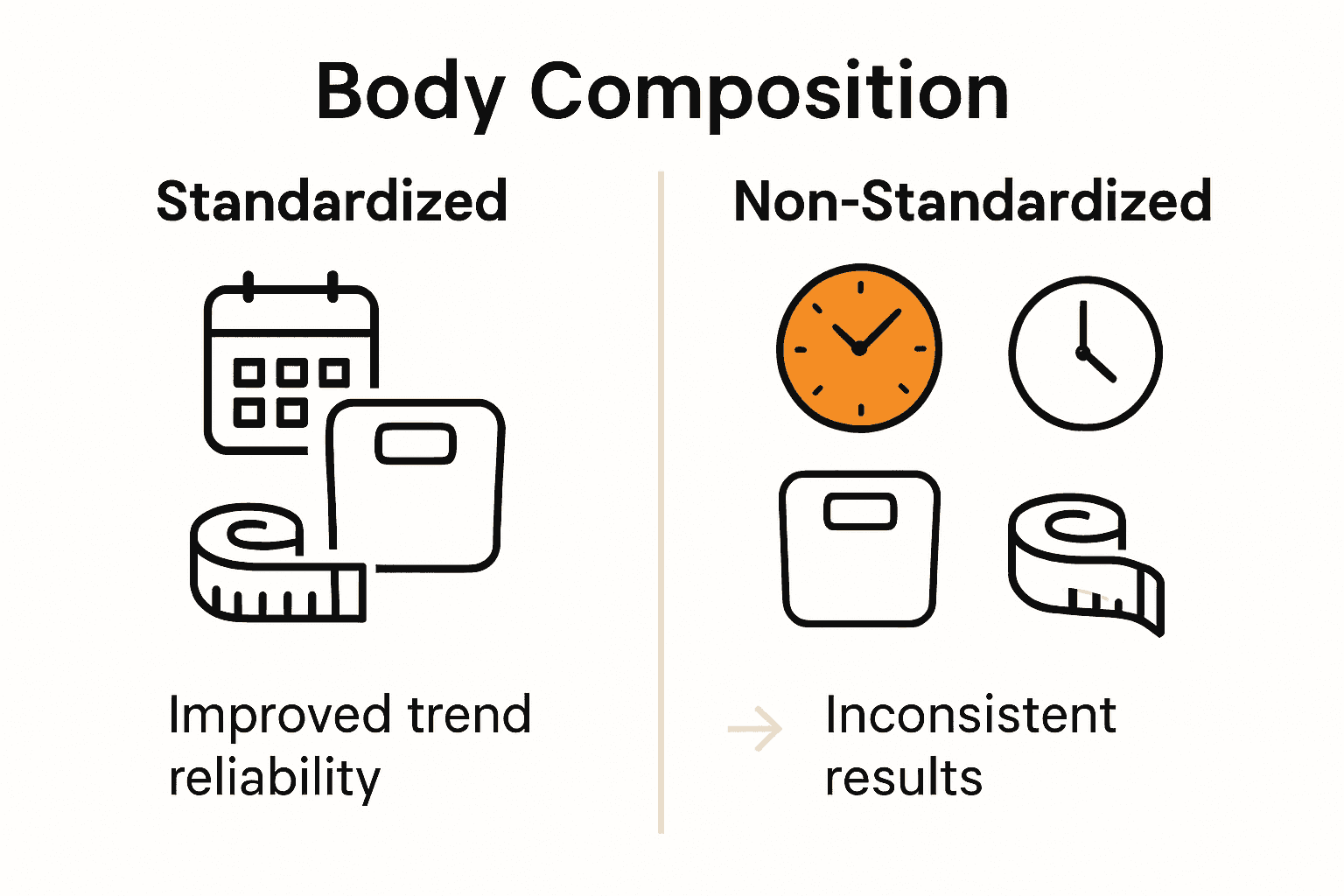
Establishing a reliable tracking routine is critical for understanding your body composition changes over time. Cambridge.org research emphasizes that standardized measurement conditions are fundamental to obtaining accurate and meaningful data.
Create a structured tracking schedule that includes precise measurements at consistent intervals. Select a specific day and time each month for your assessments preferably in the morning after using the bathroom and before eating. This approach helps minimize variables that could skew your results. Your tracking routine should incorporate these key elements:
- Select a fixed date and time for monthly measurements
- Use the same scale and measurement tools each time
- Wear similar lightweight clothing during each assessment
- Record measurements in a dedicated tracking journal or digital app
- Take multiple measurements to ensure accuracy
As recommended by Psychreg.org, consider periodic professional assessments like DEXA scans to complement your home tracking. These professional evaluations can provide deeper insights and validate your personal tracking efforts.
If you struggle with consistency, try setting calendar reminders or linking your tracking to another regular monthly activity.
By making body composition tracking a predictable routine, you transform it from a sporadic task into a reliable health monitoring strategy. Learn more about creating effective wellness routines for adults 40+ to support your health journey.
Step 3: Record your initial body measurements accurately
Capturing precise initial body measurements sets the foundation for tracking your health and fitness progress. According to Cambridge.org, standardized measurement conditions are crucial for obtaining accurate and meaningful body composition data.
To record your measurements effectively, prepare a consistent and systematic approach. You will need a flexible measuring tape, digital body composition scale, and a notebook or tracking app. Start by measuring these key areas:
- Body weight (first thing in the morning)
- Waist circumference (at the narrowest point)
- Hip circumference (at the widest point)
- Chest circumference (for men and women)
- Thigh circumference
- Upper arm circumference
Psychreg.org recommends complementing home measurements with professional assessments like DEXA scans for more comprehensive insights. Pro tip: Always measure in the same location wearing minimal clothing to ensure consistency.

Take multiple measurements and record the average to minimize potential errors. Documenting these baseline metrics will help you track your body composition changes with precision and confidence. Learn more about wellness routines for adults 40+ to support your health monitoring journey.
Step 4: Interpret your tracking data for actionable insights
Understanding your body composition data is more than just reading numbers it is about uncovering meaningful insights into your health journey. Cambridge.org research emphasizes the critical importance of recognizing measurement variability when analyzing your results.
To effectively interpret your tracking data, focus on these key areas:
- Track trends rather than individual measurements
- Look for gradual changes over multiple months
- Compare measurements taken under consistent conditions
- Pay attention to body fat percentage more than weight alone
- Note shifts in muscle mass and lean body composition
Psychreg.org suggests that comprehensive interpretation involves understanding the nuanced relationship between different body composition metrics. A small weight fluctuation might represent muscle gain rather than fat increase which is why context matters.
Remember that body composition is a journey not a destination. Small consistent changes indicate progress. When you notice significant shifts consider consulting a healthcare professional to discuss your results and potential lifestyle adjustments. Learn more about creating wellness goals for healthy aging to support your ongoing health transformation.
Step 5: Verify progress and adjust your wellness strategies
Tracking your body composition is an ongoing process that requires thoughtful reflection and strategic adjustments. Cambridge.org research underscores the importance of regular assessments to monitor progress and adapt your wellness approach effectively.
When verifying your progress, consider these key evaluation strategies:
- Compare your current measurements to your baseline data
- Identify positive and challenging trends in your body composition
- Assess whether your current fitness and nutrition strategies are working
- Recognize patterns that indicate successful or stalled progress
- Determine specific areas needing targeted intervention
Psychreg.org suggests that comprehensive progress verification involves more than just numerical changes. Look beyond weight and explore shifts in muscle mass, metabolic health, and overall functional fitness.
If you notice limited progress or plateaus, it might be time to consult a fitness professional or nutritionist who can provide personalized guidance. By staying flexible and responsive to your body’s signals, you can continuously refine your wellness plan. Explore top wellness goals for healthier living over 40 to help guide your strategic adjustments and maintain momentum.
Take Control of Your Healthy Aging Journey Today
Tracking your body composition effectively reveals the true story behind weight changes and helps you make informed wellness decisions. If you struggle to maintain consistency or want to enhance your tracking with quality tools and supplements that support muscle mass and metabolic health, we understand your challenge. This guide emphasizes the importance of accurate measurements, regular assessments, and actionable insights to improve your health as you age.

Explore our curated selection of Vitamins And Supplements example products designed specifically for adults 40 and over. Pair your tracking routine with trusted wellness aids available at Real Healthy Haven so you can confidently monitor progress and adjust your strategies. Start now to build a stronger, healthier future with easy access to helpful products and expert guidance.
Frequently Asked Questions
How do I assess my readiness for body composition tracking?
To assess your readiness, first evaluate your current health status and gather essential tools such as a digital body composition scale and measuring tape. Schedule your assessment consistently, ideally in the morning before eating or drinking for the most accurate baseline.
What measurements should I include in my body composition tracking routine?
Include key measurements like body weight, waist circumference, hip circumference, chest circumference, thigh circumference, and upper arm circumference. Record these metrics consistently to establish a reliable tracking baseline and identify changes over time.
How can I interpret the data from my body composition tracking?
Interpret your data by focusing on trends rather than single measurements, looking for gradual changes month over month. Pay attention to shifts in muscle mass and body fat percentage to gain a comprehensive understanding of your health journey.
What steps should I take if I notice limited progress in my body composition?
If your progress stagnates, compare your current measurements to your baseline and assess whether your fitness and nutrition strategies are effective. Adjust your approach as needed, possibly consulting a professional for personalized guidance to ensure you stay on track.
How often should I conduct my body composition assessments?
Conduct your body composition assessments every 4 to 6 weeks for the best results. This timeframe allows you to track meaningful changes while maintaining a consistent routine for accuracy.
Why is it important to have standardized conditions for body composition measurements?
Standardized conditions, such as measuring at the same time and under similar circumstances, are crucial for obtaining accurate and meaningful data. This consistency helps minimize variability, leading to more reliable insights into your health trends.
Recommended
- 7 Essential Weight Management Tips 2025 for Adults 40+ – Real Healthy Haven
- Workout Routine for Adults 40+: Build Strength and Mobility – Real Healthy Haven
- Midlife Nutrition Essentials: Complete Guide for Canadians – Real Healthy Haven
- 7 Proven Core Strengthening Tips for Healthy Aging Adults – Real Healthy Haven
Leave a comment