

Complete Guide to the Role of Balance Training

Over one in four adults over 65 experiences a fall each year according to the CDC. Balance training is gaining attention because it goes beyond building muscle and targets how your body stays steady during everyday tasks. Whether you want to avoid injuries as you age or increase your confidence in movement, learning about balance training reveals simple strategies that protect your health and keep you active.
Table of Contents
- What Is Balance Training and Why It Matters
- Types of Balance Exercises for Adults 40+
- How Balance Training Supports Healthy Aging
- Safety Tips and Common Mistakes to Avoid
- Integrating Balance Training Into Daily Life
Key Takeaways
| Point | Details |
|---|---|
| Importance of Balance Training | Essential for stability and control, it helps prevent falls and improves daily activity performance, especially in adults over 40. |
| Benefits Beyond Fall Prevention | Enhances muscle strength, joint flexibility, and coordination while boosting confidence in physical movements. |
| Recommended Exercises | Incorporate balance exercises like weight shifts, single-leg stands, and Tai Chi to improve stability and coordination. |
| Safety and Integration | Start with supportive structures and gradually increase difficulty; integrate balance training into daily life for consistent practice and added stability benefits. |
What Is Balance Training and Why It Matters
Balance training represents a specialized fitness approach focused on improving your body’s ability to maintain stability and control during movement. Unlike traditional strength training that targets muscle development, balance training concentrates on enhancing your neuromuscular coordination, proprioception, and core stability.
According to Heart.org, balance exercises are crucial for performing daily activities like walking and climbing stairs. They play a critical role in preventing falls, particularly for older adults and individuals recovering from injuries. The American Heart Association emphasizes that these exercises help improve overall stability and reduce the risk of unexpected accidents.
Mayo Clinic highlights that balance training offers multiple benefits beyond fall prevention:
- Increases confidence in physical movements
- Enhances overall body coordination
- Improves muscle strength and joint flexibility
- Supports better posture and body alignment
At its core, balance training challenges your body’s ability to maintain equilibrium by introducing controlled instability. This might involve exercises like single-leg stands, yoga poses, or specialized equipment training that requires constant micro-adjustments. By consistently practicing these techniques, you train your nervous system to respond more quickly and efficiently to changes in position and surface conditions.
For adults over 40, balance training becomes increasingly important. As we age, muscle mass naturally declines, and our reflexes slow down. Regular balance exercises can help counteract these age-related changes, supporting long-term mobility and independence. Check out our core strengthening tips for healthy aging to complement your balance training routine.
Types of Balance Exercises for Adults 40+
Balance training offers diverse exercise options tailored specifically for adults over 40, focusing on improving stability, coordination, and preventing age-related mobility challenges. These exercises range from simple stationary techniques to more complex movement-based practices that challenge your body’s equilibrium and neuromuscular control.
Mayo Clinic recommends several effective balance exercises designed for mature adults:
- Weight Shifts: Standing with feet hip-width apart and gradually transferring weight from one leg to another
- Single-Leg Stands: Holding a stable position on one leg to improve stability
- Tai Chi: A gentle martial art practice that enhances overall body coordination
- Heel-to-Toe Walking: Walking in a straight line by placing heel directly in front of the other foot’s toes
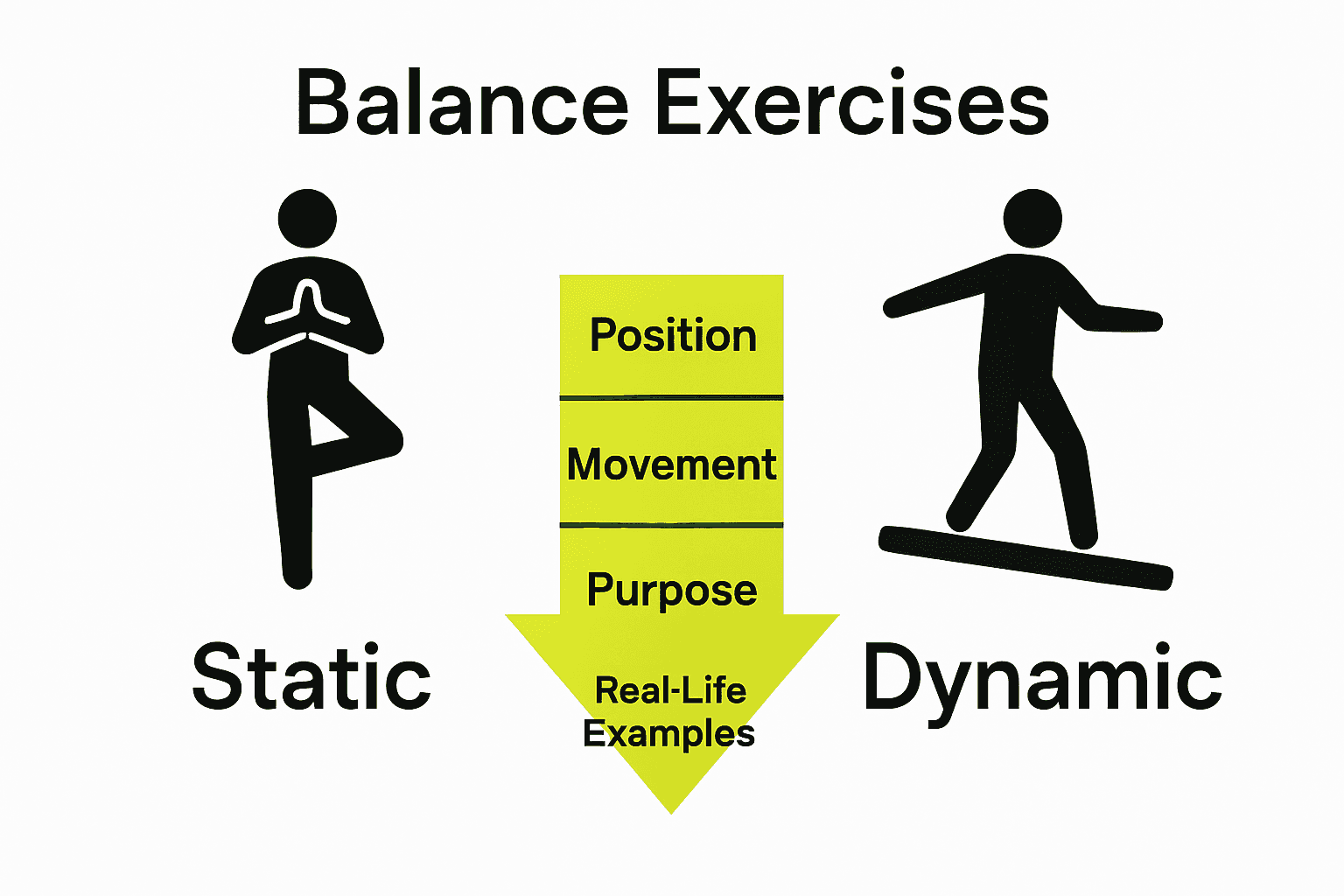
Static balance exercises focus on maintaining position without movement, while dynamic balance exercises involve controlled motion. Static exercises might include standing on one leg or performing yoga poses like tree pose, which require concentration and muscle engagement. Dynamic exercises incorporate movement patterns that simulate real-life scenarios, such as walking on uneven surfaces or navigating obstacles.
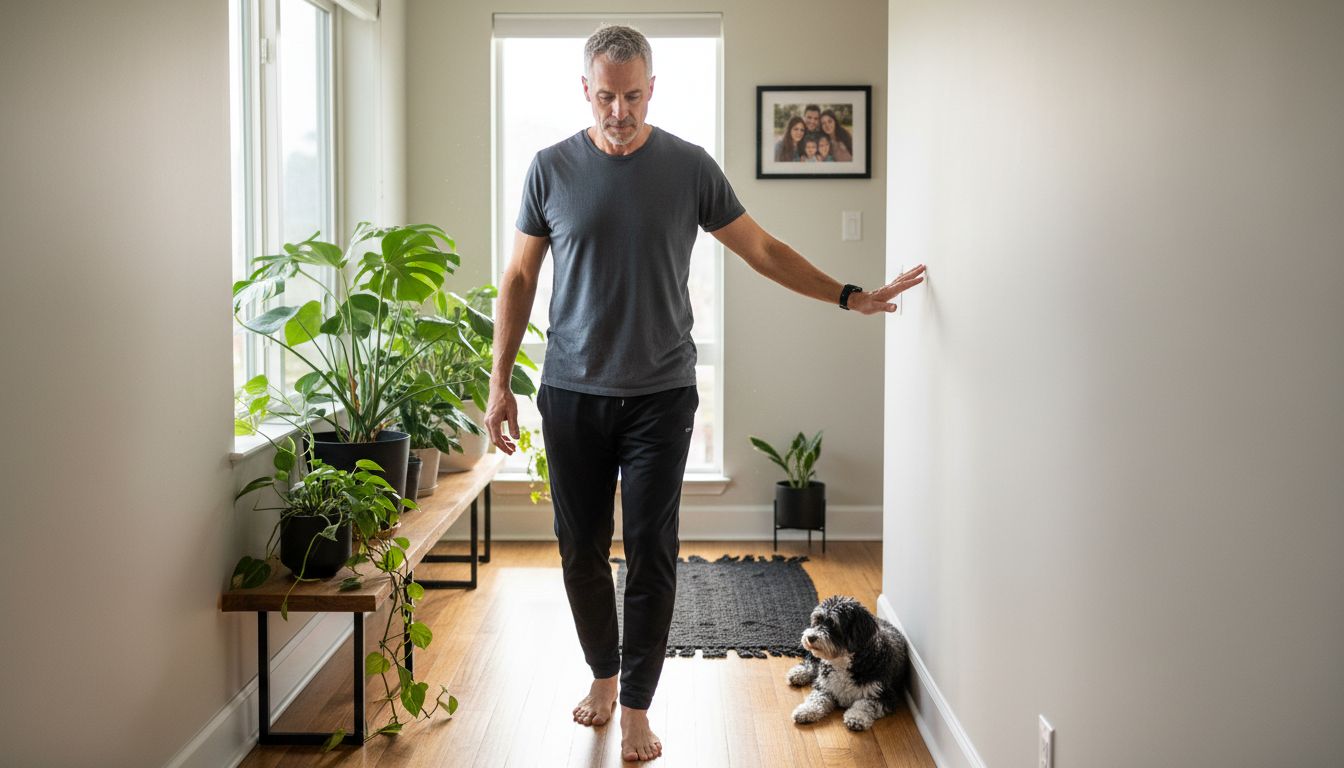
For those just beginning balance training, starting with support is crucial. Use a chair, wall, or countertop for initial stability until you build confidence and strength. As you progress, gradually reduce support and introduce more challenging variations.
 Incorporating mobility exercises for adults over 40 can complement your balance training routine, providing a comprehensive approach to maintaining physical fitness and preventing age-related decline.
How Balance Training Supports Healthy Aging
Healthy aging is not just about adding years to life, but adding life to years. Balance training emerges as a critical component in maintaining physical independence and quality of life for adults over 40, addressing the natural physiological changes that come with aging.
Heart.org highlights that balance exercises are vital for maintaining mobility and preventing falls, which become increasingly significant as we age. By consistently practicing balance techniques, older adults can significantly reduce their risk of potentially life-altering accidents and maintain greater physical autonomy.
Mayo Clinic emphasizes several key ways balance training supports healthy aging:
- Reduces fall risk by improving stability
- Enhances muscle strength and joint flexibility
- Boosts confidence in physical movements
- Maintains neurological connections between brain and muscles
- Supports overall independence in daily activities
The physiological benefits extend beyond simple fall prevention. Balance training stimulates neuroplasticity, helping the brain create and maintain neural pathways that support cognitive function and physical coordination. This means that as you practice balance exercises, you’re not just protecting your body, but also supporting your brain’s ability to adapt and respond effectively to physical challenges.
For those looking to integrate comprehensive wellness strategies, mobility in aging guide can provide additional insights into maintaining physical resilience and independence as you grow older.
Safety Tips and Common Mistakes to Avoid
Balance training requires careful approach, especially for adults over 40 who are just beginning their fitness journey. Understanding potential risks and implementing proper safety strategies can make the difference between an effective workout and a potential injury.
Mayo Clinic recommends starting balance exercises with critical safety precautions:
- Always have a stable support nearby (chair, wall, countertop)
- Begin with simple, controlled movements
- Progress gradually in difficulty and complexity
- Use proper footwear with good traction
- Stop immediately if you experience pain or extreme discomfort
Common mistakes can significantly increase injury risk. Many beginners push too hard, attempting advanced balance techniques without building foundational strength. Overconfidence leads to poor form, which can cause unexpected falls or muscle strain. Another frequent error is inconsistent practice - balance skills require regular, structured engagement to maintain and improve.
Heart.org emphasizes the importance of listening to your body and incorporating balance exercises thoughtfully into your fitness routine. For those seeking a comprehensive approach to maintaining physical resilience, our workout routine for adults 40+ can provide additional guidance on safe, effective exercise strategies.
Integrating Balance Training Into Daily Life
Balance training doesn’t require a dedicated gym session or complex equipment. In fact, the most effective approach involves seamlessly weaving stability exercises into your everyday routine, transforming mundane moments into opportunities for physical improvement.
Mayo Clinic suggests several practical ways to incorporate balance training into daily activities:
- Stand on one foot while brushing your teeth
- Practice heel-to-toe walking when moving through hallways
- Do gentle weight shifts while waiting in line
- Balance on one leg while cooking or washing dishes
- Take the stairs slowly, focusing on controlled movements
The key is consistency and mindfulness. Micro-moments of balance practice can accumulate significant benefits over time. By treating balance training as a lifestyle integration rather than a separate workout, you make physical improvement a natural part of your day. This approach reduces the mental barrier of “exercise” and makes stability training feel effortless and organic.
Heart.org emphasizes that these small interventions can dramatically improve overall stability and reduce fall risks. For those seeking a structured approach to wellness, our guide to healthy routines for adults 40+ can provide additional strategies for maintaining physical resilience throughout your daily life.
Enhance Your Balance Training Journey With Targeted Wellness Solutions
Struggling with stability and looking to prevent falls as you age is a concern many adults over 40 face. This article highlights the importance of balance training to improve coordination, muscle strength, and confidence in everyday movements. If you want to overcome the challenges of maintaining your balance safely and effectively, the right fitness products and expert guidance can make all the difference.

Explore a wide range of specially curated health monitors, supportive activewear, and therapeutic supplies designed to complement your balance exercises. Our collection at Real Healthy Haven ensures you have quality tools that promote healthy aging while enhancing your workout experience. Take advantage of free shipping across Canada and start building your stability routine today by visiting our homepage. For more tailored support, discover practical tips in our workout routine for adults 40 plus. Make balance training safer, easier, and more effective with expert-approved products and ongoing wellness insights from Real Healthy Haven. Take control of your health now and step confidently into each day.
Frequently Asked Questions
What is balance training?
Balance training is a specialized fitness approach aimed at improving your body’s stability and control during movement, focusing on enhancing neuromuscular coordination, proprioception, and core stability.
Why is balance training important for older adults?
Balance training is crucial for older adults as it helps to prevent falls, improve overall stability, boost confidence in physical movements, and maintain long-term mobility and independence.
What are some effective balance exercises for adults over 40?
Effective balance exercises for adults over 40 include weight shifts, single-leg stands, Tai Chi, and heel-to-toe walking. These exercises help improve stability and coordination.
How can I safely start a balance training routine?
To safely start a balance training routine, begin with simple exercises using stable support like a chair or countertop. Progress gradually to more challenging movements and always wear proper footwear with good traction.
Recommended
- 7 Proven Core Strengthening Tips for Healthy Aging Adults – Real Healthy Haven
- The Essential Guide to Role of Posture Exercises – Real Healthy Haven
- Workout Routine for Adults 40+: Build Strength and Mobility – Real Healthy Haven
- Why Mobility Exercises: Complete Guide for Canadians Over 40 – Real Healthy Haven
Leave a comment