

Stress Management – How It Impacts Healthy Aging

Most Canadian adults over 40 experience significant stress as they age, with studies showing that more than 60 percent report daily tension affecting their well-being. Managing stress is not just an American concern, as chronic anxiety and worry can speed up aging and increase health risks across North America. This guide reveals practical methods to help mature Canadians reduce stress, strengthen resilience, and promote lasting wellness—empowering you to take charge of your health today.
Table of Contents
- Defining Stress Management and Its Role
- Types of Stress Affecting Adults Over 40
- Effective Stress Management Strategies
- Risks of Poor Stress Management Habits
- How to Integrate Stress Reduction Into Daily Life
Key Takeaways
| Point | Details |
|---|---|
| Holistic Stress Management is Essential | Understanding and controlling stress is vital for maintaining health, especially for adults over 40. Developing resilience and adaptive coping mechanisms can mitigate chronic stress risks. |
| Types of Stress | Adults over 40 experience acute, episodic, and chronic stress, each affecting health differently. Recognizing these types can help in creating effective management strategies. |
| Effective Strategies | Integrating physical activity, social connections, and mindfulness into daily routines enhances stress resilience. These approaches support both mental and physical health. |
| Proactive Approach | Consistently practicing stress reduction techniques as part of daily life is crucial for long-term wellness. Flexible, personalized stress management plans ensure adaptability to life changes. |
Defining Stress Management and Its Role
Stress management represents a holistic approach to understanding, controlling, and minimizing the negative impacts of psychological and physiological tension on personal health. The World Health Organization defines stress as a state of worry or mental tension caused by challenging situations that can significantly disrupt daily functioning and overall wellness.
At its core, stress management involves developing practical skills and strategies to effectively navigate life’s complex challenges. According to the Centers for Disease Control, managing stress proactively helps address potential sources of tension in daily life, reducing the risk of developing chronic mental and physical health complications. The approach goes beyond simply eliminating stressors, focusing instead on building resilience, emotional regulation, and adaptive coping mechanisms.
For Canadian adults aged 40 and above, stress management becomes increasingly critical. As we age, our bodies and minds become more susceptible to the cumulative effects of chronic stress, which can accelerate aging processes, weaken immune response, and increase vulnerability to conditions like cardiovascular disease, depression, and cognitive decline. Effective stress management techniques can help mitigate these risks by promoting mental clarity, emotional stability, and physiological balance.
Pro Tip - Stress Awareness: Start a daily stress journal to track your triggers, emotional responses, and physical symptoms. This practice will help you identify patterns and develop targeted stress reduction strategies tailored to your unique experiences.
Types of Stress Affecting Adults Over 40
Stress manifests in multiple complex forms, each impacting physical and mental health differently for adults over 40. According to the American Psychological Association, stress can be categorized into three primary types: acute, episodic, and chronic stress, each presenting unique challenges for mature individuals navigating life’s intricate demands.
Acute stress represents short-term tension typically triggered by immediate pressures or challenges. For Canadian adults in their 40s and 50s, this might involve preparing for an important work presentation, managing a sudden family crisis, or handling unexpected financial decisions. While typically manageable, frequent acute stress can accumulate and potentially trigger more serious health complications.
Research from Duke University highlights that certain stress types are particularly linked with accelerated biological aging. Chronic stress emerges as the most concerning category, involving prolonged exposure to ongoing challenges such as caregiving responsibilities, persistent work pressures, health concerns, and financial instability. This persistent tension can significantly impact physiological processes, potentially accelerating cellular aging and increasing vulnerability to age-related health conditions.
Here’s a comparison of the main types of stress impacting adults over 40:
| Stress Type | Typical Causes | Common Effects | Duration |
|---|---|---|---|
| Acute Stress | Sudden work, family pressures | Temporary anxiety, tension | Short-term episodes |
| Episodic Stress | Repeated minor emergencies | Persistent irritability, worry | Weeks to months |
| Chronic Stress | Ongoing financial, health issues | Fatigue, health decline | Months or longer |
Pro Tip - Stress Type Recognition: Learn to distinguish between temporary and persistent stress by tracking the duration and recurring patterns of your stressors. Understanding your specific stress type can help you develop more targeted and effective management strategies.
Effective Stress Management Strategies
The Centers for Disease Control recommends a comprehensive approach to stress management that integrates multiple strategies tailored to individual needs and lifestyles. For Canadian adults over 40, developing a multifaceted stress reduction plan becomes increasingly critical to maintaining overall health and preventing age-related wellness challenges.
Physical activity emerges as a fundamental stress management technique. Regular exercise not only releases endorphins that naturally combat stress hormones but also provides a constructive outlet for releasing accumulated tension. This might include low-impact activities like swimming, walking, yoga, or strength training specifically designed for mature adults, which help improve both physical resilience and mental clarity.

According to the American Psychological Association, cultivating strong social support networks represents another crucial stress management strategy. For adults navigating midlife challenges, this could involve maintaining meaningful connections with family, participating in community groups, joining hobby-based clubs, or seeking professional counseling when needed. Emotional support systems provide critical buffers against chronic stress, helping individuals process complex feelings and develop adaptive coping mechanisms.
Pro Tip - Holistic Stress Reduction: Create a personalized stress management toolkit that includes multiple techniques like deep breathing exercises, guided meditation, regular physical activity, and scheduled social interactions to provide comprehensive emotional support and resilience.
This summary highlights popular stress management strategies and their key benefits for adults over 40:
| Strategy | Key Benefit | Example Activity |
|---|---|---|
| Physical Activity | Reduces stress hormones | Walking, yoga |
| Social Connection | Strengthens emotional support | Group activities, counseling |
| Mindfulness Practices | Improves mental resilience | Meditation, deep breathing |
Risks of Poor Stress Management Habits
Health Canada warns that unmanaged stress can have profound and widespread impacts on personal health. For Canadian adults over 40, chronic stress transforms from a temporary challenge into a serious long-term health risk that can systematically undermine physical and mental wellness across multiple bodily systems.
The physiological consequences of prolonged stress extend far beyond momentary discomfort. Unmanaged stress triggers a cascade of harmful hormonal responses, including elevated cortisol levels that can disrupt metabolism, suppress immune function, and accelerate cellular aging. These biological changes increase vulnerability to serious health conditions such as cardiovascular disease, diabetes, and compromised cognitive function, making stress management not just a wellness strategy but a critical health preservation technique.
According to the Centers for Disease Control, poor stress management can dramatically interfere with overall quality of life. Beyond physical health risks, chronic stress significantly impacts emotional well-being, potentially leading to depression, anxiety, sleep disorders, and decreased mental resilience. For mature adults, these challenges can compound existing age-related health vulnerabilities, creating a complex web of interconnected health challenges that become increasingly difficult to address.
Pro Tip - Stress Impact Awareness: Conduct a monthly self-assessment of your stress levels, tracking physical symptoms, emotional changes, and potential health indicators to identify potential long-term risks before they become chronic health problems.
How to Integrate Stress Reduction Into Daily Life
The Canadian Mental Health Association recommends transforming stress reduction into a consistent, intentional daily practice, rather than treating it as an occasional intervention. For Canadian adults over 40, this means developing a proactive approach that seamlessly weaves stress management techniques into everyday routines, creating a sustainable framework for long-term wellness.
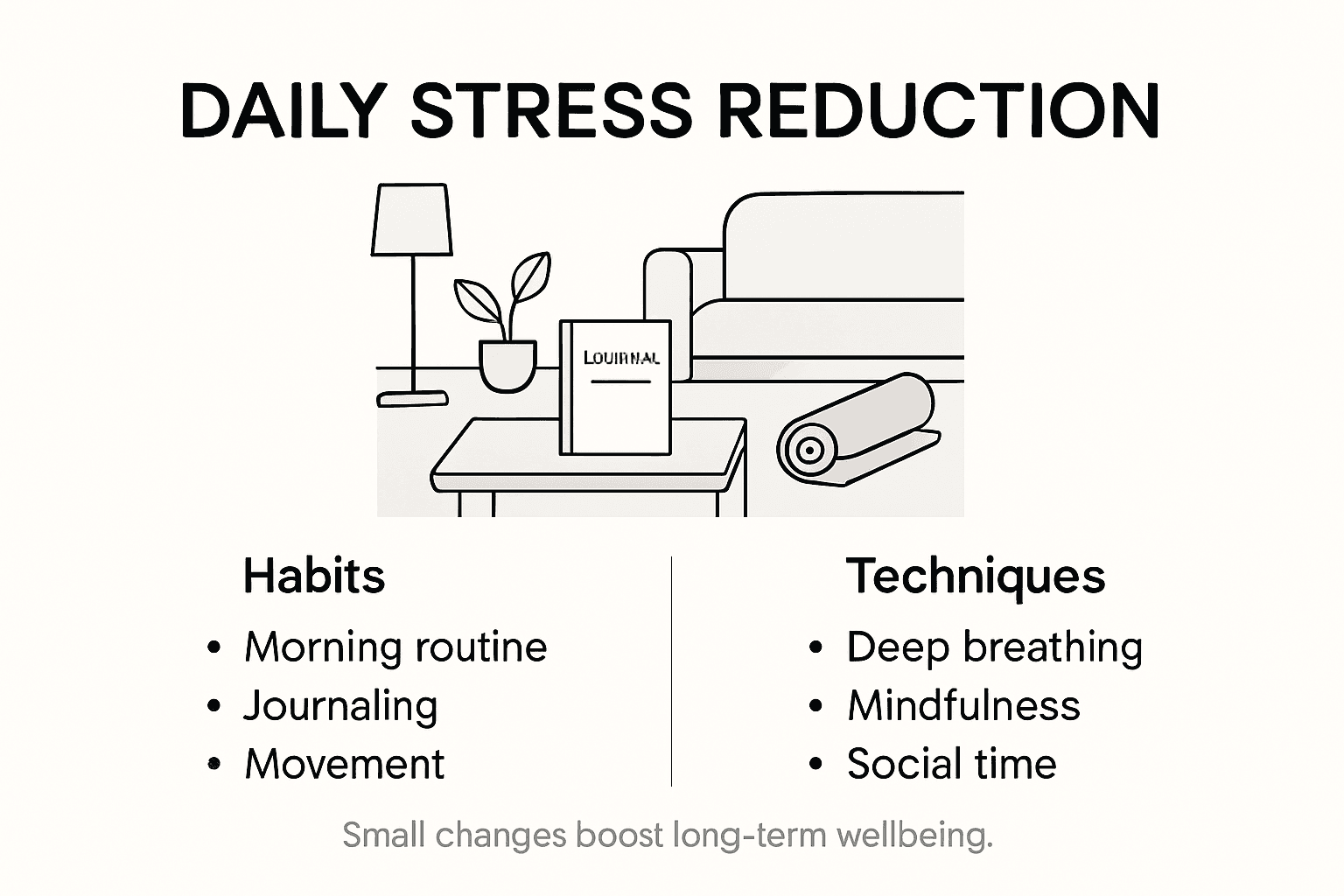
Mindfulness and structured relaxation techniques offer powerful strategies for daily stress integration. This might involve dedicating specific time slots for deep breathing exercises, practicing short meditation sessions during work breaks, or incorporating gentle stretching routines that help reset both physical and mental tension. Simple practices like morning mindfulness, evening journaling, or five-minute breathing breaks can significantly modulate stress responses without requiring extensive time commitments.
Mental Health Commission of Canada guidelines emphasize creating personalized, adaptable stress reduction plans that align with individual lifestyles and preferences. This approach recognizes that stress management is not a one-size-fits-all solution but a dynamic process of self-discovery and ongoing adjustment. Developing a flexible toolkit of stress reduction techniques allows mature adults to respond effectively to changing life circumstances while maintaining emotional equilibrium.
Pro Tip - Daily Stress Reset: Create a morning and evening ritual that includes 10 minutes of intentional stress management, such as meditation, gentle stretching, or reflective journaling, to bookend your day with purposeful relaxation techniques.
Take Control of Stress to Support Healthy Aging Today
Managing stress effectively is essential for Canadian adults over 40 who want to protect their health and maintain vitality. This article highlights how chronic stress can impact your body and mind, accelerating aging and increasing risks such as cardiovascular issues and mental fatigue. If you are seeking reliable ways to build resilience and ease tension daily, investing in quality wellness products can make a meaningful difference.
Explore Real Healthy Haven for a curated selection of fitness and wellness solutions designed specifically for mature adults. From comfortable activewear that encourages movement, to health monitors that help you track stress-related biomarkers, and therapeutic supplies to ease physical tension — we have everything you need to create a holistic stress management routine that fits your lifestyle.

Start your journey toward stress reduction and healthy aging now with support from Real Healthy Haven. Take advantage of our expert-curated collections and enjoy free shipping across Canada. Don’t wait for stress to take its toll. Visit our site and build a personalized wellness toolkit today.
Frequently Asked Questions
What is stress management and why is it important for healthy aging?
Stress management involves understanding and controlling stress to minimize its negative effects on health. It is crucial for healthy aging as chronic stress can exacerbate age-related health issues and accelerate physical and mental decline.
What are the main types of stress that affect adults over 40?
The main types of stress are acute, episodic, and chronic stress. Acute stress is short-term, episodic stress is recurring, and chronic stress persists over time, often linked to ongoing challenges such as health concerns or financial issues.
What effective strategies can help manage stress?
Effective stress management strategies include regular physical activity, cultivating strong social connections, and practicing mindfulness techniques like meditation and deep breathing exercises. These approaches help reduce stress hormones and promote emotional resilience.
What are the risks of poor stress management?
Poor stress management can lead to various health issues, including cardiovascular disease, diabetes, and mental health disorders like anxiety and depression. It can disrupt overall quality of life and make age-related health problems more complex to address.
Recommended
- How to Balance Work and Wellness for Healthy Aging Success – Real Healthy Haven
- Complete Guide to Defining Healthy Aging – Real Healthy Haven
- Role of Healthy Routines: Complete Guide for Adults 40+ – Real Healthy Haven
- 7 Top Wellness Goals 2025 for Healthier Living Over 40 – Real Healthy Haven
- Understanding Employee Wellness Programs and Their Benefits – The Ocean Straw
Leave a comment