

Complete Guide to Defining Healthy Aging

Nearly one in five Canadians is now over the age of 65, and that number keeps rising every year. Healthy aging is more than simply adding years to your life—it’s about making those years vibrant, independent, and fulfilling. As people live longer than ever, understanding what shapes our well-being in later decades becomes crucial. This guide explores the key habits and proven strategies that help Canadians stay strong, engaged, and resilient well into their golden years.
Table of Contents
- What Healthy Aging Means in Canada
- Key Models and Approaches to Aging Well
- Characteristics of Healthy Versus Unhealthy Aging
- Vital Lifestyle Factors for Canadians Over 40
- Common Myths About Healthy Aging
Key Takeaways
| Point | Details |
|---|---|
| Holistic Approach to Healthy Aging | Focus on maintaining physical, mental, and social well-being through proactive lifestyle choices. |
| Core Lifestyle Factors | Regular physical activity, balanced nutrition, and mental wellness are essential for Canadians over 40. |
| Myths About Aging | Aging does not inherently lead to decline; sustained health is achievable through engagement and lifestyle choices. |
| Preventative Strategies | Prioritize preventative healthcare and community engagement to enhance quality of life in later years. |
What Healthy Aging Means in Canada
Healthy aging transcends simply growing older - it represents a holistic approach to maintaining quality of life and wellness as we advance through our later decades. According to Health Canada, this concept encompasses maintaining physical, mental, and social well-being through strategic lifestyle choices.
At its core, healthy aging involves proactively supporting your body and mind’s natural transitions. Wellness priorities shift from pure performance to sustainable functionality, focusing on maintaining independence, preventing chronic conditions, and preserving overall vitality. Canadian Institute for Health Information emphasizes that this approach is increasingly critical as Canada’s population ages, with growing numbers of adults over 65 seeking dignity and autonomy in their later years.
Key components of healthy aging in Canada include:
- Regular physical activity tailored to individual capabilities
- Nutritionally balanced diet supporting metabolic changes
- Mental health maintenance and cognitive stimulation
- Social engagement and community connections
- Preventative healthcare and regular medical screenings
While aging is inevitable, the experience can be dramatically influenced by personal choices. For those seeking deeper insights into maintaining wellness, check out our guide on healthy lifestyle principles for adults 40+.
Key Models and Approaches to Aging Well
Understanding how we age is not a one-size-fits-all concept, but rather a complex interplay of biological, psychological, and social factors. According to the Activity Theory), maintaining active social interactions and engaging in meaningful activities is crucial for positive aging outcomes. This model suggests that older adults can successfully adapt to retirement and enhance life satisfaction by replacing former roles with new, stimulating pursuits.
Competing perspectives offer additional insights into the aging process. The Disposable Soma Theory provides a fascinating evolutionary explanation, suggesting that aging results from a biological trade-off between reproductive capabilities and cellular maintenance Source. This theory proposes that limited biological resources are strategically allocated, which can ultimately lead to gradual cellular deterioration and senescence.

Key approaches to aging well encompass multiple interconnected strategies:
- Maintaining social connections and community engagement
- Pursuing lifelong learning and cognitive stimulation
- Adapting physical activities to changing bodily capabilities
- Embracing psychological flexibility
- Prioritizing preventative healthcare
Those interested in developing a comprehensive wellness strategy might find our guide on setting wellness goals for healthy aging particularly helpful in translating these theoretical models into practical, actionable steps.
Characteristics of Healthy Versus Unhealthy Aging
Healthy aging is a dynamic process that goes far beyond simply avoiding illness. National Initiative for the Care of the Elderly emphasizes that it involves maintaining independence, quality of life, and proactively engaging in health-promoting behaviors. While chronological aging is inevitable, the trajectory of that aging can be significantly influenced by lifestyle choices, physical activity, and mental wellness.
In contrast, unhealthy aging presents a markedly different landscape. According to CARP, unhealthy aging is characterized by increased vulnerability to chronic diseases, reduced physical and cognitive capabilities, and a higher risk of social isolation. The distinguishing factors between healthy and unhealthy aging often emerge through observable patterns in several key domains:
Key Differences Between Healthy and Unhealthy Aging:
-
Physical Capacity
- Healthy: Maintains strength, flexibility, and functional mobility
- Unhealthy: Experiences rapid muscle loss, decreased mobility
-
Mental Wellness
- Healthy: Continues learning, adapts to changes, maintains cognitive engagement
- Unhealthy: Experiences cognitive decline, reduced mental plasticity
-
Social Engagement
- Healthy: Maintains strong social connections, active community involvement
- Unhealthy: Experiences social withdrawal, increased isolation
For those looking to understand how to develop sustainable wellness strategies, our guide on healthy routines for adults 40+ offers practical insights into maintaining vitality as you age.
Vital Lifestyle Factors for Canadians Over 40
Public Health Agency of Canada emphasizes that healthy aging is not a passive experience, but an active process requiring intentional lifestyle choices. For Canadians over 40, this means developing a holistic approach that addresses physical, nutritional, and mental well-being. The transition into midlife demands strategic adjustments that support long-term health and vitality.
The core lifestyle factors that significantly influence aging well encompass several interconnected dimensions. Physical activity emerges as a critical component, with recommendations focusing on consistent, age-appropriate exercise that maintains muscle strength, flexibility, and cardiovascular health. Nutrition plays an equally important role, requiring more targeted dietary strategies that support metabolic changes and support cellular health.
Key Lifestyle Priorities for Adults Over 40:
-
Physical Activity
- Regular strength training
- Low-impact cardiovascular exercises
- Flexibility and balance work
-
Nutritional Strategies
- Increased protein intake
- Nutrient-dense whole foods
- Balanced macronutrient consumption
- Targeted supplementation
-
Mental Wellness
- Stress management techniques
- Cognitive engagement activities
- Social connection maintenance
For those seeking expert guidance on developing a comprehensive wellness strategy, our midlife nutrition essentials guide provides in-depth insights tailored specifically for Canadians navigating their health journey after 40.
Common Myths About Healthy Aging
Contrary to popular belief, aging is not a process of inevitable decline. National Initiative for the Care of the Elderly challenges many long-standing myths, emphasizing that aging can be a period of continued growth, learning, and active engagement. The pervasive misconception that older adults are destined for poor health and reduced quality of life is fundamentally flawed and unsupported by scientific evidence.
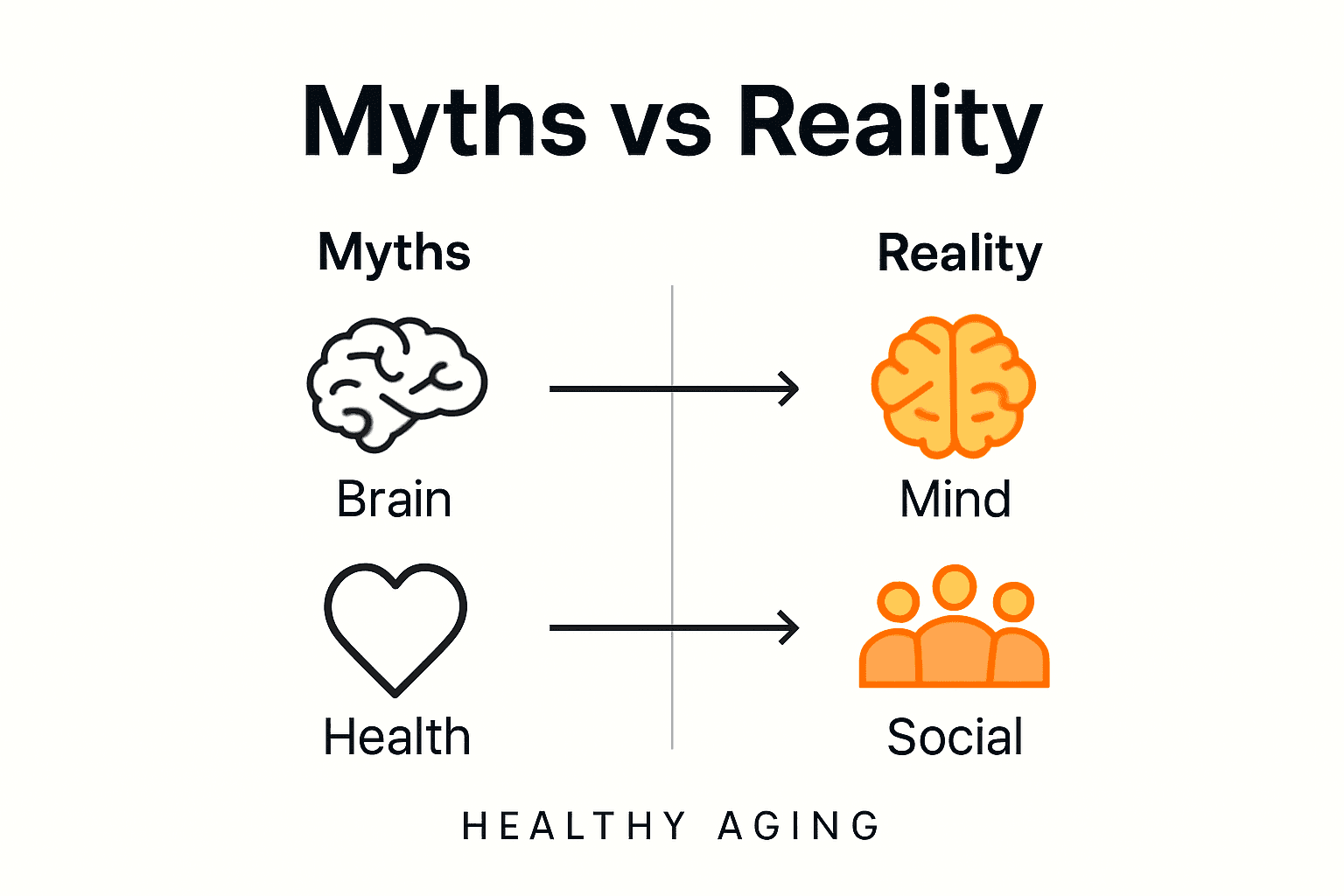
One of the most persistent myths revolves around physical capabilities. Active Aging Canada strongly refutes the notion that aging automatically means becoming sedentary or losing physical strength. In reality, lifestyle choices play a dramatically more significant role in determining health outcomes than chronological age. Many adults over 40 can maintain and even improve their physical fitness through targeted exercise, proper nutrition, and consistent engagement.
Common Myths vs. Reality:
-
Myth: Cognitive Decline is Inevitable
- Reality: Mental sharpness can be maintained through continuous learning
- Fact: Brain plasticity continues throughout life
-
Myth: Physical Activity Becomes Impossible
- Reality: Age-appropriate exercise can improve strength and mobility
- Fact: Many adults become more fitness-conscious after 40
-
Myth: Social Connections Diminish
- Reality: Meaningful relationships can be cultivated at any age
- Fact: Social engagement is a choice, not an age-related limitation
For those interested in understanding how to maintain mobility and strength as they age, our guide on the role of mobility in aging offers practical, evidence-based strategies to challenge these outdated misconceptions.
Embrace Healthy Aging with the Right Support
Achieving healthy aging means more than just making good choices it is about having the right resources to maintain your physical strength, mental clarity, and social vitality as you age. If you are ready to proactively support your wellness journey, you need products that adapt to your changing needs and empower you every step of the way. Whether you want to enhance your nutrition, improve mobility, or simply feel more energized, our carefully curated collection can help you meet those goals.

Discover our full range of Vitamins And Supplements example products designed specifically for adults over 40 in Canada to boost your health naturally. Visit Real Healthy Haven today and take control of your aging process with high-quality wellness solutions tailored just for you. Don’t wait to start living your best life now.
Frequently Asked Questions
What are the key components of healthy aging?
Healthy aging involves regular physical activity, a nutritionally balanced diet, mental health maintenance, social engagement, and preventative healthcare.
How can I maintain my physical health as I age?
You can maintain physical health by engaging in regular strength training, low-impact cardiovascular exercises, and flexibility and balance work tailored to your capabilities.
What lifestyle changes can support healthy aging?
Adopting a balanced diet rich in nutrients, managing stress, staying socially connected, and prioritizing regular medical check-ups are crucial lifestyle changes to support healthy aging.
Are there common misconceptions about aging?
Yes, common misconceptions include the belief that cognitive decline is inevitable or that physical activity becomes impossible. In reality, mental sharpness can be maintained, and age-appropriate exercise can enhance physical fitness.
Recommended
- Role of Healthy Routines: Complete Guide for Adults 40+ – Real Healthy Haven
- How to Set Wellness Goals for Healthy Aging Success – Real Healthy Haven
- Healthy Lifestyle Principles: Complete Guide for Adults 40+ – Real Healthy Haven
- 7 Top Wellness Goals 2025 for Healthier Living Over 40 – Real Healthy Haven
Leave a comment