

How to Build Core Strength 40+ Naturally Step by Step

Most American adults notice that core strength slowly fades after forty, yet over 60 percent rarely assess their stability until discomfort or injury appears. Core muscles stabilize your spine, support balance, and protect you in daily activities, especially as the years add up. Understanding and improving your core is key for staying strong and independent. This step-by-step guide breaks down practical ways to assess, train, and track your core strength safely so you can age actively and confidently.
Table of Contents
- Step 1: Assess Your Current Core Stability
- Step 2: Select Age-Appropriate Core Exercises
- Step 3: Incorporate Proper Warm-Ups and Stretching
- Step 4: Follow a Consistent Training Routine
- Step 5: Monitor Progress and Adjust Intensity
Quick Summary
| Key Insight | Explanation |
|---|---|
| 1. Assess Your Core Stability First | Start by evaluating your current fitness level to customize your core training effectively. This includes checking posture and performing basic stability tests. |
| 2. Choose Safe, Age-Appropriate Exercises | Opt for low-impact core exercises such as modified planks and bridges to enhance core strength without risking injury. |
| 3. Always Include Warm-Ups and Stretching | Prioritize dynamic warm-ups like seated side bends to prepare your muscles and reduce injury risk before core workouts. |
| 4. Maintain a Consistent Training Schedule | Aim for 3-4 core training sessions weekly, each lasting 20-30 minutes, focusing on proper form and gradual intensity increase. |
| 5. Monitor Progress and Adjust Carefully | Use a fitness journal to track your progress and adjust exercises every 4-6 weeks based on your stability and endurance improvements. |
Step 1: Assess Your Current Core Stability
Knowing your starting point is crucial when building core strength after 40. A comprehensive self assessment helps you understand your current fitness level and design a personalized workout strategy. Proven core strengthening techniques for healthy aging adults recommend starting with basic stability evaluations that are safe and effective for mature bodies.
To accurately assess your core stability, perform these simple tests: Stand sideways near a mirror and observe your posture. Check if your pelvis tilts naturally or if you have significant lower back arching. Next, attempt a modified plank position holding for 10 seconds. Watch for trembling muscles or inability to maintain a straight body line these indicate core muscle weakness. Harvard Health recommends wall planks and shoulder taps as excellent stability assessment methods, which help identify muscular imbalances without risking injury.
Warning: If you experience sharp pain during any assessment test stop immediately. Consult a healthcare professional before beginning any new exercise program. Your body provides important signals listen carefully and progress gradually. Remember building core strength is a journey not a sprint and understanding your current capabilities sets the foundation for successful fitness transformation.
Step 2: Select Age-Appropriate Core Exercises
Choosing the right core exercises for your body after 40 requires strategic planning and understanding your physical capabilities. Strength training strategies for adults over 40 emphasize the importance of selecting exercises that support muscle preservation and joint health without causing unnecessary strain.
Focus on low-impact movements that build core stability safely. Recommended core exercises for mature adults include gentle yet effective options like pelvic tilts bird dog pose seated abdominal contractions modified planks standing marches and bridges. These exercises engage multiple muscle groups while minimizing injury risk. Side bends and incline push-ups can also provide excellent core conditioning with minimal joint stress.
Warning: Always listen to your body and progress gradually. Start with 5-10 repetitions of each exercise and increase intensity only when you feel comfortable. If any movement causes sharp pain stop immediately and consult a healthcare professional. Your goal is consistent sustainable strength building not pushing beyond your current physical limits.
Step 3: Incorporate Proper Warm-Ups and Stretching
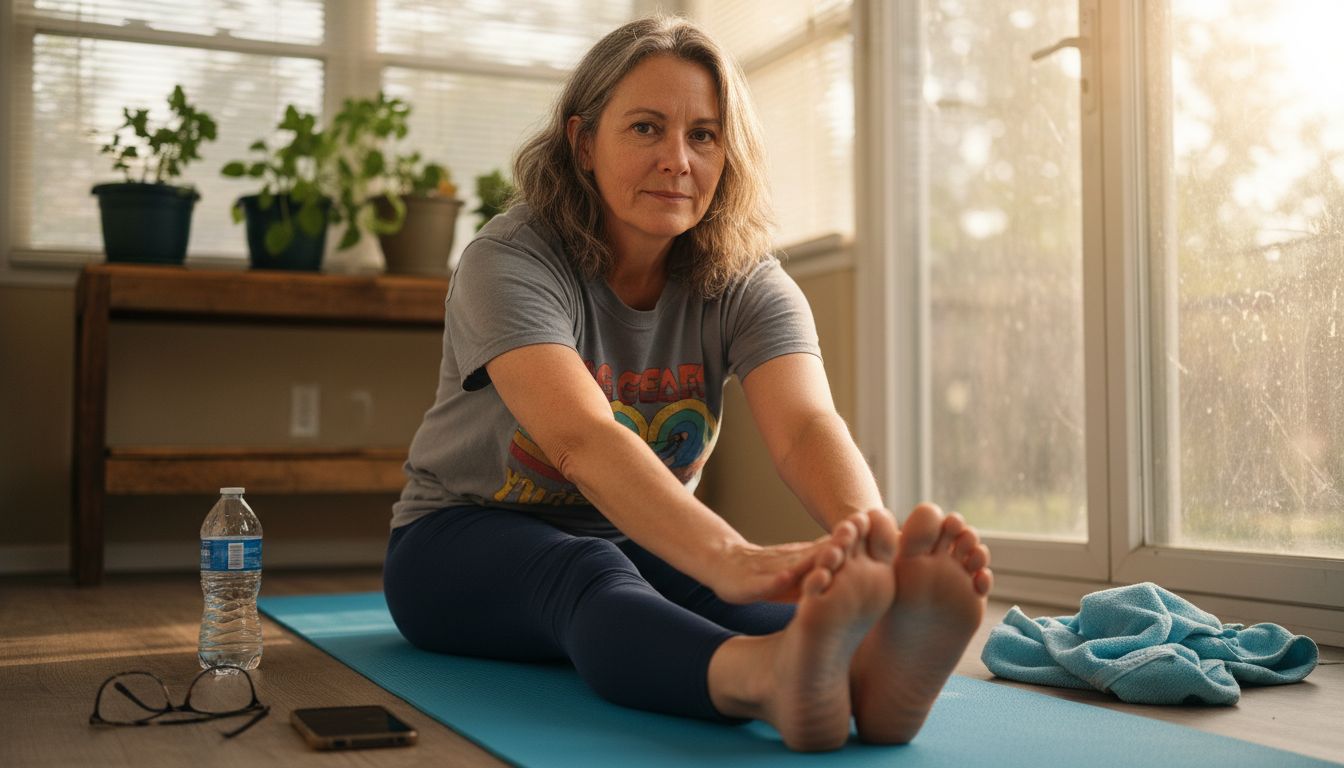
Warm-ups and stretching are critical components of any successful core strength routine especially for adults over 40. Comprehensive stretching techniques for mature fitness enthusiasts highlight the importance of preparing your muscles and joints before engaging in core exercises to prevent potential injuries.
Begin with gentle dynamic movements that activate your core and improve flexibility. Seated warm-up exercises recommended for seniors include seated dead bug movements and seated side bends which help engage core muscles safely. Start with 5-10 gentle repetitions of each movement focusing on smooth controlled motions. Breathe steadily and maintain proper posture throughout the warm-up sequence. Pay attention to how your body feels and move within a comfortable range of motion.
Warning: Never push through sharp pain or extreme discomfort. If an exercise feels too challenging modify the movement or skip it entirely. Proper warm-ups should feel like a gradual awakening of your muscles not a strenuous workout. Remember your goal is to prepare your body for core strengthening exercises while minimizing the risk of strain or injury.
Step 4: Follow a Consistent Training Routine
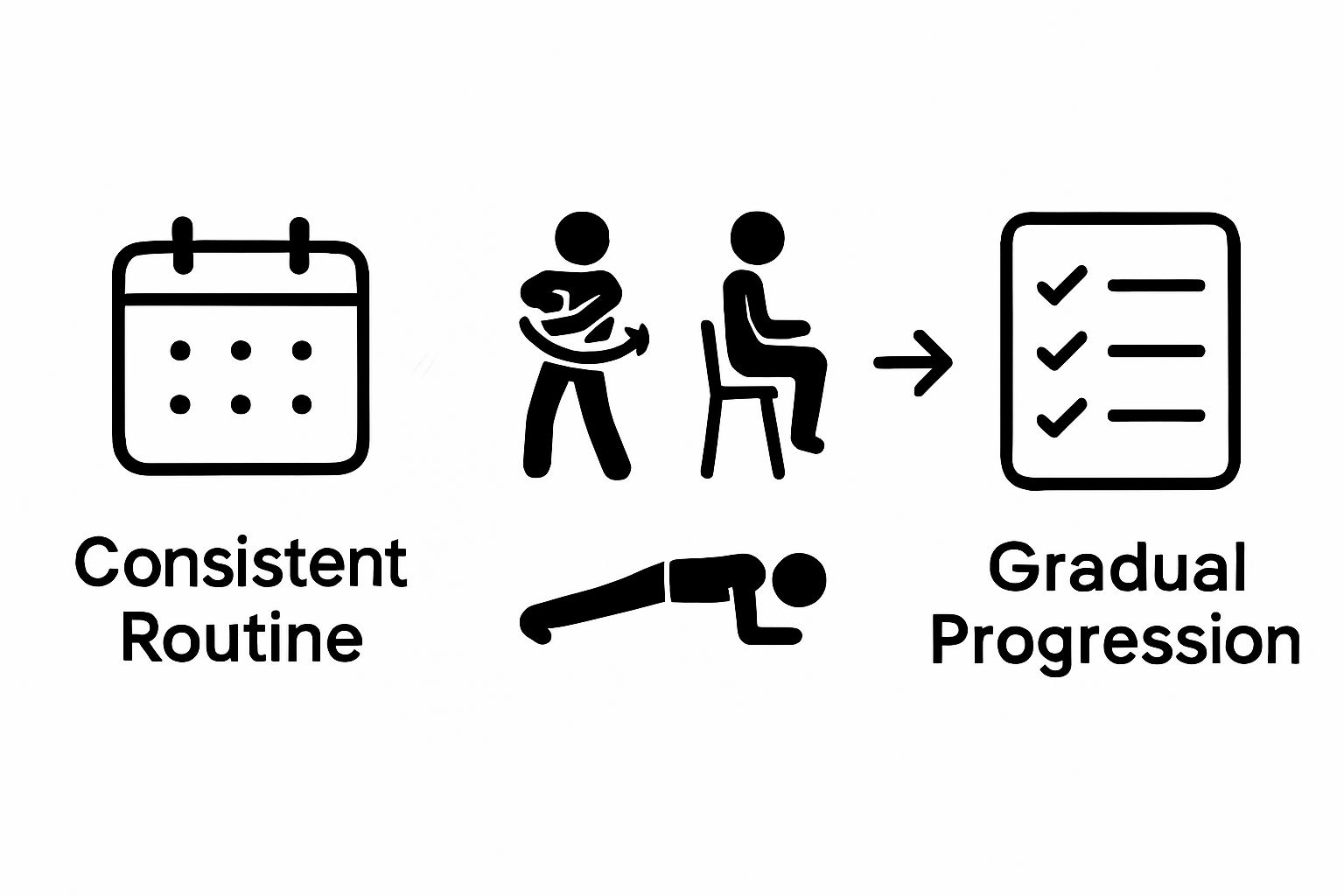
Establishing a consistent core training routine is essential for building strength and maintaining muscle integrity after 40. Workout strategies designed for adults over 40 emphasize the importance of regular structured exercise to support long term fitness goals.
Core strengthening exercises specifically recommended for mature adults include targeted movements like Russian twists glute bridges and forearm planks. Aim to perform these exercises 3 4 times per week with each session lasting approximately 20 30 minutes. Incorporate standing exercises such as marching knee raises to enhance balance and core engagement. Create a schedule that fits your lifestyle tracking progress and adjusting intensity as your strength improves. Consistency matters more than perfection focus on showing up and performing exercises with proper form.
Warning: Progress slowly and listen to your body. If you experience persistent pain or unusual discomfort stop and consult a healthcare professional. Remember that building core strength is a gradual process requiring patience and commitment. Your goal is sustainable progress not immediate transformation.
Step 5: Monitor Progress and Adjust Intensity
Tracking your core strength development is crucial for maintaining motivation and ensuring safe progression after 40. Complete guide to strength training for mature adults highlights the importance of systematic progress monitoring and intelligent intensity adjustment.
Foundational exercise progression strategies for seniors recommend starting with basic movements like standing wall planks and systematically increasing difficulty. Keep a detailed fitness journal documenting repetitions duration and perceived exertion for each exercise. Assess your progress every 4 6 weeks by measuring metrics such as plank hold time number of repetitions and overall muscle endurance. Look for subtle improvements in stability balance and core engagement rather than dramatic transformations.
Warning: Progress is not linear. Some weeks you might feel stronger while others might feel more challenging. This is normal. Avoid comparing yourself to younger fitness standards or your past performance. Instead focus on consistent effort and listening to your body. If an exercise feels too difficult modify the movement reduce repetitions or seek professional guidance to ensure safe sustainable core strength development.
Strengthen Your Core and Support Your Journey to Healthy Aging
Building core strength after 40 naturally requires dedication and safe, age-appropriate approaches to improve stability and prevent injury. If you want to enhance your efforts with trusted wellness solutions designed for mature adults, consider exploring high-quality supplements and supportive products that promote muscle health and overall vitality. Our carefully selected range of Vitamins And Supplements example products at Real Healthy Haven can help provide the essential nutrients your body needs during this transformative fitness journey.

Take charge of your core strength goals today by visiting Real Healthy Haven for trusted wellness essentials tailored for adults over 40 in Canada. Start building sustainable strength safely with the right support. Discover your options, make informed choices, and feel empowered to move forward confidently.
Frequently Asked Questions
How can I assess my core stability at home?
To assess your core stability, try standing sideways in front of a mirror to check your posture and pelvis position. Then, perform a modified plank, holding it for 10 seconds to see if you can maintain a straight line without trembling. Evaluate these exercises to identify your starting point.
What core exercises are appropriate for someone over 40?
Focus on age-appropriate core exercises such as pelvic tilts, bird dog pose, and modified planks. Start with 5-10 repetitions of each exercise and gradually increase intensity as your strength improves.
Why is warming up important before core workouts?
Warming up is essential as it prepares your muscles and joints, reducing the risk of injury during your core workouts. Begin with gentle dynamic movements for about 5-10 minutes to activate your core muscles safely.
How often should I perform core strengthening exercises after 40?
Aim to perform core strengthening exercises 3-4 times a week, with each session lasting 20-30 minutes. Consistency is key, so create a manageable schedule to ensure you stay on track.
How can I monitor my progress in core strength?
Keep a fitness journal to track your repetitions, duration, and perceived exertion of each core exercise. Assess your progress every 4-6 weeks by measuring metrics like plank hold time and the number of repetitions to see gradual improvements.
What should I do if I experience pain during exercises?
If you experience sharp pain during any exercise, stop immediately and consult a healthcare professional. Listen to your body and adjust movements as needed to ensure a safe and sustainable fitness routine.
Recommended
- Complete Guide to Strength After 40: Expert Strategies – Real Healthy Haven
- 7 Proven Core Strengthening Tips for Healthy Aging Adults – Real Healthy Haven
- Workout Routine for Adults 40+: Build Strength and Mobility – Real Healthy Haven
- How to Prevent Injury Working Out for Adults Over 40 – Real Healthy Haven
Leave a comment