

Functional Medicine: Why It Matters for Healthy Aging

Most advice about healthy aging only targets symptoms, not the underlying issues shaping your wellbeing. Over 40 percent of Canadian adults are now exploring alternatives like functional medicine, a field that challenges traditional models and borrows insights from American practitioners. If you want a deeper, more personalized approach that addresses long-term vitality and prevention, understanding functional medicine could reshape how you manage health in your forties and beyond.
Table of Contents
- What Is Functional Medicine Exactly
- Personalization And Root‑Cause Focus
- How Functional Medicine Works Systemically
- Common Myths And Scientific Debate
- Risks, Costs, And Regulation Issues
Key Takeaways
| Point | Details |
|---|---|
| Patient-Centered Approach | Functional medicine emphasizes personalized care that addresses root causes rather than just symptoms. |
| Holistic Assessment | Practitioners utilize comprehensive diagnostic tools and detailed lifestyle evaluations for tailored treatment plans. |
| Systemic Understanding | This approach examines the interconnectedness of body systems to identify imbalances affecting overall health. |
| Regulatory Considerations | Patients should verify practitioners’ qualifications and understand the potential costs and limitations of coverage for functional medicine services. |
What Is Functional Medicine Exactly
Functional medicine represents a transformative approach to healthcare that goes far beyond traditional medical practices. At its core, it’s a patient-centered strategy designed to uncover and address the root causes of health challenges rather than simply treating symptoms. Functional medicine focuses on understanding the complex interactions between genetic, environmental, and lifestyle factors that contribute to an individual’s overall health profile.
Unlike conventional medical models that often apply standardized treatments, functional medicine creates personalized care plans tailored to each patient’s unique physiological makeup. This approach recognizes that two individuals with similar symptoms might require completely different treatment strategies based on their genetic predispositions, nutritional status, stress levels, and environmental exposures. Practitioners use comprehensive assessments that include detailed medical histories, advanced diagnostic testing, and in-depth lifestyle evaluations to develop holistic wellness strategies.
The key principles of functional medicine center on treating the person, not just the disease. By examining interconnected body systems and understanding how imbalances in one area can trigger broader health issues, functional medicine practitioners aim to restore optimal function. They view the human body as an integrated ecosystem, where hormonal, digestive, immune, and neurological systems constantly communicate and influence each other. This perspective allows for more nuanced, proactive healthcare interventions that can potentially prevent chronic conditions before they fully manifest.
Pro Tip: Start your functional medicine journey by keeping a comprehensive health journal documenting diet, sleep, stress levels, and any symptoms. This detailed record can provide your healthcare provider with crucial insights into your unique health landscape.
Here’s a comparison of functional medicine and conventional medicine approaches:
| Aspect | Functional Medicine | Conventional Medicine |
|---|---|---|
| Treatment Focus | Root causes and system imbalances | Managing and alleviating symptoms |
| Approach | Personalized, patient-centered | Standardized, diagnostic-driven |
| Assessment Tools | Advanced diagnostics and lifestyle review | Basic tests and clinical symptoms |
| Perspective | Body-wide system interactions | Isolated organ-specific treatment |
Personalization And Root‑Cause Focus
Personalization stands as the cornerstone of functional medicine, transforming how healthcare professionals approach individual wellness. Unlike traditional medical models that often apply one-size-fits-all treatments, functional medicine recognizes that each person’s health journey is uniquely complex. Comprehensive diagnostic approaches consider intricate interactions between genetic predispositions, environmental influences, and lifestyle factors that collectively shape an individual’s health landscape.
The root-cause focus distinguishes functional medicine from symptomatic treatment strategies. Instead of merely masking health issues with medications, practitioners dive deep into understanding the underlying mechanisms triggering specific health challenges. This approach means exploring potential triggers like chronic inflammation, hormonal imbalances, nutritional deficiencies, or stress responses that might not be immediately apparent through standard medical testing. By mapping out these interconnected systems, functional medicine practitioners can develop targeted interventions that address the fundamental sources of health disruptions.

For adults over 40, this personalized approach becomes particularly crucial. Aging introduces complex physiological changes that require nuanced, individualized strategies. Functional medicine practitioners conduct extensive assessments that go beyond traditional blood work, including advanced metabolic testing, comprehensive hormone panels, gut microbiome analysis, and detailed lifestyle evaluations. These in-depth investigations help create precise, tailored wellness plans that can potentially mitigate age-related health risks, optimize metabolic function, and support long-term vitality.
Pro Tip: Request a comprehensive health assessment that includes genetic testing, metabolic screening, and a detailed lifestyle review to gain unprecedented insights into your personal health blueprint.
How Functional Medicine Works Systemically
Functional medicine takes a revolutionary approach to understanding human health by examining the body as an intricate, interconnected ecosystem. A systems-oriented strategy analyzes the complex interactions between various physiological systems, revealing how imbalances in one area can cascade into broader health challenges. This comprehensive perspective goes far beyond traditional medical models that typically isolate and treat individual symptoms.
The systemic approach involves deep investigation of key physiological domains, including digestion, immune function, hormonal balance, energy production, and detoxification mechanisms. Practitioners map these interconnected systems to understand how disruptions in one area might trigger cascading effects across multiple bodily functions. For instance, chronic digestive inflammation could potentially impact neurological function, hormonal regulation, and immune response. By tracing these intricate relationships, functional medicine practitioners can develop targeted interventions that address root causes rather than merely managing surface-level symptoms.
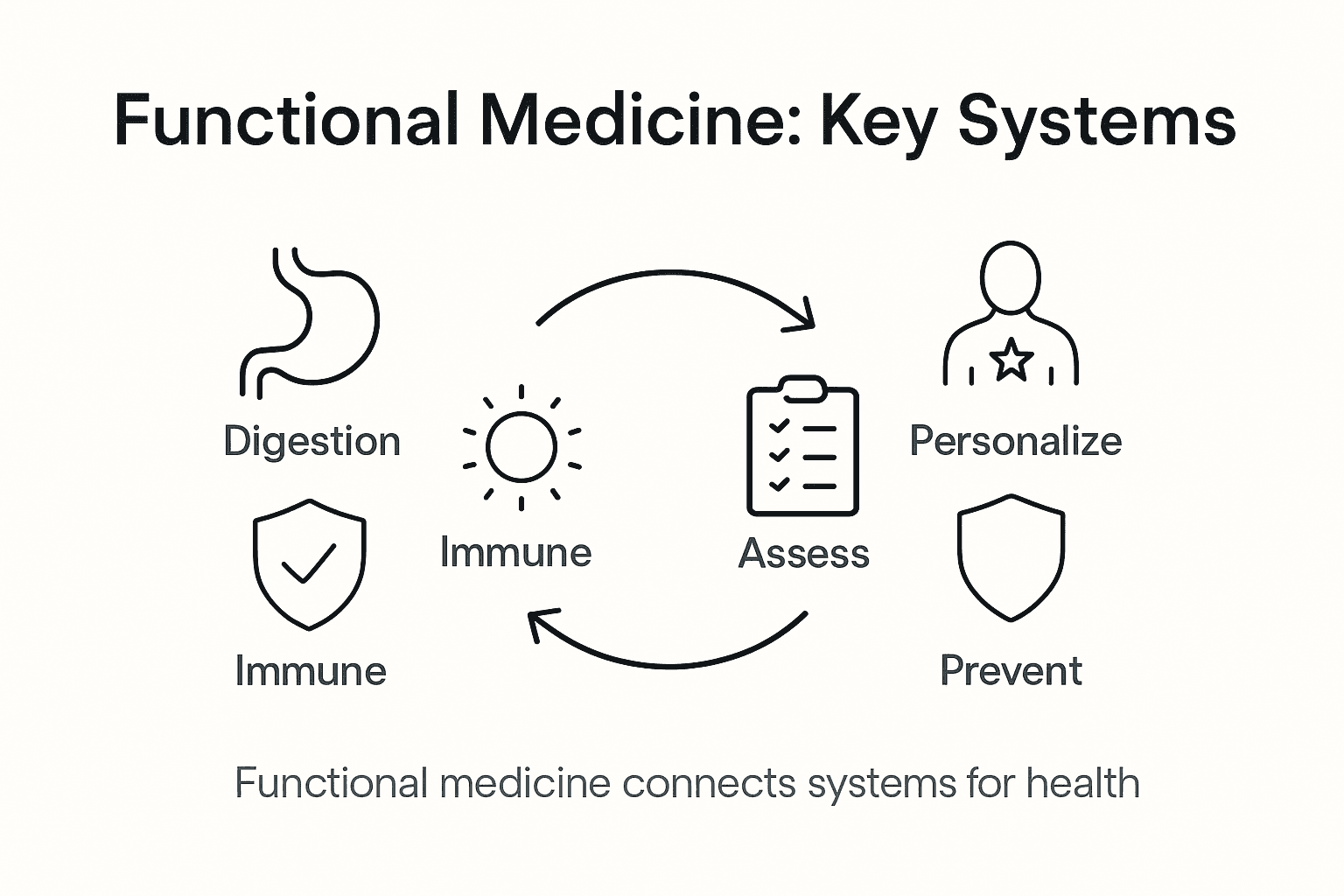
For Canadian adults over 40, this systemic approach becomes particularly powerful in managing age-related health transitions. The body’s complex systems naturally become more vulnerable with aging, making a holistic understanding critical. Functional medicine practitioners utilize advanced diagnostic tools to assess metabolic function, hormonal balance, inflammatory markers, and cellular health. These comprehensive evaluations allow for personalized strategies that can help mitigate potential health risks, optimize physiological function, and support overall wellness during crucial midlife and beyond.
Pro Tip: Schedule an annual comprehensive systems assessment that examines multiple physiological domains to proactively identify and address potential health imbalances before they develop into more significant concerns.
Common Myths And Scientific Debate
Functional medicine continues to navigate a complex landscape of scientific scrutiny and public perception. While gaining popularity, the approach remains controversial within traditional healthcare systems, with ongoing debates about its scientific validity. Skeptics argue that the holistic methodology lacks rigorous empirical evidence, challenging its credibility among conventional medical practitioners who prefer treatment models based on standardized, population-level research.
Several persistent myths surround functional medicine that require careful examination. One common misconception is that functional medicine entirely rejects conventional medical treatments, when in reality, most practitioners seek to integrate both traditional and alternative approaches. Another widespread myth suggests that personalized treatment strategies are simply placebo effects, overlooking the growing body of research demonstrating the complex interactions between genetic, environmental, and lifestyle factors. These misunderstandings often stem from a limited understanding of the sophisticated diagnostic tools and comprehensive assessment methods employed by functional medicine practitioners.
Below is a summary of common myths versus the realities of functional medicine:
| Common Myth | Reality |
|---|---|
| Rejects conventional medicine | Often integrates traditional medical treatments |
| Treatments lack scientific foundation | Uses advanced diagnostics and ongoing research |
| Only about supplements and diets | Involves lifestyle, environment, and personalized care |
| One-size-fits-all solutions | Personalized strategies for each patient |
The scientific debate surrounding functional medicine centers on methodological differences in research and treatment approaches. Traditional medical research typically relies on large-scale, randomized controlled trials that seek universal treatment protocols, while functional medicine emphasizes individualized interventions that may be challenging to standardize. This fundamental difference creates tension between conventional medical researchers and functional medicine practitioners. However, emerging research in fields like epigenetics, metabolomics, and personalized medicine is gradually bridging this gap, providing more nuanced understanding of how individualized approaches can effectively address complex health challenges.
Pro Tip: Approach functional medicine with a balanced perspective by requesting peer-reviewed research and asking your healthcare provider to explain the scientific rationale behind recommended treatments.
Risks, Costs, And Regulation Issues
The current landscape of functional medicine training and regulation reveals significant challenges for Canadian patients. Unlike traditional medical specialties with standardized certification processes, functional medicine practitioners emerge from diverse educational backgrounds, creating potential inconsistencies in expertise and treatment quality. This variability means patients must exercise substantial due diligence when selecting a functional medicine practitioner, carefully verifying their credentials and professional training.
Cost considerations represent another critical aspect of functional medicine that patients must carefully evaluate. Personalized treatment plans often involve extensive diagnostic testing, specialized supplements, and longer consultation times, which can substantially increase out-of-pocket expenses. Many provincial health insurance plans provide limited coverage for functional medicine services, meaning patients typically bear the majority of treatment costs. These expenses can range from several hundred to thousands of dollars, depending on the complexity of individual health assessments and recommended interventions.
Regulatory challenges compound the complexities of functional medicine in Canada. Without a unified national regulatory framework, practitioners operate under varying standards of practice. This lack of standardization raises legitimate concerns about treatment safety, efficacy, and potential risks. Patients must be proactive in understanding a practitioner’s qualifications, seeking practitioners affiliated with recognized professional organizations, and requesting detailed information about proposed treatment approaches. While functional medicine offers promising personalized healthcare strategies, the current regulatory environment demands that patients approach these services with informed skepticism and thorough research.
Pro Tip: Request comprehensive documentation of a functional medicine practitioner’s credentials, including their specific training, professional affiliations, and experience in managing health conditions similar to your own before initiating treatment.
Empower Your Healthy Aging Journey with Functional Medicine Principles
The article highlights how functional medicine addresses the root causes of health challenges by examining the whole body system and personalizing care plans, especially for adults over 40. If you are looking to support this approach with practical tools and wellness products, Real Healthy Haven offers a curated selection designed specifically for Canadian adults aiming to optimize their health as they age. From advanced health monitors that help track key metrics to comfort-driven activewear and supplements tailored for metabolic and hormonal balance, our products align with the proactive and systemic wellness strategies emphasized in functional medicine.

Take control of your well-being today by exploring our range of specialized fitness and wellness products. Visit Real Healthy Haven to discover solutions that complement your functional medicine journey. Act now to invest in your vitality and embrace a healthier future supported by a comprehensive and personalized approach.
Frequently Asked Questions
What is functional medicine?
Functional medicine is a patient-centered approach that focuses on identifying and addressing the root causes of health issues instead of just treating symptoms. It considers the complex interactions between genetic, environmental, and lifestyle factors that influence overall health.
How does functional medicine differ from conventional medicine?
Functional medicine emphasizes personalized care tailored to an individual’s unique health profile, whereas conventional medicine often utilizes standardized treatment protocols focused on symptom management.
Why is personalization important in functional medicine for healthy aging?
Personalization helps develop tailored wellness plans that address individual health journeys, particularly as adults over 40 experience complex physiological changes. This approach can optimize health and mitigate age-related risks.
What types of assessments are used in functional medicine?
Functional medicine uses advanced diagnostics, comprehensive medical histories, and detailed lifestyle evaluations to develop holistic wellness strategies that provide insights into a person’s health landscape.
Recommended
- Functional Movement: Boosting Mobility After 40 – Real Healthy Haven
- Lifestyle Medicine: Transforming Healthy Aging Over 40 – Real Healthy Haven
- Role of Healthy Body Fat—Why It Matters After 40 – Real Healthy Haven
- Defining Metabolic Health – Why It Matters After 40 – Real Healthy Haven
- Why Beauty Inside Out: Complete Guide to Holistic Glow – Pure Light Botanical Beauty
Leave a comment