

Role of Sleep in Wellness: Complete Guide for Adults 40+

Over 35 percent of american adults report getting less than the recommended amount of sleep each night, and the effects run deeper than grogginess. Sleep plays a key role in maintaining both physical and mental wellness, particularly for those entering their forties and beyond. As midlife brings new health challenges, understanding how vital proper rest is can transform your daily energy, mood, and overall well-being. Discover why sleep becomes one of your most powerful wellness strategies after 40.
Table of Contents
- Defining Sleep’s Role In Overall Wellness
- Sleep Stages And Their Impact On Health
- Wellness Benefits Of Healthy Sleep Patterns
- Common Sleep Challenges After Age 40
- Strategies And Products For Better Sleep
Key Takeaways
| Point | Details |
|---|---|
| Sleep’s Importance | Sleep plays a critical role in overall wellness for adults over 40, influencing physical and mental health through restorative processes. |
| Sleep Stages Matter | Understanding the various sleep stages is crucial, as each stage impacts health differently, particularly deep and REM sleep for recovery and cognitive function. |
| Health Risks Reduction | Consistent and quality sleep is linked to a lower risk of chronic health issues, improving mental performance and emotional stability. |
| Addressing Challenges | Adults over 40 face unique sleep challenges related to physiological changes, necessitating personalized strategies to enhance sleep quality. |
Defining Sleep’s Role in Overall Wellness
Sleep represents far more than just a nightly routine. Wellness for adults over 40 hinges critically on understanding sleep’s profound physiological and psychological impacts. Think of sleep as your body’s comprehensive restoration and maintenance system - a nightly reset button that influences virtually every aspect of physical and mental health.
As we age, sleep transitions from a passive recovery process to an active wellness strategy. Our bodies undergo significant metabolic, hormonal, and cellular repair mechanisms during sleep, making quality rest crucial for maintaining optimal health. While younger adults might have viewed sleep as optional, for those 40 and above, sleep becomes a non-negotiable component of sustainable wellness. Muscle recovery, cognitive function, immune system resilience, and emotional regulation are all deeply interconnected with our sleep patterns.
Key dimensions of sleep’s wellness role include:
- Hormonal Regulation: Sleep helps balance critical hormones like cortisol, testosterone, and human growth hormone
- Cognitive Restoration: Enables memory consolidation and neural pathway maintenance
- Metabolic Management: Supports healthy metabolism and weight maintenance
- Emotional Equilibrium: Helps manage stress responses and emotional processing
Understanding sleep’s multifaceted role becomes increasingly important as we navigate midlife challenges. By recognizing sleep not just as rest, but as an active wellness intervention, adults can strategically approach their nightly routines. Interested in exploring how healthy routines contribute to wellness? Check out our guide on healthy routines for adults 40+.
Sleep isn’t merely about closing your eyes and waiting for morning. It’s a sophisticated biological process that repairs, regenerates, and prepares your body for the next day’s challenges. For adults over 40, viewing sleep through this wellness lens transforms it from a passive activity into an intentional health strategy.
Sleep Stages and Their Impact on Health
Sleep stages represent a sophisticated biological process that significantly influences our overall health, especially for adults navigating their 40s and beyond. Toronto Academic Pain Medicine Institute explains that our sleep cycle consists of multiple distinct stages, each playing a crucial role in physical and mental restoration.
According to Ontario Colleges Library Services, sleep is not a uniform state but a dynamic journey through four primary stages, each with unique characteristics and health implications. These stages range from light sleep to deep sleep and REM (Rapid Eye Movement) sleep, creating a complex cycle that repeats approximately every 90-110 minutes throughout the night. Understanding these stages becomes increasingly important as we age, since the quality and duration of each stage directly impact our wellness.
Key characteristics of sleep stages include:
- Light Sleep (Stages 1-2): Transition phase, easy to wake, helps initial relaxation
- Deep Sleep (Stages 3-4): Critical for physical restoration, muscle repair, and immune function
- REM Sleep: Essential for cognitive processing, memory consolidation, and emotional regulation
For adults over 40, maintaining healthy sleep cycles becomes even more critical. Disrupted or insufficient time in deep and REM stages can lead to decreased cognitive performance, reduced pain tolerance, and compromised immune responses. By prioritizing consistent sleep patterns and creating an environment conducive to uninterrupted rest, individuals can support their body’s natural healing and maintenance processes.
IMAGE:descriptive_key_1] Want to explore how healthy routines contribute to better sleep? Check out our [guide on healthy routines for adults 40+.
Recognizing sleep as a complex, multi-stage process empowers adults to make intentional choices that support their overall wellness. Each stage serves a unique purpose, working together to repair, regenerate, and prepare our bodies for the challenges of daily life.
Wellness Benefits of Healthy Sleep Patterns
Healthy sleep patterns are not just about feeling rested. Statistics Canada reveals that consistent, quality sleep significantly reduces risks of multiple adverse health conditions, making it a critical component of wellness for adults over 40.
WHOOP highlights that maintaining regular sleep routines goes far beyond simple rest. Consistent sleep patterns actively enhance physical performance, cognitive function, and emotional stability. For adults navigating midlife, these benefits become increasingly important as our bodies naturally experience metabolic and hormonal shifts.
Key wellness benefits of healthy sleep patterns include:
- Reduced Health Risks: Lower probability of cardiovascular disease, diabetes, and cognitive disorders
- Enhanced Mental Performance: Improved memory, problem-solving skills, and mental clarity
- Emotional Resilience: Better stress management and mood regulation
- Physical Recovery: Accelerated muscle repair and immune system support
Embracing healthy sleep isn’t just a nighttime routine - it’s a comprehensive wellness strategy. By prioritizing consistent sleep, adults over 40 can proactively manage their health, potentially mitigating age-related challenges. Want to learn more about creating effective wellness habits? Check out our guide on tracking wellness habits naturally.
Ultimately, healthy sleep patterns represent a powerful, accessible tool for maintaining overall wellness. Each night of quality sleep is an investment in your long-term health, cognitive function, and emotional well-being.
Common Sleep Challenges After Age 40
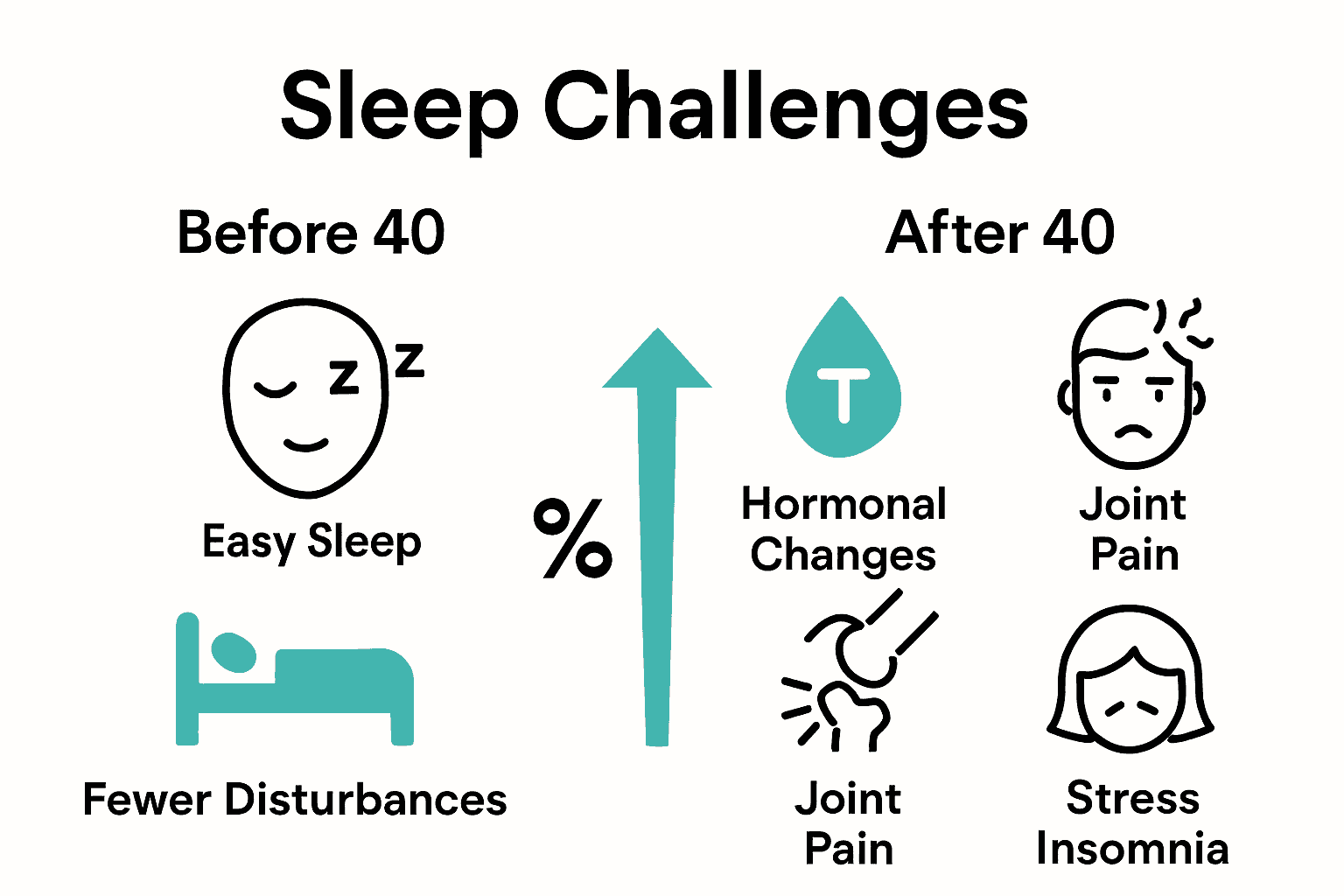
Sleep disruption becomes increasingly complex as we age, with multiple physiological and lifestyle factors converging to challenge our nightly rest. Health Promotion and Chronic Disease Prevention in Canada highlights that adults over 40 frequently experience sleep challenges linked to chronic conditions like stress and arthritis, fundamentally altering our sleep architecture.
Canadian Longitudinal Study on Aging reveals that sleep health is deeply interconnected with social determinants such as income, education, and living arrangements. This means sleep challenges aren’t just medical issues, but complex interactions between personal circumstances, health status, and environmental factors unique to midlife experiences.
Common sleep challenges for adults over 40 include:
- Hormonal Shifts: Decreased melatonin production affecting sleep-wake cycles
- Physical Discomfort: Increased joint pain and muscle stiffness disrupting sleep
- Stress-Related Insomnia: Higher cortisol levels making relaxation difficult
- Metabolic Changes: Slower metabolism impacting sleep quality and duration
Navigating these sleep challenges requires a holistic approach that addresses both physiological and lifestyle factors. Recognizing that sleep disruption is not a personal failure but a natural part of aging can help reduce associated stress. Want to explore comprehensive wellness strategies for this life stage? Check out our guide to healthy lifestyle principles for adults 40+.
Ultimately, understanding these sleep challenges empowers adults to develop personalized strategies that support restorative rest. By acknowledging the complex interplay of factors influencing sleep, individuals can make informed decisions about their health and wellness.
Strategies and Products for Better Sleep
Sleep optimization requires a multifaceted approach tailored specifically to adults over 40. McMaster Continuing Education highlights the importance of understanding sleep science, emphasizing that effective sleep strategies go beyond simple recommendations, involving comprehensive behavioral and clinical interventions.
University of New Brunswick underscores the critical nature of creating a consistent sleep environment and adopting targeted relaxation techniques. For adults navigating midlife, this means developing personalized strategies that address both physiological changes and lifestyle challenges.
Key strategies for improving sleep quality include:
- Consistent Sleep Schedule: Maintain regular bedtime and wake-up times
- Sleep Environment Optimization: Control room temperature, minimize noise, reduce blue light exposure
- Relaxation Techniques: Practice meditation, deep breathing, gentle stretching
- Nutrition and Supplement Support: Manage caffeine intake, consider sleep-supportive supplements
Technology and targeted products can significantly enhance sleep quality for adults over 40. Ergonomic pillows, white noise machines, and sleep tracking devices offer innovative solutions for understanding and improving sleep patterns. Want to explore comprehensive wellness goals that support better sleep? Check out our guide to top wellness goals for healthier living.
Ultimately, improving sleep is a personalized journey. By combining scientific insights, lifestyle adjustments, and strategic product support, adults can transform their nighttime experience and enhance overall wellness.
Unlock Restorative Sleep for Lasting Wellness After 40
Sleep deeply impacts your health and wellness as you age. This guide highlights how hormonal shifts, stress, and physical discomfort can disrupt your sleep cycles and reduce your energy and focus. You deserve better nights and brighter days through balanced rest that supports hormone regulation, cognitive clarity, and emotional resilience.
Discover targeted solutions including supportive supplements and wellness products designed specifically for adults 40 and above. Our curated Vitamins And Supplements example products support natural sleep rhythms and recovery.

Take control of your sleep health and overall wellness now with trusted products made for your unique needs. Visit Real Healthy Haven today and explore how a well-rounded approach to sleep can transform your vitality. Start building your healthier sleep habits with expert support and high-quality wellness products.
Frequently Asked Questions
What is the role of sleep in overall wellness for adults over 40?
Sleep plays a critical role in overall wellness for adults over 40 by influencing physical and mental health. It supports hormonal regulation, cognitive restoration, metabolic management, and emotional equilibrium, making quality rest essential as we age.
How do sleep stages impact health as we age?
As we age, the different sleep stages—light sleep, deep sleep, and REM sleep—become increasingly important for health. Quality and duration in each stage affect cognitive performance, physical recovery, and emotional regulation, which are crucial for adults over 40.
What are common sleep challenges faced by adults over 40?
Common sleep challenges for adults over 40 include hormonal shifts, physical discomfort from conditions like arthritis, stress-related insomnia, and metabolic changes that impact sleep quality and duration.
What strategies can help improve sleep quality for adults in midlife?
To improve sleep quality, adults can establish a consistent sleep schedule, enhance their sleep environment, practice relaxation techniques, and manage nutrition, including caffeine intake. Additionally, sleep-supportive products like ergonomic pillows can assist in promoting better rest.
Recommended
- Role of Healthy Routines: Complete Guide for Adults 40+ – Real Healthy Haven
- 7 Top Wellness Goals 2025 for Healthier Living Over 40 – Real Healthy Haven
- 7 Essential Weight Management Tips 2025 for Adults 40+ – Real Healthy Haven
- The Essential Guide to Yoga Over 40 – Real Healthy Haven
- The Essential Guide to the Role of Wellness in Makeup – Pure Light Botanical Beauty
Leave a comment