

What Is Digital Health – Benefits for Canadians 40+

Over half of Canadian adults now interact with digital health technologies, yet many remain unsure how these tools compare to American approaches. As healthcare becomes increasingly tech-driven, understanding digital health options can help Canadians make informed choices for their personal wellness. Explore what sets the Canadian digital health experience apart, and discover practical ways technology is shaping daily healthcare for adults across the country.
Table of Contents
- Digital Health Defined For Canadian Adults
- Major Types Of Digital Health Solutions
- How Technology Powers Personal Wellness
- Benefits Of Digital Health For Aging Adults
- Privacy, Safety, And Key Considerations
Key Takeaways
| Point | Details |
|---|---|
| Digital Health Enhances Care | Digital health tools empower Canadian adults, particularly those over 40, with greater control over their healthcare through remote consultations and health tracking. |
| Proactive Health Management | Technology enables continuous monitoring, allowing individuals to detect health issues early and tailor their wellness strategies effectively. |
| Privacy and Safety Are Crucial | Understanding data protection measures and maintaining security is essential for older adults using digital health solutions. |
| Start Small with Technology | Gradually adopting digital health tools, such as wearable devices or apps, can help individuals become comfortable and effective in managing their health. |
Digital Health Defined for Canadian Adults
Digital health represents a transformative approach to healthcare that leverages advanced technologies to enhance medical services and patient experiences. At its core, digital health encompasses a wide range of technological innovations designed to improve healthcare accessibility, efficiency, and personalization for Canadian adults.
The concept of digital health goes far beyond simple digital record keeping. Digital technologies and data analytics now enable comprehensive healthcare solutions that integrate multiple aspects of medical care. These innovations include:
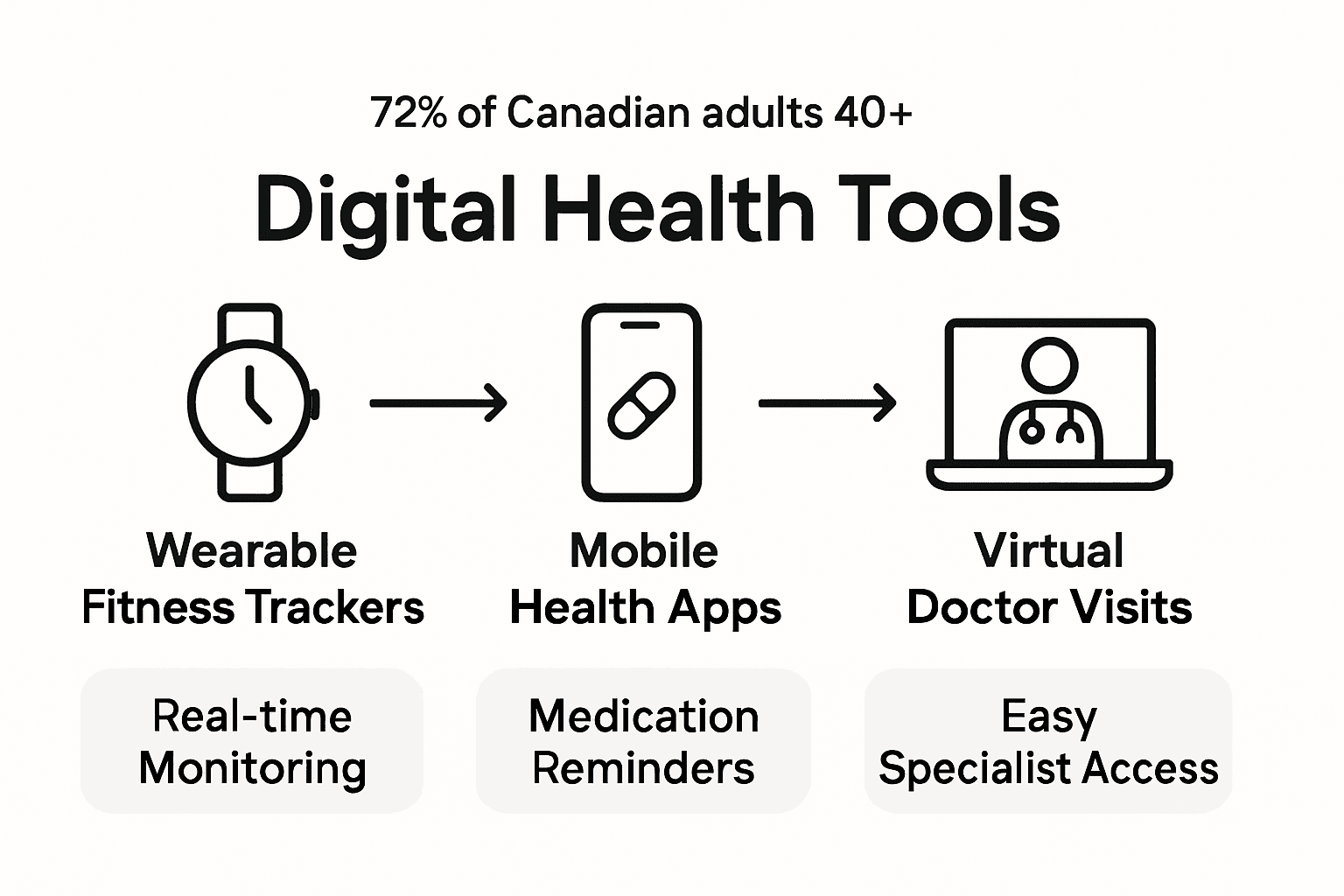
- Telemedicine platforms allowing remote consultations
- Electronic health records for streamlined patient information management
- Wearable technologies that track personal health metrics
- Artificial intelligence systems for diagnostic support
For Canadian adults over 40, digital health offers particularly meaningful benefits. These technologies can help monitor chronic conditions, provide early warning signs of potential health issues, and create more personalized healthcare experiences. Individuals can now track their fitness levels, monitor heart rate and sleep patterns, and share crucial health data directly with medical professionals without extensive in-person visits.
The integration of digital health tools means more proactive and preventative healthcare approaches. Seniors and middle-aged adults can now have greater control and insights into their personal health trajectories, enabling more informed medical decisions and potentially reducing long-term healthcare costs.
Pro Tip: Start small with digital health adoption. Choose one wearable device or health monitoring app to familiarize yourself with the technology and gradually expand your digital health toolkit.
Major Types of Digital Health Solutions
Digital health solutions represent a diverse ecosystem of technological innovations designed to transform healthcare delivery and patient experiences. These technologies provide comprehensive approaches to monitoring, managing, and improving personal health for Canadian adults, particularly those over 40.
Digital health technologies encompass multiple interconnected systems that work together to create more efficient and personalized healthcare experiences. These solutions can be categorized into several key types:
-
Telemedicine Platforms
- Remote medical consultations
- Virtual healthcare appointments
- Specialist access without geographic limitations
-
Electronic Health Records (EHR)
- Centralized patient information systems
- Secure medical data management
- Seamless information sharing between healthcare providers
-
Wearable Health Monitoring Devices
- Continuous fitness and health tracking
- Real-time physiological data collection
- Heart rate, sleep, and activity monitoring
-
Mobile Health Applications
- Personalized health information resources
- Medication tracking and reminders
- Nutrition and wellness guidance
For Canadian adults navigating complex healthcare landscapes, these digital solutions offer unprecedented levels of personal health management. Wearable devices, for instance, allow individuals to track vital signs, monitor chronic conditions, and share critical health data directly with medical professionals. This proactive approach empowers patients to take greater control of their health journey.
Mobile applications further enhance digital health capabilities by providing instant access to medical resources, symptom checkers, and personalized health recommendations. These tools bridge gaps between traditional healthcare models and modern technological interventions, making health management more accessible and user-friendly.
Pro Tip: Start your digital health journey by selecting one user-friendly mobile health app or wearable device that aligns with your specific health goals and comfort level with technology.
Here’s how major digital health solution types differ in their primary focus for Canadian adults:
| Solution Type | Main Focus | Example Users |
|---|---|---|
| Telemedicine Platforms | Virtual access to medical care | Rural patients |
| Electronic Health Records | Managing patient information | Family physicians |
| Wearable Devices | Tracking personal health metrics | Fitness enthusiasts |
| Mobile Health Apps | Delivering health guidance | Chronic condition management |
How Technology Powers Personal Wellness
Personal wellness technology has revolutionized how Canadian adults over 40 approach health management, transforming passive healthcare into an interactive, empowering experience. Modern digital tools provide unprecedented insights into individual health patterns, enabling more proactive and personalized wellness strategies.
Digital education programs are helping older adults bridge technological gaps, ensuring they can leverage cutting-edge health monitoring tools effectively. These programs teach critical skills that allow mature adults to navigate complex digital health ecosystems with confidence and ease.
Technology powers personal wellness through several key mechanisms:
-
Continuous Health Monitoring
- Real-time physiological tracking
- Early detection of potential health risks
- Personalized health trend analysis
-
Data-Driven Health Insights
- Comprehensive personal health dashboards
- Predictive health risk assessments
- Customized wellness recommendations
-
Enhanced Communication Channels
- Direct medical professional consultations
- Secure health information sharing
- Simplified medical record management
Wearable devices and smartphone applications now function as personal health assistants, providing instantaneous feedback about physical activity, sleep quality, heart rate variability, and stress levels. These technologies transform raw data into actionable insights, empowering individuals to make informed decisions about their lifestyle and health management.

Moreover, artificial intelligence and machine learning algorithms are becoming increasingly sophisticated in analyzing personal health data. These advanced technologies can identify subtle health patterns, predict potential medical issues before they become serious, and offer personalized prevention strategies tailored to an individual’s unique physiological profile.
Pro Tip: Start small with wellness technology by selecting one user-friendly device or app that aligns with your primary health monitoring goals, and gradually expand your digital health toolkit as you become more comfortable.
Benefits of Digital Health for Aging Adults
Digital health technologies are transforming healthcare experiences for Canadian adults over 40, offering unprecedented opportunities for personalized wellness management. These innovative solutions go beyond traditional medical approaches, empowering individuals to take proactive control of their health and well-being.
Digital health technologies offer aging adults improved access to healthcare services, enabling more efficient and personalized medical interactions. This technological revolution addresses several critical needs for mature adults seeking comprehensive health management:
-
Enhanced Healthcare Accessibility
- Remote medical consultations
- Reduced travel requirements
- Immediate medical advice and support
-
Personal Health Monitoring
- Continuous vital sign tracking
- Early detection of potential health risks
- Comprehensive wellness insights
-
Autonomy and Independence
- Self-managed health tracking
- Reduced dependency on frequent in-person appointments
- Improved personal health literacy
By providing digital literacy programs and access to technology, older adults can maintain greater independence and quality of life. These programs help mature individuals navigate digital platforms, manage online health resources, and stay connected with healthcare providers through innovative technological solutions.
The integration of artificial intelligence and machine learning further enhances digital health benefits. These advanced technologies can analyze personal health data, predict potential medical issues, and provide personalized recommendations tailored to individual health profiles. Wearable devices and smartphone applications now function as personal health assistants, offering real-time insights into physical activity, sleep patterns, and overall wellness.
Pro Tip: Start your digital health journey gradually by selecting one user-friendly health monitoring tool that matches your specific wellness goals and comfort level with technology.
Privacy, Safety, and Key Considerations
Digital health privacy represents a critical aspect of technological wellness for Canadian adults, balancing the incredible benefits of health monitoring with essential personal data protection. Understanding and navigating the complex landscape of digital health safety requires careful consideration and proactive strategies.
Ensuring privacy and safety in digital health involves addressing multiple interconnected challenges that directly impact user experience and trust. These considerations extend far beyond simple data protection, encompassing comprehensive approaches to technological accessibility and personal security.
Key privacy and safety considerations include:
-
Data Protection Strategies
- Encryption of personal health information
- Secure transmission protocols
- Limited data sharing permissions
-
User Authentication
- Strong password requirements
- Two-factor authentication
- Biometric access controls
-
Consent and Transparency
- Clear privacy policy communication
- Opt-in/opt-out mechanisms
- Detailed information about data usage
Mature adults must remain vigilant about digital health platforms, carefully evaluating the security measures and privacy policies of any technology they choose to incorporate into their wellness routine. This means understanding how personal health data will be collected, stored, processed, and potentially shared with third-party services.
Technological literacy plays a crucial role in maintaining personal digital safety. Learning to recognize potential security risks, understanding basic cybersecurity principles, and staying informed about emerging digital health technologies can significantly reduce potential vulnerabilities. Regular software updates, using trusted platforms, and maintaining skepticism about unsolicited health recommendations are essential protective strategies.
Below is a summary of key privacy and safety considerations unique to digital health for adults over 40:
| Consideration | Importance for Older Adults | Action Recommended |
|---|---|---|
| Data Encryption | Protects sensitive health details | Use apps with strong security |
| User Authentication | Prevents unauthorized access | Enable two-factor authentication |
| Consent Transparency | Ensures informed data sharing | Review privacy policies regularly |
Pro Tip: Conduct a personal digital health security audit by reviewing the privacy settings of your current health apps, removing unnecessary permissions, and ensuring you understand each platform’s data usage policies.
Take Control of Your Health with Digital Wellness Solutions
The article highlights the challenge Canadian adults 40 and over face in managing their health proactively while navigating complex digital health technologies. If you want to overcome barriers like understanding wearable devices, tracking vital health signs, or enhancing personal wellness at home, there is a simple way forward. With digital health becoming a vital tool for prevention and early detection, combining technology with quality wellness products can change your health journey for the better.

Discover specialized fitness and health monitoring products designed to align with the digital health benefits discussed. From reliable health monitors to comfortable activewear and therapeutic supplies, RealHealthyHaven offers tools that help you stay engaged with your wellness goals today. Start your journey with carefully curated products and expert consultations that make adopting digital health easier and more enjoyable right now. Visit RealHealthyHaven and explore options that fit your lifestyle, then take the next step to boost your wellness with confidence.
Frequently Asked Questions
What is digital health?
Digital health refers to the use of advanced technologies to improve healthcare accessibility, efficiency, and personalization. It includes telemedicine, electronic health records, wearable devices, and mobile health applications that help individuals manage their health more effectively.
What are the benefits of digital health for individuals over 40?
For individuals over 40, digital health provides advantages such as continuous health monitoring, early detection of potential health risks, enhanced access to healthcare services, and greater control over personal health management.
How can wearable devices enhance my health management?
Wearable devices track personal health metrics like heart rate, sleep patterns, and physical activity in real-time. This information allows users to monitor chronic conditions and share crucial health data with medical professionals, fostering proactive health management.
What privacy and safety considerations should I keep in mind with digital health tools?
When using digital health tools, it is essential to consider data protection strategies, user authentication methods, and transparency regarding consent and data usage. Always review privacy policies and ensure you use secure, trusted platforms.
Recommended
- 7 Expert Tips for Healthy Aging Every Canadian Over 40 Needs – Real Healthy Haven
- What Is Heart Health and Why It Matters After 40 – Real Healthy Haven
- Complete Guide to Defining Healthy Aging – Real Healthy Haven
- 7 Heart Healthy Habits for Canadian Adults Over 40 – Real Healthy Haven
- Warum medizinische Dokumente digitalisieren – Mehr Klarheit für Patienten
Leave a comment