

Cognitive Health: Vital for Aging Well in Canada

Most American adults over forty report noticeable changes in memory and focus as they age, a reality that resonates strongly with Canadian men and women. Maintaining cognitive health is not just about staying sharp but also preserving independence and well-being through the years. This overview takes a closer look at the science behind brain wellness and offers practical steps Canadians can use to support mental vitality and prevent age-related cognitive decline.
Table of Contents
- What Is Cognitive Health and Why It Matters
- Types of Cognitive Function in Aging Adults
- Key Features and How Cognitive Health Works
- Major Influences on Cognitive Well-Being
- Risks to Cognitive Health After Forty
- Enhancing and Sustaining Cognitive Vitality
Key Takeaways
| Point | Details |
|---|---|
| Cognitive Health is Essential | It encompasses the brain’s ability to think, learn, remember, and adapt, impacting quality of life as we age. |
| Lifestyle Influences Matter | Nutrition, physical activity, and mental stimulation significantly affect cognitive resilience and performance. |
| Proactive Management is Key | Addressing lifestyle-related risks through regular assessments can help mitigate cognitive decline. |
| Social Engagement Boosts Brain Health | Meaningful interactions and continuous learning promote neural plasticity and enhance cognitive vitality. |
What Is Cognitive Health and Why It Matters
Cognitive health represents a critical aspect of overall wellness, particularly for Canadians navigating the aging process. At its core, cognitive health encompasses our brain’s ability to think, learn, remember, and process information effectively. The World Health Organization defines brain health as a complex system involving cognitive, sensory, social-emotional, behavioral, and motor functions that collectively determine our mental performance and quality of life.
Understanding cognitive health goes beyond simply measuring memory retention. It involves a holistic assessment of how our brain processes information, adapts to new challenges, maintains emotional balance, and supports daily functioning. As we age, these cognitive capabilities can naturally decline, which makes proactive brain health management increasingly important for Canadians over 40. Factors like genetics, lifestyle choices, physical activity, nutrition, and mental stimulation all play significant roles in maintaining optimal cognitive function.
The implications of cognitive health extend far beyond individual experiences. At a societal level, maintaining robust cognitive abilities can reduce healthcare costs, support workforce productivity, and enhance overall community well-being. Research indicates that individuals who prioritize brain health can potentially delay or mitigate age-related cognitive decline, leading to more independent and fulfilling lives. This understanding transforms cognitive health from a medical concept into a personal empowerment strategy for aging Canadians.
Pro tip: Incorporate daily mental exercises like crossword puzzles, learning a new language, or strategic games to keep your cognitive skills sharp and engaged.
Types of Cognitive Function in Aging Adults
Cognitive function encompasses several critical mental domains that naturally evolve as we age. Health Canada’s comprehensive overview of cognitive changes highlights the intricate ways our brain processing adapts over time. These cognitive domains include memory, executive function, language skills, attention, and processing speed - each playing a unique role in our daily mental performance.
Memory represents perhaps the most discussed cognitive function, with two primary types significantly impacting aging adults. Short-term memory involves temporarily holding and manipulating information, while long-term memory stores accumulated knowledge and experiences. As individuals age, short-term memory often experiences more noticeable changes, making tasks like remembering recent conversations or new instructions more challenging. Executive function - which includes planning, problem-solving, and decision-making capabilities - can also become more deliberate and potentially slower with age.

Language skills and communication abilities represent another crucial cognitive domain. While vocabulary and accumulated knowledge typically remain stable or can even improve with age, processing speed and word retrieval might gradually decline. Attention and concentration capabilities also transform, potentially requiring more focused effort to maintain consistent mental engagement. These changes are not universal deficits but natural variations in cognitive processing that differ among individuals based on genetics, lifestyle, and overall health.
Here is a summary of major cognitive domains and how they change with age:
| Cognitive Domain | Typical Age-Related Change | Role in Daily Life |
|---|---|---|
| Short-Term Memory | May decline noticeably | Remembering conversations |
| Long-Term Memory | Remains more stable | Recalling life experiences |
| Executive Function | Slows but remains adaptable | Planning and decision-making |
| Language Skills | Vocabulary often stable or improves | Understanding and communication |
| Attention | May require more effort | Focusing on tasks |
| Processing Speed | Tends to slow gradually | Quick information handling |
Pro tip: Engage in regular cognitive activities that challenge multiple mental domains, such as learning a musical instrument or participating in strategic group games that require memory, language, and problem-solving skills.
Key Features and How Cognitive Health Works
The World Health Organization’s comprehensive framework on cognitive health reveals that cognitive functioning is a complex, dynamic system influenced by multiple interconnected factors. Neuroplasticity serves as the fundamental mechanism underlying cognitive health, representing the brain’s remarkable ability to reorganize, form new neural connections, and adapt throughout our lifetime. This process enables our cognitive system to continuously learn, modify existing neural pathways, and respond to new experiences and challenges.
The key features of cognitive health extend beyond mere brain function, encompassing a holistic interaction between physical, psychological, and environmental elements. Neurological research demonstrates that cognitive performance is deeply influenced by factors such as genetics, lifestyle choices, nutrition, physical activity, social engagement, and mental stimulation. Genetic predispositions provide a baseline, but environmental and behavioral interventions can significantly modify cognitive trajectories, offering hope for maintaining mental sharpness as we age.
Neurochemical balance plays a critical role in sustaining optimal cognitive health. Neurotransmitters like dopamine, serotonin, and acetylcholine regulate various cognitive processes, including attention, memory formation, emotional regulation, and learning capabilities. As we age, natural variations in neurotransmitter production can impact cognitive performance, making proactive lifestyle management essential. The brain’s intricate network relies on consistent stimulation, proper nutrition, adequate sleep, and stress management to maintain its complex communicative infrastructure.
Pro tip: Create a daily routine that incorporates mental challenges, physical exercise, and social interaction to support multiple dimensions of cognitive health and brain plasticity.
Major Influences on Cognitive Well-Being
Canada’s comprehensive public health guidelines highlight the multifaceted nature of cognitive well-being, revealing that mental health is far more than a single-dimensional concept. Lifestyle choices emerge as the most powerful determinant of cognitive resilience, with several key influences playing critical roles in maintaining mental sharpness and neurological vitality. These influences range from physical activity and nutrition to social engagement and mental stimulation, each contributing uniquely to our cognitive ecosystem.
Nutritional intake stands as a fundamental pillar of cognitive health. Balanced diets rich in omega-3 fatty acids, antioxidants, and essential nutrients directly support brain function, potentially reducing the risk of cognitive decline. Physical exercise plays an equally transformative role, with regular movement improving blood flow to the brain, stimulating neurogenesis, and enhancing neural connectivity. Research consistently demonstrates that adults who maintain consistent physical activity levels experience slower cognitive aging and improved mental resilience.
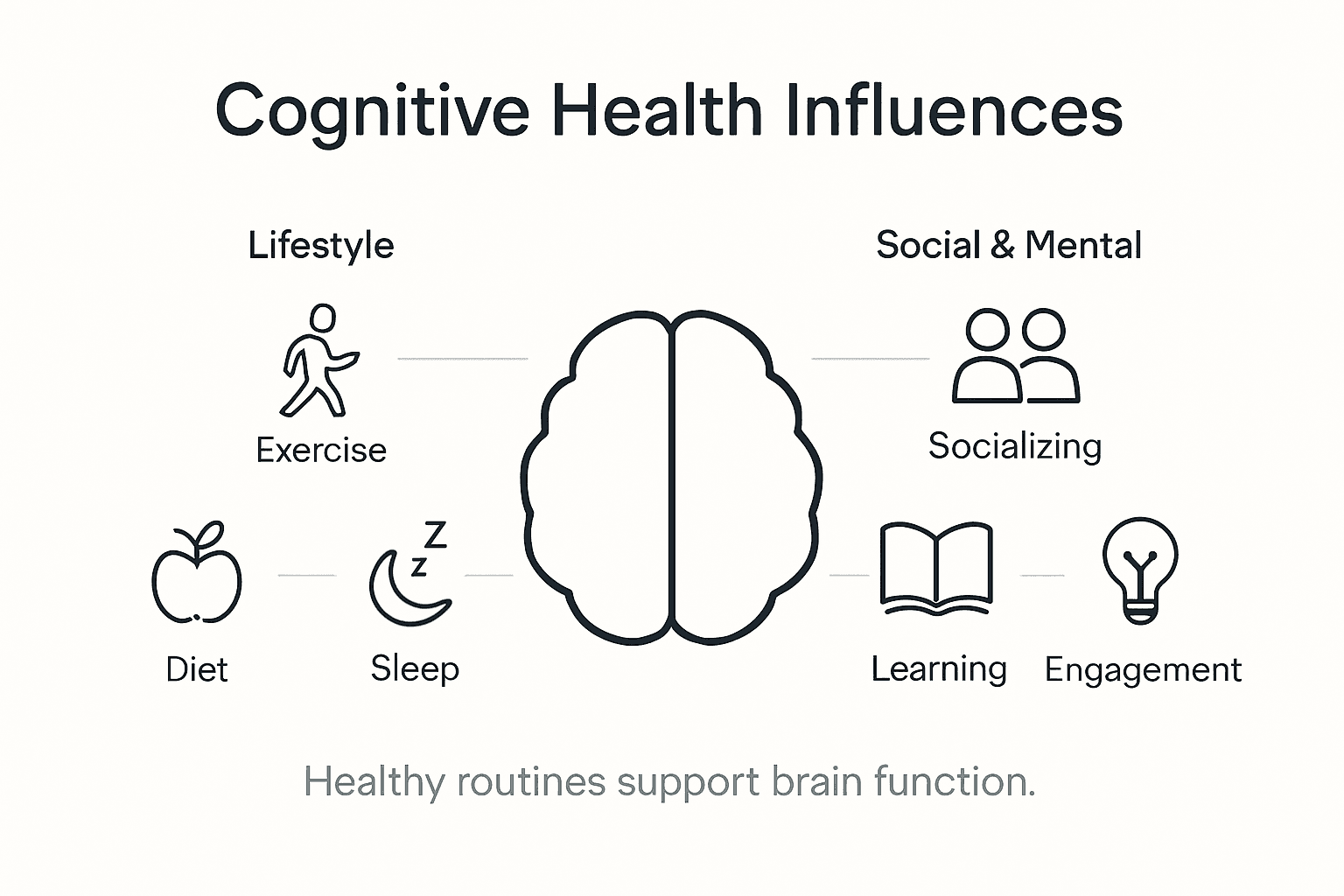
Social connections and mental engagement represent another crucial dimension of cognitive well-being. Meaningful social interactions, continuous learning, and cognitive challenges create a protective environment for brain health. Chronic stress, isolation, and limited mental stimulation can accelerate cognitive decline, while robust social networks and intellectually engaging activities help maintain neural plasticity. Psychological factors like emotional regulation, stress management, and maintaining a positive outlook also significantly influence cognitive performance, underscoring the intricate relationship between mental and cognitive health.
The following table compares key factors influencing cognitive health and how they contribute:
| Factor | How It Supports Cognitive Health | Example Action |
|---|---|---|
| Nutrition | Fuels brain cells, reduces inflammation | Eat more omega-3-rich foods |
| Physical Activity | Boosts blood flow, stimulates new cells | Walk briskly daily |
| Social Engagement | Reduces stress, enhances brain networks | Join a club or volunteer |
| Mental Stimulation | Builds neural connections, prevents decline | Learn a language or play chess |
Pro tip: Design a weekly routine that incorporates social activities, physical exercise, and mental challenges to create a comprehensive approach to cognitive wellness.
Risks to Cognitive Health After Forty
World Health Organization guidelines highlight critical risks that emerge during midlife and beyond, revealing a landscape of potential cognitive challenges for adults entering their forties. Lifestyle-related risks become increasingly significant during this life stage, with several modifiable factors directly impacting long-term brain health. Understanding these risks represents the first step in developing a proactive approach to cognitive preservation and mental resilience.
Physiological changes and external factors converge to create unique cognitive vulnerabilities after forty. Hypertension, chronic stress, and metabolic disorders like diabetes can significantly accelerate cognitive decline. Reduced physical activity, which often accompanies career and family responsibilities, contributes to decreased neural plasticity. Hormonal shifts, particularly for women experiencing perimenopause, can also influence cognitive processing speed and memory retention, making this a critical period for targeted health interventions.
Psychosocial risks play an equally important role in cognitive health deterioration. Social isolation, limited mental stimulation, and chronic psychological stress can create neurological vulnerabilities. Harmful lifestyle habits such as excessive alcohol consumption, smoking, poor sleep patterns, and nutritional deficiencies compound these risks. Research consistently demonstrates that individuals who maintain comprehensive wellness strategies, including regular exercise, balanced nutrition, social engagement, and continuous learning, can significantly mitigate age-related cognitive decline and maintain mental sharpness.
Pro tip: Conduct an annual comprehensive health assessment focusing on cognitive and metabolic markers to identify and address potential risk factors early.
Enhancing and Sustaining Cognitive Vitality
Canada’s Healthy Living guidelines offer comprehensive strategies for maintaining cognitive wellness, emphasizing that vitality is not a passive state but an active, intentional process. Cognitive enhancement requires a multifaceted approach that integrates physical, mental, and social dimensions of health. By understanding the intricate mechanisms of brain plasticity, individuals can develop targeted strategies to maintain and even improve cognitive function throughout their later years.
Physical exercise emerges as a cornerstone of cognitive vitality. Aerobic activities, strength training, and coordinated movements stimulate neurogenesis, improve neural connectivity, and enhance brain-derived neurotrophic factors. Nutrition plays an equally crucial role, with diets rich in antioxidants, omega-3 fatty acids, and complex nutrients supporting neural health. Specific nutritional strategies like maintaining balanced blood sugar levels, consuming anti-inflammatory foods, and ensuring adequate hydration can directly impact cognitive performance and neural resilience.
Mental stimulation represents the third critical pillar of cognitive vitality. Continuous learning, challenging cognitive tasks, and diverse mental activities create neural reserve and cognitive flexibility. Engaging in activities like learning new languages, playing strategic games, practicing musical instruments, or pursuing creative hobbies can build cognitive resilience. Social engagement further amplifies these benefits, with meaningful interactions providing emotional support, reducing stress, and creating complex neural stimulation that helps maintain cognitive sharpness.
Pro tip: Create a weekly routine that intentionally combines physical exercise, nutritional mindfulness, and mentally challenging activities to holistically support your cognitive health.
Support Your Cognitive Health Journey with Real Healthy Haven
The article highlights the growing challenges Canadians face to maintain cognitive vitality as they age. Everyday concerns like slowing processing speed, managing stress, and sustaining mental stimulation can feel overwhelming. At Real Healthy Haven we understand these struggles and provide practical solutions designed specifically for adults over 40 seeking to preserve and enhance their brain health through lifestyle choices.

Explore our curated collection of fitness equipment to keep your body active, wellness supplements that support brain function, and comfortable activewear that motivates you to move. Each product is selected to fuel your cognitive well-being with nutrients, physical activity aides, and tools to stay mentally engaged. Don’t wait until cognitive decline feels inevitable. Visit Real Healthy Haven to start building a personalized routine today. Your brain deserves care that matches your commitment to healthy aging.
Discover tailored options in our wellness supplements and health monitors categories to track and boost your cognitive health now.
Frequently Asked Questions
What is cognitive health and why is it important?
Cognitive health refers to the brain’s ability to think, learn, remember, and process information effectively. It is crucial for maintaining overall wellness, particularly as we age, as it can impact independence and quality of life.
How can I improve my cognitive health as I age?
You can enhance cognitive health by engaging in regular physical exercise, maintaining a balanced diet rich in nutrients, participating in social activities, and challenging your brain with mental exercises such as puzzles and learning new skills.
What are the main cognitive functions affected by aging?
Aging typically affects several cognitive functions, including short-term memory, executive function (planning and decision-making), attention, processing speed, and language skills, with varying effects on each individual.
What lifestyle factors can negatively impact cognitive health after age 40?
Key lifestyle factors include physical inactivity, poor nutrition, chronic stress, social isolation, and unhealthy habits like excessive alcohol consumption and smoking. These can accelerate cognitive decline and should be addressed for better cognitive well-being.
Leave a comment