

Role of Nutrition for Adults – Impact on Healthy Aging

Most American adults over 40 are surprised to learn that over one third of seniors in Canada face significant nutritional risk. As metabolism slows and nutrient absorption changes with age, dietary needs become far more complex than simply counting calories. This guide breaks down the science and practical strategies that help American adults make smarter food choices, prevent deficiencies, and support optimal health well into midlife and beyond.
Table of Contents
- Defining Nutrition’s Role in Adult Health
- Age-Related Nutritional Needs Over 40
- Essential Nutrients and Daily Requirements
- Risks of Poor Nutrition and Health Decline
- Practical Nutrition Strategies for Canadians
Key Takeaways
| Point | Details |
|---|---|
| Nutritional Strategies Are Crucial Over 40 | Adults over 40 should focus on strategic nutritional choices to maintain health and prevent chronic diseases. |
| Micronutrient Prioritization Is Essential | Emphasizing nutrients like calcium and vitamin D is vital for maintaining bone density and cognitive function. |
| Protein Intake Is Critical | Increasing protein intake helps preserve muscle mass and supports metabolism as metabolic processes slow down. |
| Tailored Dietary Approaches Are Necessary | Individualized nutrition plans should address changing metabolic needs and potential deficiencies to ensure optimal health. |
Defining Nutrition’s Role in Adult Health
Nutrition is not just about eating food - it’s about providing your body with the precise fuel and building blocks needed for optimal functioning, especially as you age. For adults over 40, nutritional strategies become increasingly critical in maintaining health, preventing chronic diseases, and supporting overall well-being. Understanding how different nutrients interact with our body’s complex systems can dramatically transform our approach to aging.
As we progress through adulthood, metabolic processes slow down, and our nutritional requirements shift significantly. Protein becomes more essential for maintaining muscle mass, while micronutrients like calcium, vitamin D, and B vitamins play increasingly important roles in bone density, cognitive function, and energy metabolism. Midlife Nutrition Essentials for Canadians highlights that strategic nutrition can counteract age-related physiological changes and support long-term health.
The impact of nutrition extends far beyond simple calorie intake. Key nutritional components work as powerful modulators of cellular health, inflammation reduction, and immune system performance. Antioxidant-rich foods, omega-3 fatty acids, and balanced macronutrient profiles can help mitigate oxidative stress, support cardiovascular health, and potentially slow down the aging process. By understanding these intricate relationships between nutrition and bodily functions, adults can develop personalized dietary approaches that promote resilience, vitality, and sustained wellness throughout their later years.
Critical nutritional considerations for adults include:
- Maintaining adequate protein intake for muscle preservation
- Incorporating anti-inflammatory foods
- Balancing micronutrient consumption
- Managing portion sizes and metabolic efficiency
- Supporting gut health through diverse, nutrient-dense diet choices
Age-Related Nutritional Needs Over 40
Adults entering their 40s experience profound metabolic shifts that dramatically transform nutritional requirements. As the body’s natural processes slow down, strategic dietary choices become paramount in maintaining health, energy, and preventing age-related decline. Nutritional intelligence means understanding how our dietary needs evolve, requiring more precise and targeted nutritional interventions.

Research reveals significant nutritional challenges for older adults. Nutritional risk statistics show that 34% of Canadian seniors face potential dietary deficiencies, with women being particularly vulnerable to these challenges. These findings underscore the critical importance of tailored nutritional strategies that address age-specific metabolic changes, hormonal shifts, and potential micronutrient deficiencies.
The complexity of nutritional needs after 40 extends beyond basic calorie counting. Canada’s Food Guide may not provide adequate guidance for older adults, particularly regarding essential nutrients like calcium, vitamin D, and folate. This means adults must develop more nuanced approaches to nutrition that account for individual metabolic rates, potential health conditions, and changing body composition.
Key nutritional priorities for adults over 40 include:
- Increasing protein intake to preserve muscle mass
- Focusing on nutrient density over volume
- Monitoring micronutrient levels
- Supporting bone health through targeted nutrition
- Managing metabolic efficiency and hormonal balance
- Reducing inflammation through strategic food choices
Essential Nutrients and Daily Requirements
Understanding nutrient requirements becomes increasingly complex as adults age, with each micronutrient playing a critical role in maintaining optimal health and preventing age-related decline. The body’s ability to absorb and utilize nutrients changes significantly after 40, demanding a more strategic and personalized approach to nutrition that goes beyond basic dietary recommendations.
Research on Canadian adults reveals significant nutritional gaps, with high prevalence of inadequate intakes for key vitamins and minerals. Specifically, many adults are not meeting recommended levels of essential nutrients like vitamin A, vitamin D, vitamin C, magnesium, and calcium. These deficiencies can compromise immune function, bone health, metabolic processes, and overall cellular performance, highlighting the importance of targeted nutritional interventions.
Dietary intake surveys indicate that median fibre consumption falls below Adequate Intake levels across all age and gender groups. This underscores the critical need for adults to be proactive about their nutritional intake, potentially supplementing their diet to ensure comprehensive nutrient coverage. Comprehensive nutrient strategies should focus on:
- Targeted supplementation of micronutrients
- Whole food nutrient sources
- Balanced macronutrient consumption
- Regular nutritional status assessments
- Personalized dietary planning
- Hydration and mineral intake management
Risks of Poor Nutrition and Health Decline
Nutrition is far more than a simple dietary choice - it’s a critical determinant of long-term health and wellness, especially as adults progress through midlife and beyond. Nutritional deficiencies can trigger cascading health challenges that progressively compromise physiological functioning, metabolic efficiency, and overall quality of life.
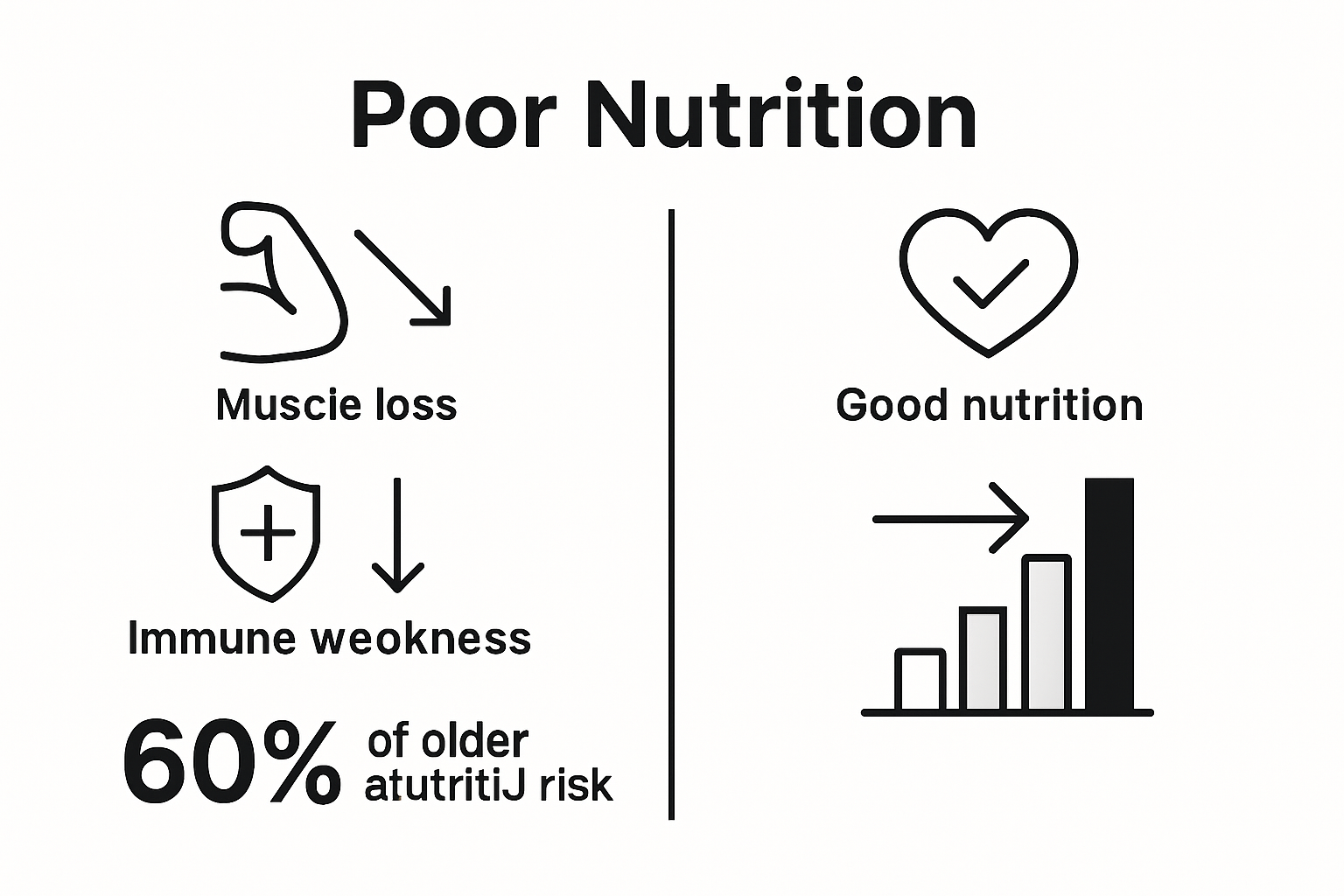
Research on Canadian seniors reveals a startling statistic: 34% were at significant nutritional risk, with women experiencing substantially higher vulnerability compared to men. These findings highlight the profound implications of inadequate nutrition, demonstrating how dietary imbalances can accelerate cellular aging, weaken immune responses, and increase susceptibility to chronic health conditions.
Social factors like isolation further compound nutritional risks among older adults, creating complex interconnections between dietary habits, mental health, and physiological resilience. Chronic poor nutrition can lead to multiple systemic risks, including:
- Accelerated muscle mass deterioration
- Compromised immune system functionality
- Increased inflammation
- Higher risk of metabolic disorders
- Reduced cognitive performance
- Slower wound healing and recovery processes
Addressing nutritional risks requires a proactive, holistic approach that considers individual metabolic needs, lifestyle factors, and potential health vulnerabilities.
Practical Nutrition Strategies for Canadians
Navigating nutritional needs after 40 requires a nuanced, personalized approach that transcends generic dietary guidelines. Strategic nutrition involves understanding individual metabolic changes, addressing specific micronutrient requirements, and developing adaptive eating habits that support long-term health and vitality.
Canada’s existing Food Guide may not provide comprehensive nutritional guidance for older adults, particularly regarding critical nutrients like calcium, vitamin D, and folate. This limitation underscores the importance of developing personalized nutrition strategies that go beyond standard recommendations and account for individual physiological variations.
Research highlighting nutritional risks among Canadian seniors emphasizes the critical need for targeted dietary interventions. Practical strategies for maintaining optimal nutrition include:
- Conducting comprehensive nutritional assessments
- Prioritizing nutrient-dense whole foods
- Implementing targeted supplementation
- Monitoring micronutrient levels regularly
- Adapting diet to changing metabolic needs
- Consulting nutrition professionals for personalized guidance
Successful nutrition after 40 requires a holistic, proactive approach that integrates dietary choices, lifestyle modifications, and ongoing health monitoring.
Empower Your Health with Targeted Nutrition and Wellness Solutions
As the article highlights, adults over 40 face unique nutritional challenges that impact muscle preservation, inflammation management, and overall vitality. Addressing these concerns requires more than just awareness. It demands proactive steps with the right tools tailored to your evolving needs such as quality supplements, health monitors, and supportive wellness products designed specifically for midlife nutritional health.
Boost your resilience today by exploring our curated collection of fitness and wellness essentials at Real Healthy Haven.

Take control of your healthy aging journey with products that support balanced nutrition and metabolic efficiency. Visit Real Healthy Haven now to discover solutions that help maintain muscle mass, reduce inflammation, and enhance energy levels. Your path to lasting vitality starts with one smart choice.
Frequently Asked Questions
What nutritional changes should adults over 40 consider to maintain health?
Adults over 40 should focus on increasing protein intake to preserve muscle mass, consuming nutrient-dense foods, monitoring micronutrient levels, and managing portion sizes to support metabolic efficiency.
How do nutritional needs change as we age?
As we age, metabolic processes slow down, and the body requires more protein, calcium, vitamin D, and B vitamins for muscle maintenance, bone density, cognitive function, and energy metabolism.
What are the risks associated with poor nutrition in older adults?
Poor nutrition can lead to accelerated muscle deterioration, compromised immune functionality, increased inflammation, a higher risk of metabolic disorders, reduced cognitive performance, and slower healing processes.
What practical nutrition strategies can support healthy aging for adults?
Practical strategies include conducting nutritional assessments, prioritizing whole foods, ensuring targeted supplementation, monitoring micronutrient levels regularly, and consulting nutrition professionals for tailored dietary guidance.
Recommended
- Midlife Nutrition Essentials: Complete Guide for Canadians – Real Healthy Haven
- Healthy Lifestyle Principles: Complete Guide for Adults 40+ – Real Healthy Haven
- Complete Guide to Defining Healthy Aging – Real Healthy Haven
- 7 Essential Supplements Checklist for Women 40+ – Real Healthy Haven
- Understanding Weight Loss for Seniors: A Clear Guide - LeanAndFit
Leave a comment