

Understanding What is Muscle Mass and Its Importance

Muscle mass shapes more than just how you look in the mirror and it fuels nearly every move you make. Most people think it is just for bodybuilders and athletes, but the story runs deeper. Muscle mass naturally starts declining after age 40 at a rate of up to 8 percent per decade and this hidden drop could quietly impact your health, metabolism, and independence long before you notice the change.
Table of Contents
- What Is Muscle Mass? Defining The Concept
- Why Muscle Mass Matters For Health And Aging
- How Muscle Mass Works In The Body
- Key Concepts Related To Muscle Mass And Wellbeing
- Practical Insights On Maintaining Muscle Mass
Quick Summary
| Takeaway | Explanation |
|---|---|
| Muscle mass is vital for health. | Muscle mass influences metabolism, structural support, and functions like movement and digestion. |
| Preserving muscle mass is crucial as you age. | Sarcopenia, or muscle loss, accelerates after age 40, impacting mobility and independence. |
| Prioritize resistance training for muscle maintenance. | Strength training stimulates muscle protein synthesis and is key for building and maintaining muscle mass. |
| Nutrition significantly affects muscle preservation. | Consuming adequate high-quality protein supports muscle maintenance, especially for those over 40. |
| Recovery is essential for muscle health. | Rest, hydration, and stress management directly benefit muscle repair and growth, enhancing overall function. |
What is Muscle Mass? Defining the Concept
Muscle mass represents the total amount of muscle tissue in the human body, a critical component of physical health and overall wellness. Unlike body weight, which includes fat, water, and bone, muscle mass specifically refers to the lean muscle tissue that supports movement, metabolism, and structural integrity.
The following table summarizes key types of muscle tissue and their main characteristics as described in the article. This helps clarify the differences in how various muscle types function in the body.
| Muscle Type | Main Function | Voluntary/Involuntary | Role in Health and Aging |
|---|---|---|---|
| Skeletal Muscle | Supports movement and posture | Voluntary | Major impact on metabolism and strength |
| Smooth Muscle | Manages digestion, blood vessel regulation | Involuntary | Critical for internal bodily functions |
| Cardiac Muscle | Pumps blood throughout the body | Involuntary | Essential for heart health |
The Biological Composition of Muscle Mass
At its core, muscle mass consists of muscle fibers composed of proteins that enable contraction and movement. These protein-rich tissues are not uniform across the body but vary in type and function. Skeletal muscles provide voluntary movement and contribute significantly to metabolic processes, while smooth muscles manage involuntary functions like digestion and blood vessel regulation.
According to National Institutes of Health, muscle tissue is metabolically active, meaning it burns calories even during rest. An individual with higher muscle mass typically experiences a faster metabolic rate, which supports weight management and overall energy expenditure.
Understanding Muscle Mass Beyond Physical Size
Contrary to popular belief, muscle mass is not solely about physical appearance or bodybuilding. It plays a fundamental role in multiple physiological processes:
- Supports metabolic health
- Enhances insulin sensitivity
- Provides structural support for joints
- Contributes to overall functional strength
Research from the American Journal of Clinical Nutrition demonstrates that maintaining muscle mass becomes increasingly important with age. As individuals progress through their 40s and beyond, natural muscle loss can occur, a process known as sarcopenia. This gradual reduction in muscle tissue can impact mobility, balance, and overall physical independence.
Precisely measuring muscle mass involves advanced techniques like DEXA scans or bioelectrical impedance analysis, which provide detailed insights into muscle composition and distribution across different body regions. Understanding one’s muscle mass offers valuable information about physical health, fitness potential, and potential areas for targeted exercise and nutrition strategies.
Why Muscle Mass Matters for Health and Aging
Muscle mass is far more than a fitness metric.
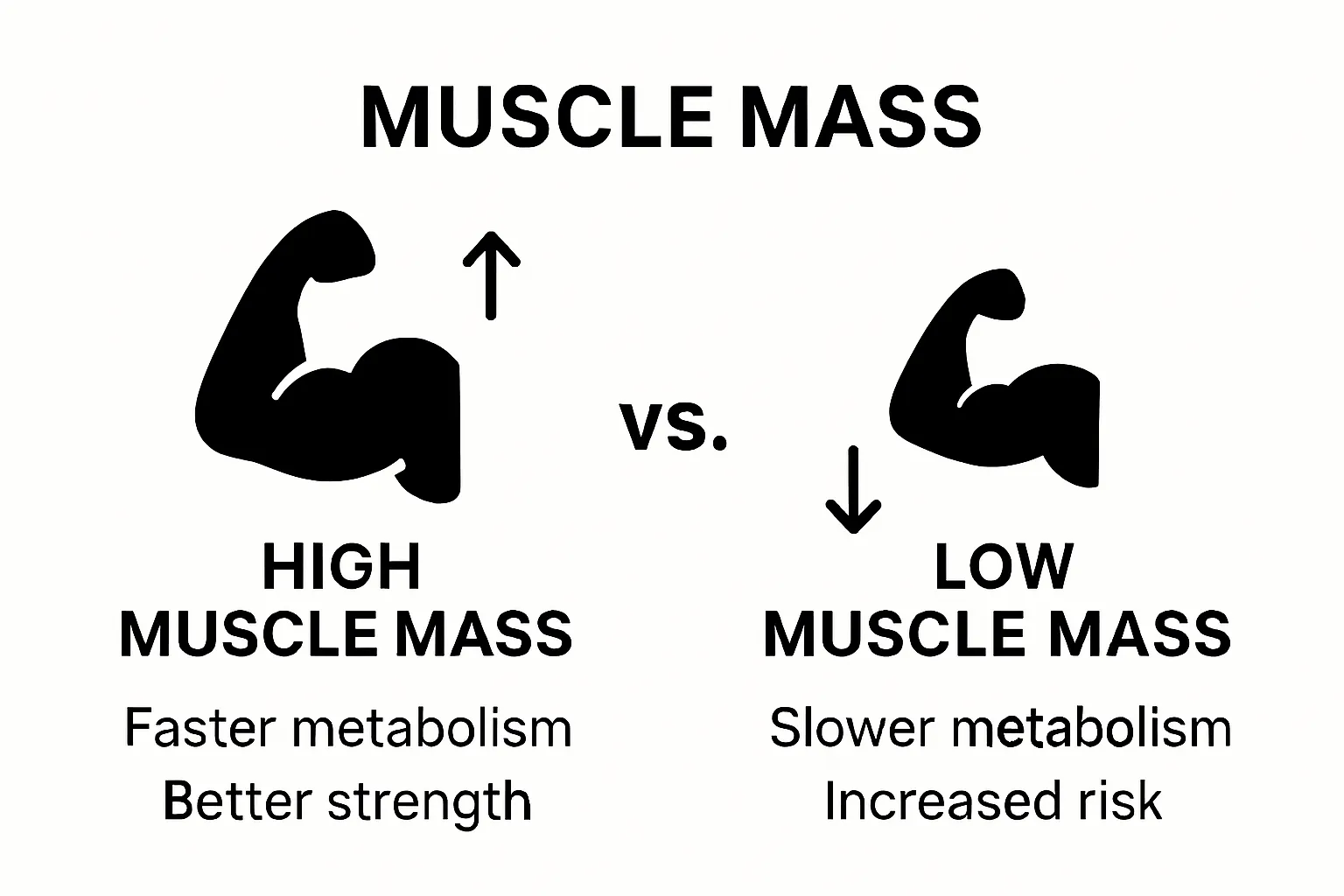 It represents a critical biomarker of health, particularly as individuals navigate the natural aging process. Understanding its profound impact can transform how we approach wellness, physical capabilities, and long-term quality of life.
Metabolic Health and Disease Prevention
Muscle tissue functions as an essential metabolic organ, playing a pivotal role in preventing chronic health conditions. Active muscle tissue acts like an endocrine system component, releasing beneficial proteins and hormones that regulate metabolism, glucose processing, and inflammation.
Research from the Journal of Gerontology reveals that maintaining robust muscle mass can significantly reduce risks associated with:
- Type 2 diabetes
- Cardiovascular disease
- Metabolic syndrome
- Insulin resistance
Functional Independence and Quality of Life
As individuals age, muscle mass directly correlates with physical independence and life quality. Muscle strength determines an individual’s ability to perform daily activities, manage personal care, and maintain mobility. Reduced muscle mass can lead to increased fall risks, decreased balance, and potential loss of autonomy.
According to Harvard Health Publishing, muscle mass preservation becomes increasingly critical after age 40, when natural muscle decline accelerates. This gradual reduction, known as sarcopenia, can compromise physical resilience and increase vulnerability to injuries.
Hormonal and Immune System Support
Muscle mass plays a sophisticated role in hormonal regulation and immune system function. Muscle tissue produces myokines, specialized proteins that communicate with other bodily systems, promoting inflammation reduction and supporting overall immune response. Robust muscle mass can enhance the body’s natural defense mechanisms and contribute to more effective healing processes.
The intricate relationship between muscle mass and holistic health underscores the importance of targeted strength training, proper nutrition, and proactive wellness strategies throughout one’s lifetime.
This table compares the main benefits of maintaining muscle mass with the potential risks of muscle loss, allowing readers to quickly identify the consequences of each scenario as outlined in the health and aging section.
| Maintaining Muscle Mass | Risk of Muscle Loss (Sarcopenia) |
|---|---|
| Improved metabolism and blood sugar control | Higher risk of type 2 diabetes |
| Enhanced physical independence and mobility | Increased risk of falls and injuries |
| Reduced chronic disease risk | Greater likelihood of cardiovascular disease |
| Better hormonal and immune system regulation | Compromised recovery and immune function |
| Supports joint and bone health | Decreased balance and loss of autonomy |
How Muscle Mass Works in the Body
Muscle mass operates through an intricate biological system involving proteins, cellular mechanisms, and complex neural networks. This sophisticated process enables human movement, energy production, and metabolic regulation far beyond simple mechanical functions.
Muscle Fiber Composition and Protein Synthesis
Skeletal muscles are composed of specialized protein filaments called myofibrils, which contain two primary proteins: actin and myosin. These proteins interact through a mechanism known as the sliding filament theory, allowing muscles to contract and generate force. Protein synthesis becomes crucial in maintaining and expanding muscle tissue, with the body continuously breaking down and rebuilding muscle proteins.
Research from the Journal of Physiology indicates that muscle protein synthesis occurs most effectively during periods of physical stress, such as resistance training, and requires adequate nutritional support, particularly protein intake.
Neuromuscular Signaling and Motor Control
Muscle activation begins with neural signals transmitted from the brain through motor neurons. Motor units, which consist of a motor neuron and the muscle fibers it innervates, coordinate precise movements. When the brain sends an electrical signal, it triggers a cascade of biochemical reactions that cause muscle fibers to contract.
Key components of neuromuscular signaling include:
- Neurotransmitter release at synaptic junctions
- Electrical impulse transmission
- Calcium ion release within muscle cells
- Protein filament interaction
Energy Production and Metabolic Processes
Muscle tissue functions as a metabolically active organ, converting nutrients into energy through complex biochemical pathways. Mitochondria within muscle cells generate ATP (adenosine triphosphate), the primary energy currency used for muscle contraction and cellular functions.
According to Nature Reviews Molecular Cell Biology, muscle metabolism involves multiple energy systems, including aerobic and anaerobic processes that adapt dynamically to physical demands. The efficiency of these metabolic processes directly influences an individual’s overall energy expenditure, metabolic health, and physical performance.
Key Concepts Related to Muscle Mass and Wellbeing
Muscle mass represents a complex biological system that extends far beyond physical appearance, playing a crucial role in overall health, metabolic function, and long-term wellness. Understanding the nuanced relationship between muscle tissue and holistic health provides profound insights into preventative healthcare strategies.
Muscle Mass and Hormonal Balance
Muscle tissue functions as an active endocrine organ, secreting specialized proteins called myokines that influence hormonal regulation. These molecular messengers communicate with other bodily systems, modulating inflammatory responses, insulin sensitivity, and metabolic processes. The intricate hormonal interactions demonstrate that muscle mass is not merely about strength, but a sophisticated biological communication network.
Research from the Endocrine Society highlights how muscle-generated myokines can positively influence hormonal balance, potentially mitigating age-related hormonal decline and supporting overall metabolic health.
Muscle Mass as a Longevity Indicator
Scientific evidence increasingly suggests muscle mass serves as a critical biomarker for aging and overall health resilience. Muscle quality becomes more important than quantity as individuals progress through different life stages. Maintaining muscle mass contributes to:
- Enhanced metabolic efficiency
- Improved insulin sensitivity
- Reduced inflammation
- Better cognitive function
- Increased physical independence
According to Canadian Institutes of Health Research, muscle mass preservation represents a key strategy in promoting healthy aging and reducing the risk of chronic age-related conditions.
Nutritional and Exercise Interactions
Muscle mass development and maintenance result from a complex interplay between nutritional intake, exercise stimulus, and genetic predisposition. Protein synthesis requires not just adequate protein consumption, but also appropriate amino acid profiles and consistent physical stimulation. Resistance training emerges as a powerful mechanism for stimulating muscle protein synthesis, triggering adaptive responses that enhance muscle tissue quality and metabolic functionality.
The dynamic nature of muscle mass underscores the importance of holistic approaches to health that integrate targeted nutrition, consistent physical activity, and comprehensive wellness strategies.
Practical Insights on Maintaining Muscle Mass
Maintaining muscle mass requires a strategic approach that combines targeted exercise, proper nutrition, and an understanding of individual physiological needs. As individuals age, proactive muscle preservation becomes increasingly critical for sustained health and functional independence.
Resistance Training Strategies
Strength training emerges as the most effective method for muscle mass preservation and development. Resistance exercises create microscopic muscle fiber tears that stimulate protein synthesis and muscle adaptation. The key lies not just in performing exercises, but in implementing progressive overload techniques that continually challenge muscle groups.
Research from American College of Sports Medicine recommends targeting major muscle groups through compound movements that engage multiple joints and muscle systems simultaneously. Effective resistance training includes exercises like squats, deadlifts, chest presses, and rows that provide comprehensive muscular stimulation.
Nutritional Considerations for Muscle Maintenance
Nutritional intake plays a fundamental role in muscle mass preservation. Protein consumption becomes particularly crucial, with emphasis on:
- High-quality protein sources
- Adequate amino acid profile
- Consistent protein distribution throughout daily meals
- Consideration of individual metabolic requirements
According to the Journal of the International Society of Sports Nutrition, adults over 40 require approximately 1.2 to 1.6 grams of protein per kilogram of body weight to support muscle maintenance and counteract age-related muscle decline.
Recovery and Holistic Muscle Health
Muscle recovery represents a critical yet often overlooked component of muscle mass maintenance. Proper rest, hydration, and stress management directly influence muscle protein synthesis and overall tissue health. Sleep emerges as a fundamental recovery mechanism, during which significant muscle repair and growth processes occur.
Holistic muscle health transcends exercise and nutrition, encompassing comprehensive lifestyle strategies that support muscular resilience.
 This approach recognizes muscle mass as a dynamic system responsive to consistent, intelligent interventions tailored to individual physiological needs.
Ready to Protect Your Muscle Mass and Wellness After 40?
As you read about the risks of muscle loss and the importance of muscle mass for healthy aging, you might be wondering how to take real action. Features like resistance training, nutrition, and regular health monitoring become essential, especially after age 40. The article highlighted how muscle quality supports balance, metabolic health, and independence, but maintaining it can be challenging without the right tools and support. That is where practical solutions matter most.

Explore how our carefully chosen fitness solutions, health monitors, and wellness supplements can help you stay strong and independent. Visit Real Healthy Haven to experience a full range of user-friendly health monitors designed with mature adults in mind or discover comfortable activewear for any routine. Take charge of your wellness and act now to support your muscle health for years to come.
Frequently Asked Questions
What is muscle mass?
Muscle mass refers to the total amount of muscle tissue in the human body, excluding fat, water, and bone. It is vital for movement, metabolism, and physical health.
Why is muscle mass important for health?
Muscle mass is crucial for metabolic health, functional independence, and quality of life. It can help prevent chronic diseases, improve insulin sensitivity, and enhance overall physical strength, especially as one ages.
How does muscle mass affect metabolism?
Muscle mass is metabolically active, meaning it burns calories even at rest. A higher muscle mass contributes to a faster metabolic rate, aiding in weight management and overall energy expenditure.
What are effective ways to maintain muscle mass as I age?
To maintain muscle mass, engage in regular resistance training, consume adequate high-quality protein, and ensure proper recovery through rest and hydration. Holistic approaches combining exercise and nutrition are essential for preserving muscle health.
Leave a comment