

Understanding What is Mental Fitness for Better Well-Being

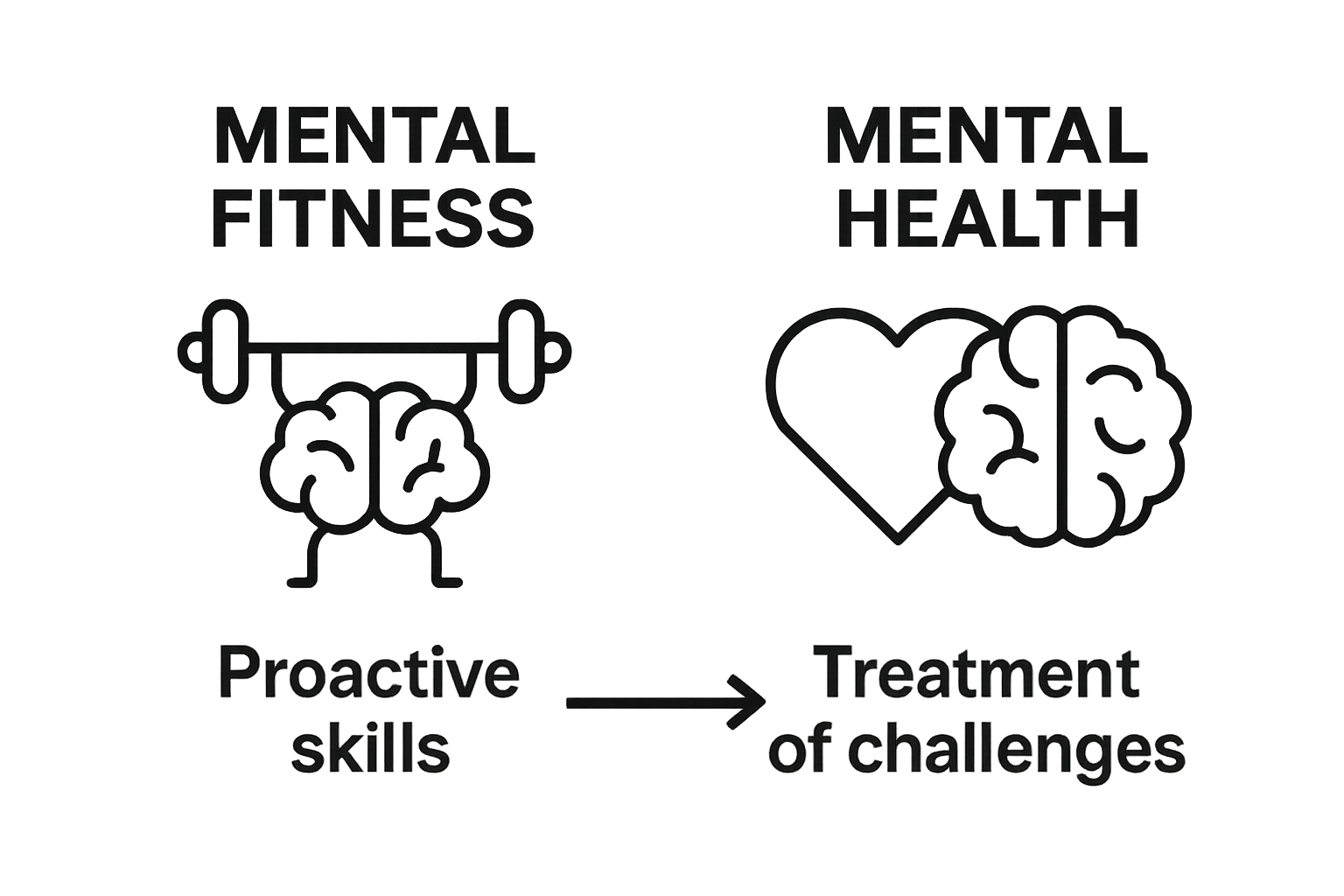
People talk a lot about mental health and emotional well-being but most skip over mental fitness. The difference is bigger than you think. While traditional mental health care focuses on solving problems, mental fitness is about building new skills and staying sharp for years to come.
To clarify the differences between mental health, emotional well-being, and mental fitness, the following table compares their focus, approach, and long-term impact.
| Concept | Main Focus | Approach | Long-term Impact |
|---|---|---|---|
| Mental Health | Addressing psychological disorders | Problem-solving, clinical care | Restoration or maintenance of function |
| Emotional Well-Being | Managing emotional states and mood | Coping, self-care practices | Improved mood and stress management |
| Mental Fitness | Building psychological and cognitive skills | Skill development, training | Lasting resilience and cognitive strength |
| Research from Stanford shows that mental fitness practices can actually slow brain aging and enhance memory. So the real secret to thriving isn’t just handling stress or bouncing back from tough times. It’s training your mind just like you’d train your body and the effects go way beyond what people expect. |
Table of Contents
- Defining Mental Fitness: Concepts And Importance
- The Science Behind Mental Fitness: Psychological Foundations
- The Role Of Mental Fitness In Daily Life And Aging
- Building Mental Fitness: Key Components And Strategies
- Real-World Applications: Enhancing Your Mental Well-Being
Quick Summary
| Takeaway | Explanation |
|---|---|
| Prioritize emotional regulation skills | Mastering emotional regulation allows individuals to effectively manage stress and enhance their psychological resilience. |
| Engage in cognitive training | Regular cognitive exercises can improve mental capabilities, slowing cognitive decline as you age. |
| Develop self-awareness for growth | Self-awareness fosters personal insights, enabling better emotional management and decision-making in life transitions. |
| Create supportive social networks | Building strong relationships can enhance mental fitness, providing emotional backing during life’s challenges. |
| Implement mindfulness practices | Mindfulness techniques cultivate emotional balance and cognitive flexibility, promoting overall mental wellness. |
Defining Mental Fitness: Concepts and Importance
Mental fitness goes beyond traditional definitions of mental health. It represents a proactive approach to psychological well-being that empowers individuals to develop resilience, emotional strength, and cognitive flexibility. Unlike merely treating mental health issues, mental fitness focuses on building psychological capabilities that help people thrive in challenging environments.
The Core Components of Mental Fitness
Mental fitness encompasses several interconnected dimensions that contribute to overall psychological wellness. Research from the American Psychological Association suggests these core components include:
- Emotional regulation skills
- Cognitive flexibility and adaptability
- Stress management techniques
- Psychological resilience
- Self-awareness and introspection
These components work together to create a robust mental framework that enables individuals to navigate life’s complexities with greater ease.
The table below summarizes the core components of mental fitness and their primary functions, organizing key concepts discussed to support reader understanding.
| Core Component | Description |
|---|---|
| Emotional Regulation | Ability to manage and respond to emotional experiences effectively |
| Cognitive Flexibility | Capability to adapt to new information and shifting perspectives |
| Stress Management | Techniques to handle stress and reduce negative impact |
| Psychological Resilience | Capacity to recover from challenges and adversity |
| Self-Awareness | Awareness of thoughts, feelings, and behaviors for personal growth |
| By developing these skills, people can better manage unexpected challenges, maintain emotional balance, and sustain long-term psychological well-being. |
Why Mental Fitness Matters for Adults Over 40
As adults transition through midlife, maintaining mental fitness becomes increasingly critical. Neuroscience research from Stanford University demonstrates that intentional mental fitness practices can slow cognitive decline, enhance brain plasticity, and support overall mental health.
Mental fitness is not about achieving perfection but creating a sustainable approach to psychological wellness. It involves continuous learning, personal growth, and developing strategies that support emotional and cognitive resilience. By prioritizing mental fitness, individuals can maintain cognitive sharpness, emotional stability, and a sense of purpose as they navigate the unique challenges of midlife and beyond.
The Science Behind Mental Fitness: Psychological Foundations
Mental fitness emerges from complex interactions between neurological processes, psychological mechanisms, and environmental influences. Understanding these foundational scientific principles reveals how our brains adapt, learn, and maintain psychological resilience.
Neuroplasticity and Mental Fitness
Research from the National Institutes of Health demonstrates that the human brain possesses remarkable adaptability. Neuroplasticity describes the brain’s ability to reorganize neural pathways, form new connections, and modify existing neural networks in response to experiences, learning, and challenges.
Key neuroplasticity processes supporting mental fitness include:
- Neural pathway reconfiguration
- Synaptic connection strengthening
- Cognitive pattern transformation
- Brain region functional adaptation
These mechanisms allow individuals to develop enhanced emotional regulation, improve problem-solving skills, and build psychological resilience through intentional mental training and consistent cognitive engagement.
Psychological Mechanisms of Mental Wellness
Beyond neurological changes, mental fitness involves intricate psychological mechanisms that support emotional balance and cognitive performance. Psychological research from Stanford University reveals that mental fitness is not simply about preventing dysfunction but actively cultivating psychological strength.
The brain’s capacity to process emotional experiences, regulate stress responses, and maintain cognitive flexibility represents a dynamic system of psychological adaptation. By understanding these underlying mechanisms, individuals can develop targeted strategies to enhance mental fitness, promoting long-term psychological well-being and personal growth.
The Role of Mental Fitness in Daily Life and Aging
Mental fitness serves as a critical foundation for navigating life’s complexities, particularly as individuals progress through different stages of adulthood. It represents more than a theoretical concept—it is a practical approach to maintaining psychological well-being and functional capacity throughout the aging process.
Impact on Cognitive Performance
Neuroscience research from the National Institute on Aging demonstrates that consistent mental fitness practices can significantly mitigate age-related cognitive decline. Adults who actively engage in mental fitness strategies experience enhanced cognitive function, improved memory retention, and greater problem-solving capabilities.
Key cognitive benefits of sustained mental fitness include:
- Reduced risk of cognitive impairment
- Enhanced information processing speed
- Improved working memory capacity
- Better executive function maintenance
These cognitive advantages translate into practical everyday skills, enabling adults to remain sharp, adaptable, and mentally resilient as they age.
This table highlights several cognitive benefits associated with sustained mental fitness, as outlined in the research findings shared above.
| Cognitive Benefit | Description |
|---|---|
| Reduced Risk of Cognitive Impairment | Lower likelihood of developing age-related decline |
| Enhanced Processing Speed | Faster handling and understanding of information |
| Improved Working Memory | Better ability to temporarily hold and manipulate data |
| Maintained Executive Function | Sustained skills in planning, organizing, and problem-solving |
Emotional Resilience and Life Transitions
Mental fitness plays a profound role in helping individuals manage emotional challenges associated with life transitions. Psychological research from Harvard Medical School reveals that robust mental fitness provides a psychological buffer against stress, helping adults navigate major life changes with greater emotional stability.
As individuals move through different life stages, mental fitness equips them with emotional regulation skills, enabling more effective coping mechanisms and a more balanced psychological response to personal and professional challenges. This approach transforms aging from a period of potential decline into an opportunity for continued personal growth and psychological development.
Building Mental Fitness: Key Components and Strategies
Developing mental fitness requires intentional practice and targeted approaches that nurture psychological resilience. Unlike physical fitness, mental fitness demands consistent engagement with specific techniques that challenge and strengthen cognitive and emotional capabilities.
Cognitive Training and Skill Development
Research from the American Psychological Association indicates that deliberate cognitive exercises can significantly enhance mental fitness. These strategies focus on expanding mental capabilities through structured activities that stimulate neural connections and promote cognitive flexibility.
Essential cognitive training techniques include:
- Problem-solving challenges
- Memory enhancement exercises
- Learning new complex skills
- Mindfulness and meditation practices
- Strategic puzzle and logic activities
By systematically engaging these techniques, individuals can build mental agility, improve information processing, and develop more robust cognitive frameworks that support long-term psychological wellness.
Emotional Regulation and Resilience Strategies
Psychological research from Stanford University reveals that emotional regulation is a cornerstone of mental fitness. Developing skills to understand, process, and manage emotional experiences allows individuals to navigate complex psychological landscapes with greater effectiveness.
Emotional resilience involves creating psychological flexibility that enables individuals to adapt to stress, recover from challenges, and maintain a balanced psychological state. This approach transforms emotional experiences from potential sources of disruption into opportunities for personal growth and psychological strength.
Real-World Applications: Enhancing Your Mental Well-Being
Transforming mental fitness principles into practical, everyday strategies requires understanding how psychological skills can be integrated seamlessly into daily life. Effective mental wellness approaches focus on creating sustainable habits that support long-term psychological resilience and personal growth.
Personal Development and Skill Integration
Research from the Mental Health Foundation demonstrates that intentional personal development practices can significantly enhance mental fitness. These strategies involve consciously developing skills that strengthen psychological capabilities and emotional intelligence.
Key personal development approaches include:
- Regular self-reflection practices
- Setting meaningful personal goals
- Cultivating growth mindset perspectives
- Developing emotional self-awareness
- Creating structured learning opportunities
By systematically implementing these approaches, individuals can create a personalized framework for continuous psychological growth and enhanced mental resilience.

Workplace and Social Context Strategies
Psychological research from Stanford University reveals that mental fitness strategies extend beyond individual practice into broader social and professional environments. Effective mental wellness requires understanding how psychological skills interact with interpersonal dynamics and organizational contexts.
Adults can enhance mental fitness by creating supportive networks, engaging in continuous learning, and developing adaptive communication skills. These strategies transform mental fitness from a personal practice into a comprehensive approach to psychological well-being that supports professional success and meaningful social connections.
Unlock Stronger Mental Fitness for Life After 40
Are you feeling the pressure as you try to keep your mind sharp and emotions balanced in your 40s and beyond? The article highlights how building mental fitness goes beyond just basic mental health. It requires active steps toward resilience, stress management and personal growth. Many adults over 40 struggle to keep cognitive performance high while also handling the stress and changes that come with aging. You do not need to go through this phase alone or unprepared.

Take your next step toward lasting well-being. Visit Real Healthy Haven to find actionable tips, science-backed strategies and a supportive environment designed for adults over 40 who want to boost their mental fitness. Start building a routine that supports better emotional regulation and cognitive strength today. Your future self will thank you. Explore your path to greater well-being right now at Real Healthy Haven.
Frequently Asked Questions
What is mental fitness?
Mental fitness refers to a proactive approach to psychological well-being that focuses on building resilience, emotional strength, and cognitive flexibility, enabling individuals to navigate life’s challenges effectively.
Why is mental fitness important for adults over 40?
Mental fitness is crucial for adults over 40 as it can help slow cognitive decline, enhance brain plasticity, and support emotional stability, enabling individuals to maintain cognitive sharpness and a sense of purpose during midlife.
How can one improve their mental fitness?
Improving mental fitness can be achieved through cognitive training activities, emotional regulation practices, mindfulness, and engaging in personal development strategies that nurture psychological resilience and emotional intelligence.
What are the core components of mental fitness?
The core components of mental fitness include emotional regulation skills, cognitive flexibility, stress management techniques, psychological resilience, and self-awareness, which together contribute to overall psychological wellness.
Leave a comment