

How to Set Up Home Gym 40+: Step-by-Step Guide for Active Living

Building a home gym after 40 can redefine what fitness looks like in your own space. So many believe you need a sprawling basement and pricey equipment for real results. The truth is you only need as little as 50 square feet and a few smart choices to create a highly effective personal gym, no matter your age or square footage.
Table of Contents
- Step 1: Assess Your Available Space And Equipment Needs
- Step 2: Choose Appropriate Fitness Equipment For Your Goals
- Step 3: Design An Ergonomic Workout Layout For Comfort
- Step 4: Install Any Necessary Safety Features And Technology
- Step 5: Create A Personalized Workout Schedule And Track Progress
Quick Summary
| Key Point | Explanation |
|---|---|
| 1. Assess your space carefully | Measure available space and ensure it supports your fitness goals and equipment needs for an effective workout environment. |
| 2. Choose versatile equipment | Opt for multifunctional fitness tools that support a range of exercises while minimizing space use and injury risk. |
| 3. Design an ergonomic layout | Organize your gym to allow for safe, unrestricted movement and to separate different workout areas for improved focus and organization. |
| 4. Prioritize safety features | Install essential safety equipment and technology to reduce injury risks and create a secure workout space for consistent activity. |
| 5. Track your fitness progress | Develop a flexible workout schedule and use technology to monitor health metrics, ensuring you adapt to changing physical needs. |
Step 1: Assess your available space and equipment needs
Creating a home gym after 40 requires strategic planning and thoughtful space assessment. Your workout environment will directly impact your fitness journey, making this initial step crucial for long term success. Fitness experts recommend designing a space that accommodates your specific health and fitness goals while maximizing available square footage.
Begin by measuring the dedicated area you can convert into your home fitness zone. This might be a spare bedroom, basement corner, garage section, or multipurpose room. Look for spaces with solid, even flooring that can withstand equipment weight and provide enough clearance for movement. Aim for a minimum of 50 square feet to ensure comfortable exercise performance, though smaller spaces can be effectively utilized with compact, versatile equipment.
Carefully evaluate your physical capabilities and fitness objectives. For adults over 40, this means considering joint health, potential mobility limitations, and specific workout preferences. Some individuals might prioritize low impact activities like yoga or resistance training, while others seek cardiovascular and strength conditioning. Your equipment selection should align with these personal requirements.
Key considerations for space planning include:
- Proximity to electrical outlets for equipment
- Natural light and ventilation
- Flooring durability and shock absorption
- Storage potential for workout accessories
- Potential noise restrictions if living with family
When selecting equipment, focus on multifunctional pieces that maximize your limited space. Adjustable dumbbells, resistance bands, a compact folding weight bench, and a stability ball can provide comprehensive workout options without overwhelming your designated area. Wall mounting certain equipment or investing in foldable designs can help optimize your available square footage.
Finally, conduct a practical walkthrough of your selected space. Visualize your workout movements, ensure sufficient clearance between equipment, and confirm the area feels comfortable and motivating. A well planned home gym becomes more than just a workout zone it transforms into your personal wellness sanctuary.
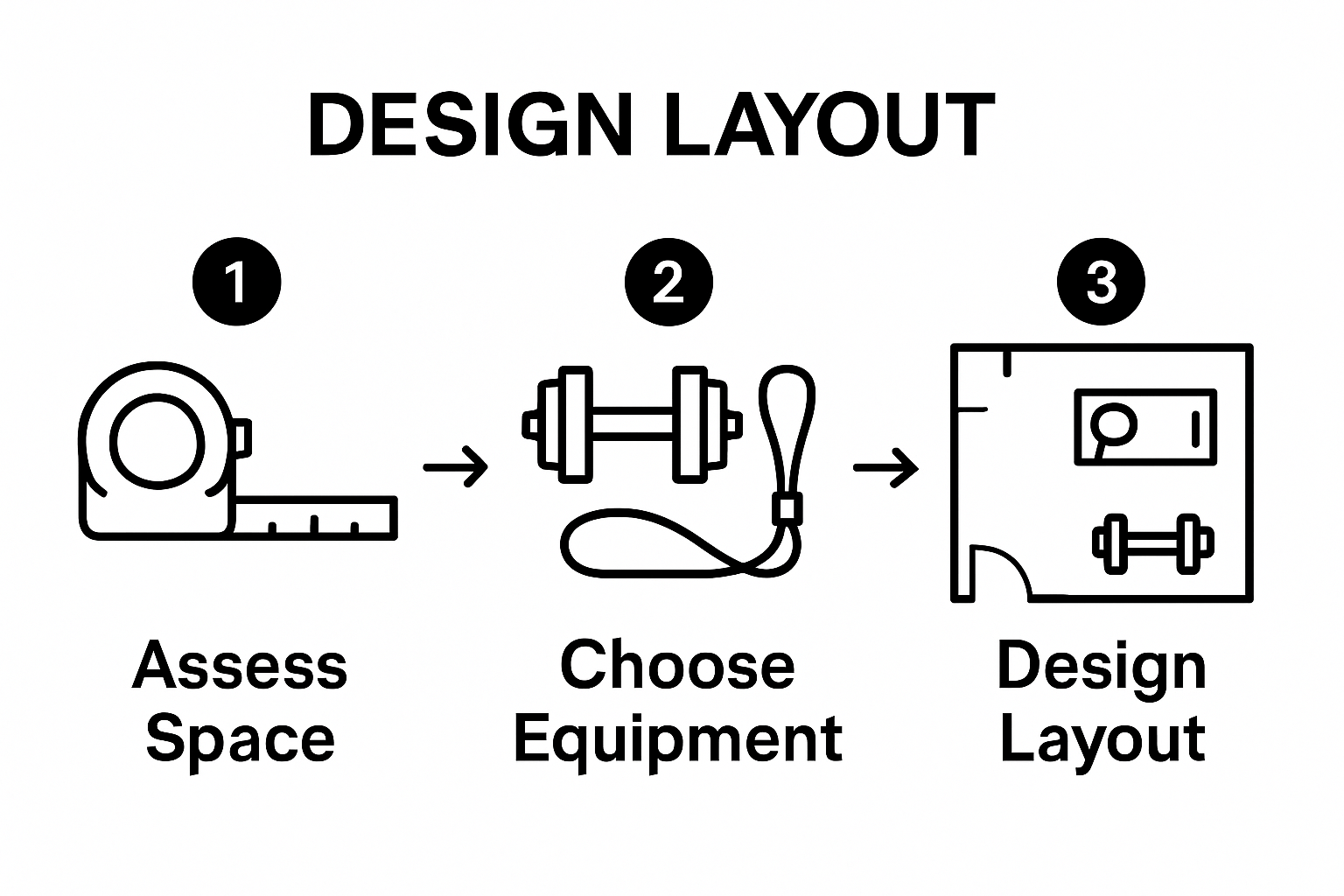
Step 2: Choose appropriate fitness equipment for your goals
Selecting fitness equipment after 40 requires a nuanced approach that balances personal health goals, physical capabilities, and long term wellness strategies. Research from active living experts emphasizes the importance of choosing equipment that supports joint health, promotes muscle maintenance, and minimizes injury risk.
Start by conducting an honest self assessment of your current fitness level, existing health conditions, and specific workout objectives. Prioritize versatility and adaptability in your equipment selections. For individuals over 40, this means gravitating toward tools that offer adjustable resistance, support multiple muscle groups, and accommodate varying intensity levels.
Consider investing in foundational equipment that provides comprehensive workout potential. Resistance bands offer exceptional flexibility, allowing users to modify tension and target specific muscle groups with minimal joint stress. Adjustable dumbbells represent another smart investment, enabling progressive strength training without consuming excessive space. Stability balls can enhance core strength, balance, and flexibility while serving as multipurpose workout accessories.
Key equipment recommendations for mature fitness enthusiasts include:
- Adjustable dumbbells (5-25 pound range)
- Resistance band set with multiple tension levels
- Stability ball
- Yoga mat
- Foam roller for muscle recovery
Budget considerations should balance quality and affordability. While premium equipment offers durability, many budget friendly options provide excellent functionality. Look for pieces with solid construction, ergonomic design, and positive user reviews from individuals in similar age brackets. Some manufacturers specialize in equipment designed specifically for mature athletes, featuring enhanced safety features and thoughtful engineering.
Before finalizing your selections, consult with a fitness professional or healthcare provider who understands your specific health profile. They can offer personalized recommendations that account for individual physical limitations, past injuries, or chronic conditions. Your goal is creating a home gym environment that feels supportive, challenging, and tailored to your unique wellness journey.
Below is a table summarizing essential equipment for a home gym for adults over 40, including suggestions, recommended features, and their main benefits.
| Equipment | Recommended Features | Main Benefits |
|---|---|---|
| Adjustable Dumbbells | 5-25 lb. range, compact design | Versatile strength training, space-saving |
| Resistance Bands | Multiple tension levels | Joint-friendly resistance, adaptability |
| Stability Ball | Anti-burst, appropriate size | Core strength, balance, flexibility |
| Yoga Mat | Non-slip, cushioned | Comfort for floor exercises, stretching |
| Foam Roller | High-density, portable | Muscle recovery, aids flexibility |
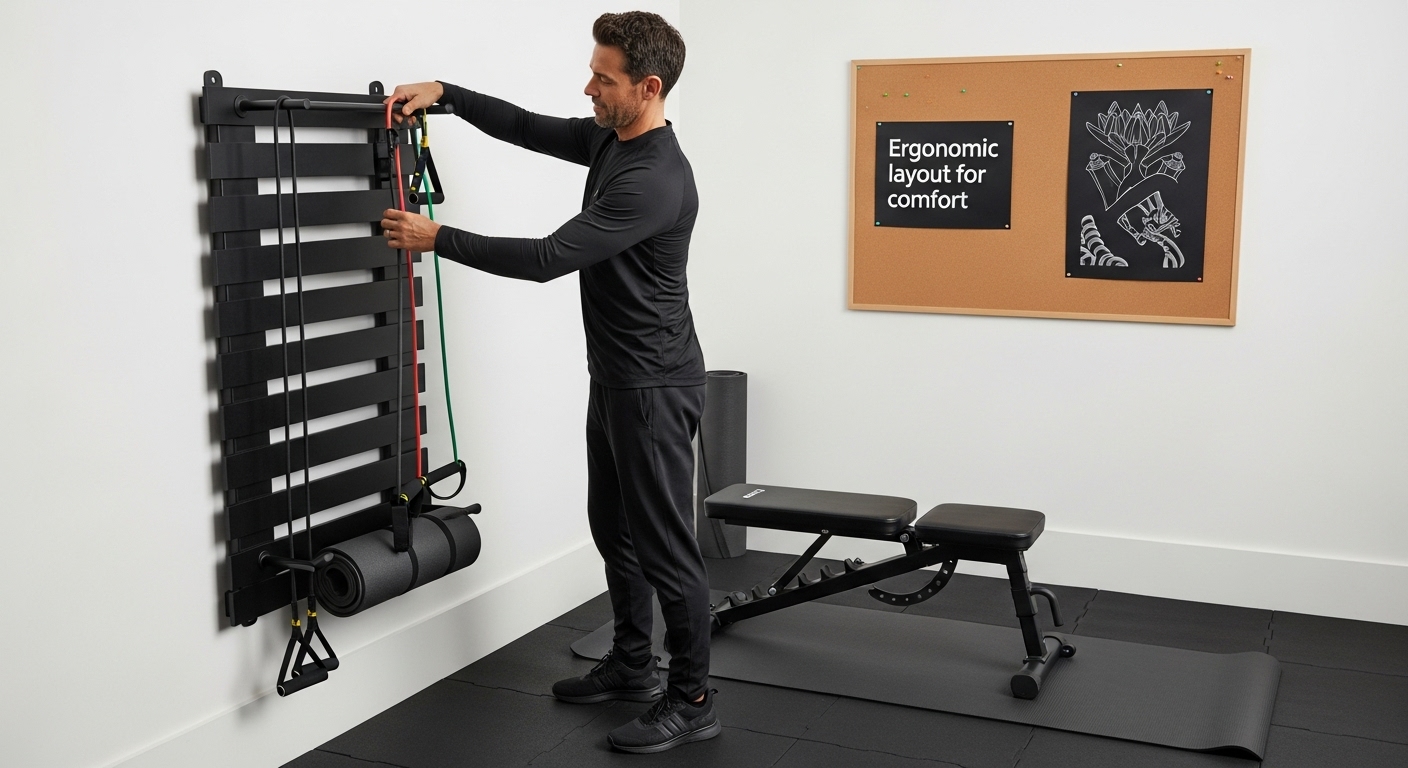
Step 3: Design an ergonomic workout layout for comfort
Creating an ergonomic home gym layout goes beyond simple equipment placement it represents a strategic approach to preventing injury and maximizing workout effectiveness for adults over 40. Fitness design experts emphasize the critical relationship between workspace organization and long term physical wellness.
Ergonomic design starts with understanding movement patterns and creating intentional spatial relationships. Position your primary equipment to allow natural, unrestricted motion without potential collision or obstruction. Consider creating distinct zones for different workout types: a strength training area, a stretching space, and a cardiovascular section. This compartmentalization helps mental organization and prevents workout interruptions.
Flooring plays a pivotal role in home gym ergonomics. Invest in high quality, shock absorbing mats that protect joints and provide stable surfaces for various exercises. Interlocking foam tiles offer excellent cushioning and can be customized to fit your specific space. Aim for surfaces that reduce impact stress, particularly important for mature athletes managing potential joint sensitivities.
Key ergonomic layout considerations include:
- Minimum 3 feet clearance around each piece of equipment
- Proximity to water source and towel storage
- Natural or adjustable lighting
- Ventilation and temperature control
- Easy access to recovery tools like foam rollers
Mirror placement can significantly enhance workout effectiveness and safety. Position mirrors to provide clear visual feedback on form and movement, helping prevent potential injuries. However, avoid overwhelming the space multiple smaller mirrors might work better than one large wall mounted option.
Consider storage solutions that maintain a clean, organized environment. Wall mounted racks, compact shelving, and collapsible equipment options help manage workout accessories without cluttering your designated fitness area. Remember that visual simplicity contributes to mental clarity and motivation.
Finally, personalize your space with elements that inspire consistent exercise. This might include motivational artwork, a small sound system for workout music, or strategic placement of a water station. Your home gym should feel like a welcoming sanctuary that encourages regular physical activity and supports your wellness journey.
Step 4: Install any necessary safety features and technology
Safety becomes paramount when designing a home gym for adults over 40, transforming your workout space from a simple exercise area into a protected wellness environment. Fitness experts emphasize the critical importance of strategic safety installations that mitigate potential injury risks and support consistent physical activity.
Electrical safety forms the foundation of your home gym technology infrastructure. Begin by ensuring all workout areas have sufficient electrical outlets with modern surge protection. Consider professional installation of dedicated circuit breakers if your equipment requires significant power consumption. Ground fault circuit interrupters (GFCI) outlets provide additional protection against electrical accidents, which becomes increasingly important when electronic fitness equipment and moisture potentially coexist.
Emergency preparedness represents another crucial safety consideration. Install a clearly visible first aid kit within immediate reach, stocked with essential medical supplies like bandages, antiseptic wipes, and instant cold packs. Position a charged mobile phone nearby for potential emergency communication. Some fitness enthusiasts also invest in a medical alert device or smartwatch with health monitoring capabilities, providing an extra layer of personal security during solo workouts.
Key safety technology recommendations include:
- Nonslip floor mats with shock absorption
- Motion sensor lighting
- Portable fire extinguisher
- Wall mounted emergency communication device
- Bluetooth enabled heart rate monitoring system
Additional technological investments can enhance both safety and workout effectiveness. Smart sensors that track heart rate, movement quality, and potential overexertion provide valuable health insights. Wearable technology offering real time feedback helps mature athletes maintain appropriate exercise intensities while preventing potential strain or injury.
Consider installing comprehensive environmental controls to optimize workout conditions. Adjustable fans, humidity monitors, and temperature regulation systems create a comfortable exercise environment that supports consistent physical activity. Proper ventilation reduces injury risks associated with overheating and helps maintain consistent workout performance.
Finally, conduct a comprehensive safety walkthrough of your home gym. Test all electrical connections, verify equipment stability, and confirm emergency access routes remain unobstructed. Your goal is creating a technology enabled workout space that feels both empowering and secure, supporting your wellness journey with intelligent, proactive design strategies.
Use the following checklist table to verify that your home gym setup prioritizes safety and supports consistent, effective workouts as described in the article.
| Safety Feature | Purpose | Completion Status |
|---|---|---|
| Nonslip Floor Mats | Prevent slips and absorb shock | |
| Motion Sensor Lighting | Improve visibility and reduce accidents | |
| First Aid Kit (stocked, visible) | Emergency preparedness | |
| Fire Extinguisher | Increased safety for electrical equipment | |
| GFCI Outlets/Surge Protectors | Prevent electrical hazards | |
| Bluetooth Heart Rate Monitor/Smartwatch | Monitor intensity, prevent overexertion | |
| Phone or Emergency Device Accessible | Quick communication in an emergency |
Step 5: Create a personalized workout schedule and track progress
Developing a personalized workout schedule after 40 requires a strategic approach that balances fitness goals with individual physical capabilities. Active living research highlights the importance of creating flexible, adaptive fitness plans that accommodate changing physical needs.
Crafting an effective workout schedule begins with honest self assessment. Start by identifying your primary fitness objectives whether that involves maintaining muscle mass, improving cardiovascular health, enhancing flexibility, or managing weight. Consider consulting a healthcare professional or certified fitness trainer who can provide personalized guidance tailored to your specific health profile and age related considerations.
Structure your workout routine with a balanced approach that incorporates multiple fitness dimensions. Aim for a comprehensive weekly plan that includes strength training, cardiovascular exercise, flexibility work, and adequate recovery periods. For adults over 40, this might mean alternating intense workout days with lighter, recovery focused sessions that prevent overexertion and support joint health.
Key elements of an effective tracking system include:
- Digital fitness tracking app or journal
- Weekly performance log
- Measurement of key health metrics
- Photographic progress documentation
- Regular health assessment checkpoints
Technology can significantly enhance workout tracking and motivation. Smartwatches and fitness apps provide real time data on heart rate, calories burned, and exercise intensity. These tools offer objective measurements that help you understand your physical performance and make informed adjustments to your fitness strategy. Choose tracking technologies that feel intuitive and motivating, not overwhelming.
Remember that progression is more important than perfection. Design your schedule with built in flexibility, allowing modifications based on energy levels, health conditions, and unexpected life events. Some weeks you might complete every planned workout, while others require more gentle, adaptive approaches. The goal is consistent, sustainable movement that supports your long term wellness journey.
Establish clear, measurable milestones that go beyond traditional fitness metrics. Consider tracking improvements in daily energy levels, sleep quality, stress management, and overall sense of well being. These holistic indicators often provide more meaningful insights into your fitness progress than simple weight or muscle measurements. Celebrate small victories and approach your fitness journey with patience, curiosity, and self compassion.
Transform Your Over-40 Home Gym Into a Wellness Sanctuary
Struggling to find equipment that truly fits your needs after 40? If you have measured your space, set your fitness goals, and realized that generic products do not support your joint health, comfort, or motivation, you are not alone. Many Canadians face these barriers as they try to create a safe, effective workout environment at home. You deserve a solution designed for mature adults who want to stay active and prevent injuries.

Stop settling for equipment that fails to prioritize your comfort or safety. At Real Healthy Haven, you will find curated exercise equipment, wellness supplements, supportive activewear, and healthcare monitors chosen for people just like you. We make staying fit over 40 easier, safer, and more enjoyable. Take the next step toward building your own home gym sanctuary by exploring our latest wellness solutions. Enjoy free shipping across Canada and ongoing expert guidance to keep you on track. Shop now and give yourself a reason to look forward to every workout.
Frequently Asked Questions
How much space do I need for a home gym for someone over 40?
A minimum of 50 square feet is ideal to ensure comfortable exercise performance, but smaller spaces can be effectively utilized with compact, versatile equipment.
What types of fitness equipment should I prioritize for a home gym?
Focus on multifunctional equipment such as adjustable dumbbells, resistance bands, a stability ball, and a yoga mat to accommodate various exercises and fitness levels.
How can I create an ergonomic layout in my home gym?
Ensure proper spacing by having at least 3 feet of clearance around each piece of equipment. Create distinct zones for different workout types and invest in shock-absorbing flooring to protect your joints.
What safety features should I consider when setting up a home gym?
Install non-slip mats, ensure electrical safety with GFCI outlets, and have a first aid kit readily accessible. Consider adding monitoring technology for heart rate and overall safety during workouts.
Leave a comment