

Dental Wellness Explained: Complete Guide for Adults 40+

Did you know that more than 96 percent of adults over 40 experience some form of dental issue in their lifetime? Good oral health is much more than just fresh breath or a bright smile. It shapes your nutrition, comfort, and even your social confidence at every age. By understanding how dental wellness connects to whole body health, you gain powerful habits and strategies to maintain a healthy mouth—and a healthier you—throughout life.
Table of Contents
- Defining Dental Wellness And Vital Concepts
- Essential Habits For Maintaining Oral Health
- Age-Related Dental Changes And Risks
- The Role Of Diet And Lifestyle In Dental Wellness
- Preventive Care, Monitoring, And Dentist Visits
- Common Dental Wellness Mistakes To Avoid
Key Takeaways
| Point | Details |
|---|---|
| Holistic Dental Wellness | Dental wellness encompasses comprehensive care, emphasizing oral health’s connection to overall well-being and proactive maintenance. |
| Age-Specific Strategies | Individuals over 40 should adopt specialized dental practices and regular check-ups to address increased risks of oral health issues. |
| Nutrition and Lifestyle Impact | A balanced diet, hydration, and exercise significantly contribute to maintaining oral health and preventing dental diseases. |
| Preventive Care Importance | Regular professional dental visits are crucial for early detection and management of dental problems, safeguarding overall health. |
Defining Dental Wellness and Vital Concepts
Dental wellness represents far more than just having clean teeth. According to Canadian Dental Association, oral health is integral to overall well-being, enabling individuals to eat, speak, and smile comfortably while enhancing physical, social, and mental health.
At its core, dental wellness encompasses comprehensive care that goes beyond routine brushing and flossing. It involves understanding the intricate connections between your mouth and total body health. Oral function plays a critical role in daily life, with key capabilities including:
- Comfortable speaking
- Pain-free chewing
- Confident smiling
- Preventing systemic health complications
The significance of dental wellness becomes even more pronounced as we age. Canada Public Health highlights that oral health directly contributes to quality of life, affecting nutritional intake, social interactions, and overall physical comfort.
Understanding dental wellness means recognizing it as a holistic practice. It’s not just about avoiding cavities but creating a proactive approach to maintaining mouth health that supports your entire body’s wellness. Regular dental check-ups, proper hygiene techniques, nutrition, and understanding individual risk factors become essential strategies in maintaining optimal dental health through every life stage.
Essential Habits for Maintaining Oral Health
Oral hygiene is a critical component of overall health, especially for adults over 40. Canada Public Health recommends a comprehensive approach to dental care that goes beyond simple brushing, emphasizing consistent and thorough practices that protect both teeth and gums.
The foundation of excellent oral health starts with fundamental daily habits. According to Canadian Dental Association, these essential practices include:
- Brushing teeth thoroughly for 2 minutes twice daily
- Using fluoride-containing toothpaste
- Flossing daily to remove interdental plaque
- Replacing toothbrush every 3-4 months
- Limiting sugary and acidic food intake
Beyond basic cleaning, your oral health routine should adapt as you age. Mature adults might need specialized tools like electric toothbrushes, softer bristles, and additional fluoride products to combat natural enamel weakening. Consider using an antiseptic mouthwash to reduce bacteria and protect against gum inflammation.

Regular professional dental check-ups become increasingly important after 40. These appointments are not just about cleaning but comprehensive health assessments that can detect early signs of potential issues like periodontal disease, tooth decay, and even systemic health conditions that manifest through oral symptoms.
Professional cleanings and thorough examinations help maintain not just your smile, but your overall physical wellness.
Age-Related Dental Changes and Risks
Dental health transforms significantly as we age, bringing unique challenges that require proactive and targeted care. Canada Public Health warns that individuals over 40 face increased risks of tooth decay, gum disease, and potential tooth loss, making consistent oral hygiene more critical than ever.
The aging process introduces several significant oral health transformations:
Here’s a summary of common age-related dental changes and recommended strategies:
| Age-Related Change | Key Risks | Recommended Strategies |
|---|---|---|
| Enamel erosion | Tooth wear Sensitivity |
Use remineralizing toothpaste Gentle electric toothbrush |
| Reduced saliva | Dry mouth Higher decay risk |
Stay hydrated Saliva substitutes Frequent water intake |
| Gum inflammation | Periodontal disease Tooth loss |
Antiseptic mouthwash More frequent cleanings |
| Root decay | Cavities at root surfaces | Fluoride treatments Professional assessments |
| Sensitivity | Discomfort with temperature/pressure | Desensitizing products Softer bristles |
- Enamel erosion from decades of use
- Decreased saliva production
- Higher susceptibility to gum inflammation
- Increased risk of root decay
- Greater sensitivity to temperature and pressure
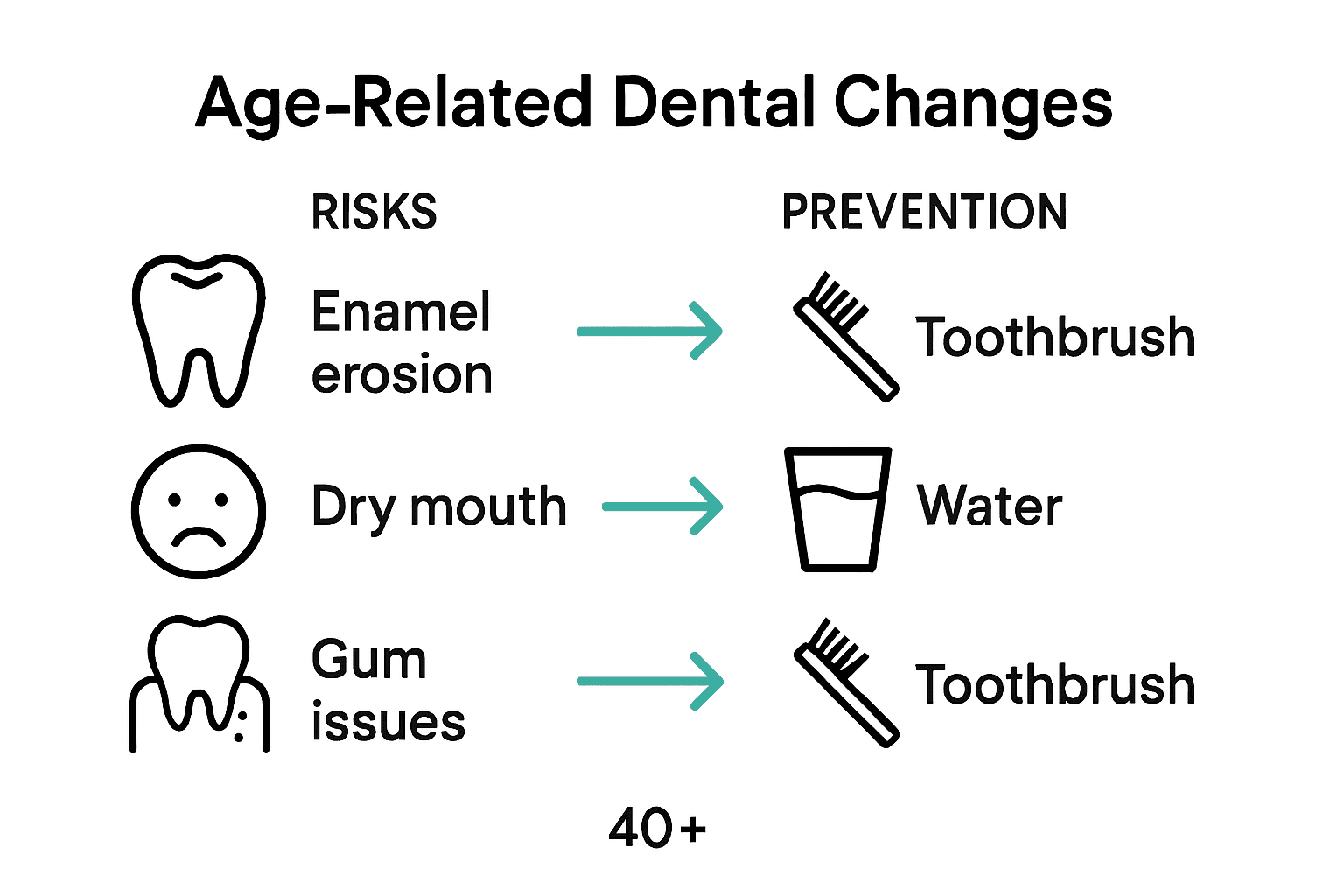
Canadian Dental Association emphasizes that these changes aren’t inevitable decline but natural progression that can be effectively managed through targeted interventions. Hormonal shifts, medications, and cumulative environmental exposures contribute to these dental modifications, requiring a more nuanced approach to oral care.
Understanding these age-related risks allows for strategic prevention. Mature adults should focus on specialized dental care techniques like using remineralizing toothpastes, investing in gentle electric toothbrushes, scheduling more frequent professional cleanings, and addressing potential dry mouth issues. Comprehensive care isn’t just about maintaining appearance—it’s about preserving overall health, preventing systemic complications, and ensuring continued comfort and confidence in daily interactions.
The Role of Diet and Lifestyle in Dental Wellness
Nutrition plays a pivotal role in maintaining optimal dental health, especially for adults navigating the complexities of oral wellness after 40. Canada Public Health emphasizes that a balanced diet and strategic lifestyle choices are fundamental in preventing dental diseases and supporting long-term oral health.
Key dietary considerations for dental wellness include:
- Minimizing sugar and acidic food intake
- Increasing calcium-rich foods
- Drinking plenty of water
- Consuming foods high in vitamins D and K
- Limiting alcohol and avoiding tobacco products
Canadian Dental Association recommends making water the primary beverage of choice, as it helps rinse away food particles, maintains saliva production, and supports overall oral hydration. Proper hydration is especially crucial for mature adults who may experience reduced saliva flow, which can increase risks of tooth decay and gum issues.
Beyond nutrition, lifestyle factors significantly impact dental wellness. Regular exercise improves circulation, which supports gum health, while stress management techniques can reduce instances of teeth grinding and jaw tension. Understanding these interconnected elements allows for a holistic approach to oral care—transforming dental wellness from a reactive medical necessity to a proactive component of comprehensive health management.
Preventive Care, Monitoring, and Dentist Visits
Preventive dental care becomes increasingly crucial as we age, transforming from occasional check-ups to a strategic health management approach. Canada Public Health underscores the importance of regular dental check-ups and professional cleanings as vital components of maintaining long-term oral health and detecting potential issues early.
Key elements of comprehensive dental monitoring include:
- Biannual professional dental examinations
- Annual comprehensive oral cancer screenings
- Regular dental x-rays to detect hidden issues
- Professional teeth cleaning and plaque removal
- Personalized oral health risk assessments
Canadian Dental Association recommends that adults over 40 adopt a more proactive approach to dental visits, recognizing that early detection can prevent more serious and costly interventions. These check-ups are not just about cleaning teeth, but about comprehensive health assessments that can reveal early signs of systemic health conditions that first manifest in oral symptoms.
Adults should view dental visits as an essential part of their overall health strategy. Beyond traditional cleaning, these appointments provide opportunities for personalized advice on managing age-related dental challenges, discussing potential treatment options, and developing tailored oral hygiene strategies that adapt to changing physical conditions. Proactive dental care is an investment in both immediate comfort and long-term health preservation.
Common Dental Wellness Mistakes to Avoid
Dental health mistakes can silently compromise your overall wellness, often going unnoticed until significant damage occurs. Canadian Dental Association warns that adults over 40 are particularly vulnerable to oral health complications resulting from seemingly minor oversights in daily dental care routines.
The most critical dental wellness mistakes include:
- Inconsistent brushing and flossing techniques
- Ignoring signs of gum inflammation
- Consuming excessive sugary and acidic foods
- Skipping regular dental check-ups
- Using incorrect or worn-out toothbrushes
- Neglecting hydration and dry mouth management
Canada Public Health emphasizes that many dental issues are preventable through consistent, mindful practices. Many mature adults mistakenly believe that dental problems are an inevitable part of aging, when in fact, most complications can be mitigated or entirely avoided with proper care and professional guidance.
Recognizing and correcting these mistakes requires a proactive approach. This means not just maintaining basic hygiene, but understanding the unique oral health challenges that emerge after 40. Developing a personalized dental wellness strategy that adapts to changing physical conditions, addresses potential risk factors, and incorporates professional recommendations is key to preserving dental health and overall quality of life.
Take Control of Your Dental Wellness After 40 Today
As the article highlights, dental wellness is not just about clean teeth but involves managing age-related changes like enamel erosion, dry mouth, and gum health. These challenges can impact your confidence and overall well-being if left unaddressed. You deserve a simple way to support your oral health routine and improve your daily quality of life.

Explore specialized wellness products designed with adults 40 and over in mind at Real Healthy Haven. From health monitors to wellness supplements and comfortable activewear, our carefully selected offerings help you build a comprehensive approach to aging well. Don’t wait until discomfort takes hold. Take the first step toward sustained dental and overall health by visiting Real Healthy Haven to find the right tools and support for your unique needs. Your smile and vitality will thank you.
Frequently Asked Questions
What is dental wellness?
Dental wellness refers to the overall health of your mouth and teeth, encompassing comprehensive care beyond routine brushing and flossing. It includes understanding the connections between oral health and total body wellness, enabling individuals to eat, speak, and smile comfortably.
How can adults over 40 maintain good oral health?
Adults over 40 should focus on essential practices such as brushing for two minutes twice a day, flossing daily, using fluoride toothpaste, and scheduling regular dental check-ups. They may also benefit from specialized tools and products that address age-related changes in oral health.
What dietary changes can support dental wellness after 40?
To support dental wellness, adults should minimize sugar and acidic food intake, increase calcium-rich foods, hydrate regularly, and consume foods high in vitamins D and K. Limiting alcohol and avoiding tobacco products are also crucial for maintaining optimal oral health.
Why are regular dental check-ups important for adults over 40?
Regular dental check-ups are vital for early detection of potential issues such as periodontal disease, tooth decay, and systemic health conditions. These visits provide opportunities for personalized advice, professional cleanings, and comprehensive assessments to preserve oral and overall health.
Leave a comment